
Damascus, Syria– Syria on Saturday rejected a report by the global chemical weapons watchdog that has blamed Damascus for a 2018 chlorine attack which killed 43 people, calling it “false”.
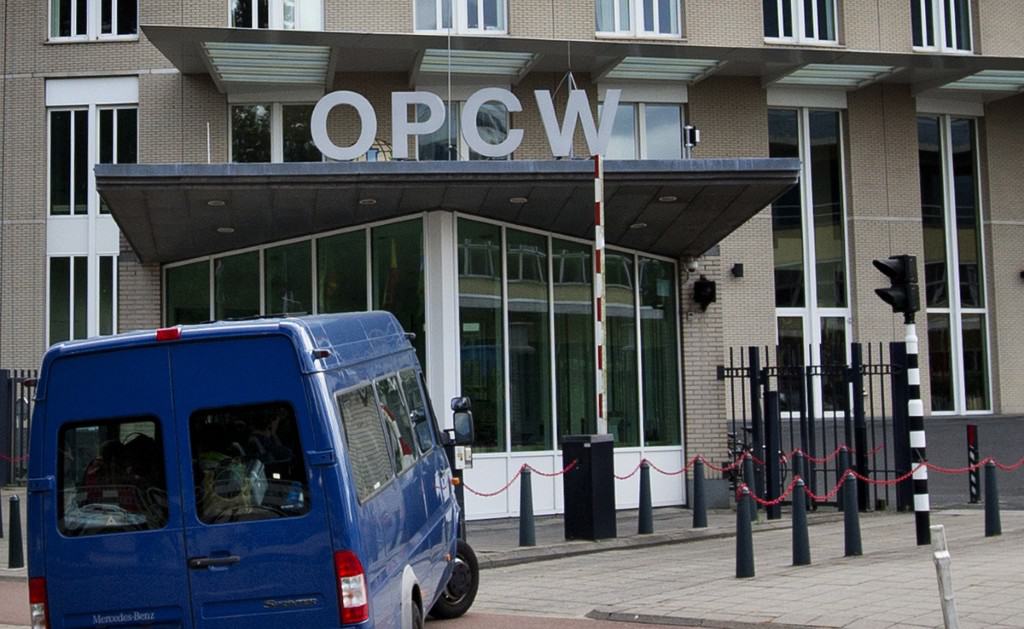
“Syria totally rejects the report” published Friday by the Organization for the Prohibition of Chemical Weapons (OPCW), the foreign ministry said in a statement carried by state news agency SANA.
“The report lacks scientific proof,” it said, decrying “false conclusions”.
In the OPCW report, investigators said there were “reasonable grounds to believe” that at least one Syrian air force helicopter had dropped two cylinders of the toxic gas on the rebel-held town of Douma.
Damascus and its ally Moscow say the April 7, 2018 attack was staged by rescue workers at the behest of the United States, which afterwards launched air strikes on Syria along with Britain and France.
The OPCW dismissed claims that rebels and emergency workers had staged the attack.
Its team “thoroughly pursued lines of inquiry and scenarios suggested by Syrian authorities and other state parties, but was unable to obtain any concrete information supporting them.”
Emergency workers said at the time that they had treated people suffering breathing problems, foaming at the mouth and other symptoms.
The Douma case caused controversy after leaks from two former employees accused the Hague-based watchdog of altering its original findings to make them sound more convincing.
But the OPCW said its investigators had “considered a range of possible scenarios” and concluded that “the Syrian Arab Air Forces are the perpetrators of this attack”.
Damascus denies the use of chemical weapons and insists it has handed over its stockpiles under a 2013 agreement, prompted by a suspected sarin gas attack that killed 1,400 in the Damascus suburb of Ghouta.
Syria’s voting rights at the OPCW were suspended in 2021 over its refusal to cooperate after being accused of more chemical attacks.
Nearly half a million people have been killed in Syria’s conflict, which began in 2011 and has displaced about half of the country’s pre-war population.