Masar signs $82m land deal

Agreements signed with Abdulmohsin Al Rossais & Sons Group.

Borouge okays $656m dividend

The company said dividend reflects its resilience

DEWA posts record H1 profit

Revenue reaches record $4.04 billion.

Tabreed H1 revenue $308m

Blurb: Profit reaches $52 million in H1

ADNOC L&S to expand fleet

It will acquire 11 carriers for $1.3bn.

Google denies removing W.Sahara border for Morocco users

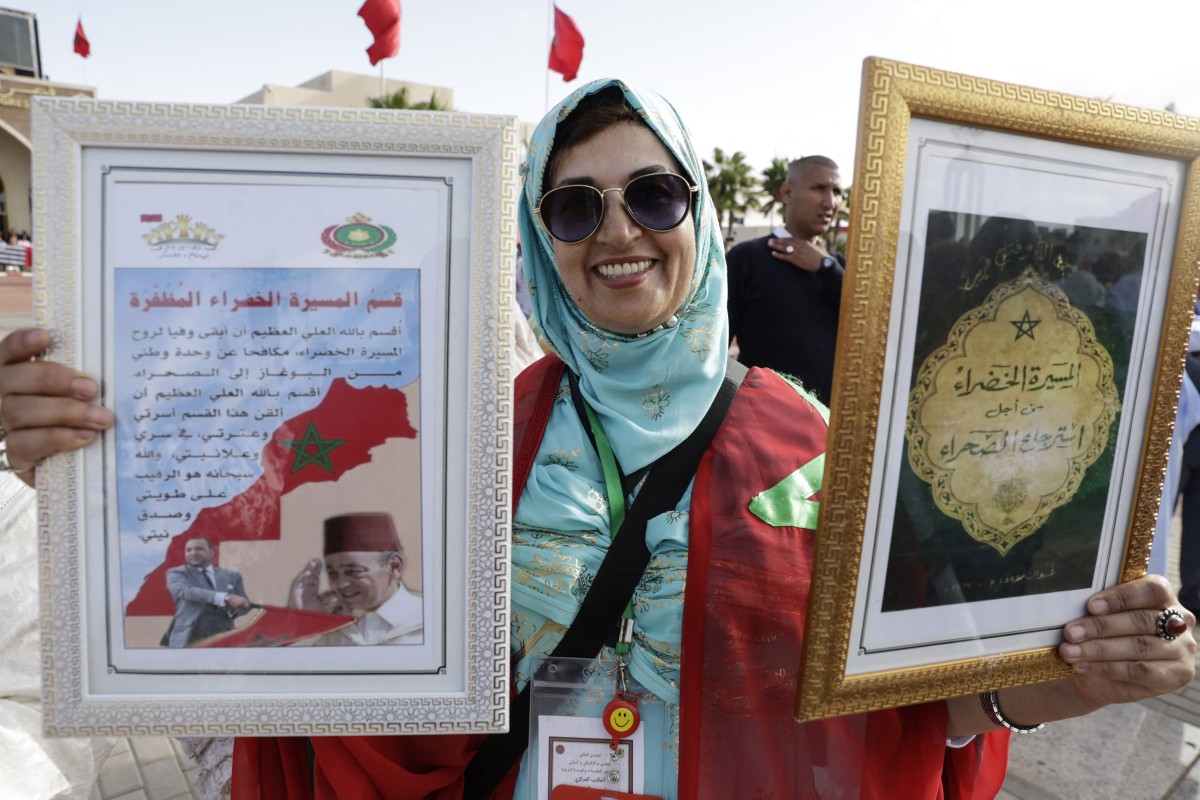
A Moroccan woman attending commemorations of the so-called Green March of 1975, when 350,000 Moroccans marched to the border of what was then Spanish Sahara to pressure Madrid into handing over the territory. AFP
  • Western Sahara is a vast mineral-rich former Spanish colony that is largely controlled by Morocco but has been claimed for decades by the pro-independence Polisario Front
  • The United Nations Security Council had previously urged Morocco, the Polisario Front, Algeria and Mauritania to resume talks to reach a broad agreement

New York, United States – The dotted lines illustrating the border between Western Sahara and Morocco, indicating the former’s disputed territory status, have never been visible to people using Google Maps in the latter, the company told AFP on Tuesday.

After media reports last week highlighted the discrepancy, tying it to the UN Security Council endorsing the Moroccan autonomy plan for Western Sahara, the tech giant has released a statement saying the different border displays have always been the case.

“We have not made changes to Morocco or Western Sahara on Google Maps,” a Google spokesperson said in a statement to AFP.

“These labels follow our longstanding policies for disputed regions. People using Maps outside of Morocco see Western Sahara and a dotted line to represent its disputed border; people using Maps in Morocco do not see Western Sahara.”

Western Sahara is a vast mineral-rich former Spanish colony that is largely controlled by Morocco but has been claimed for decades by the pro-independence Polisario Front, which is supported by Algeria.

The United Nations Security Council had previously urged Morocco, the Polisario Front, Algeria and Mauritania to resume talks to reach a broad agreement.

But, at the initiative of US President Donald Trump’s administration, the council’s resolution supported a plan, initially presented by Rabat in 2007, in which Western Sahara would enjoy autonomy under Morocco’s sole sovereignty.