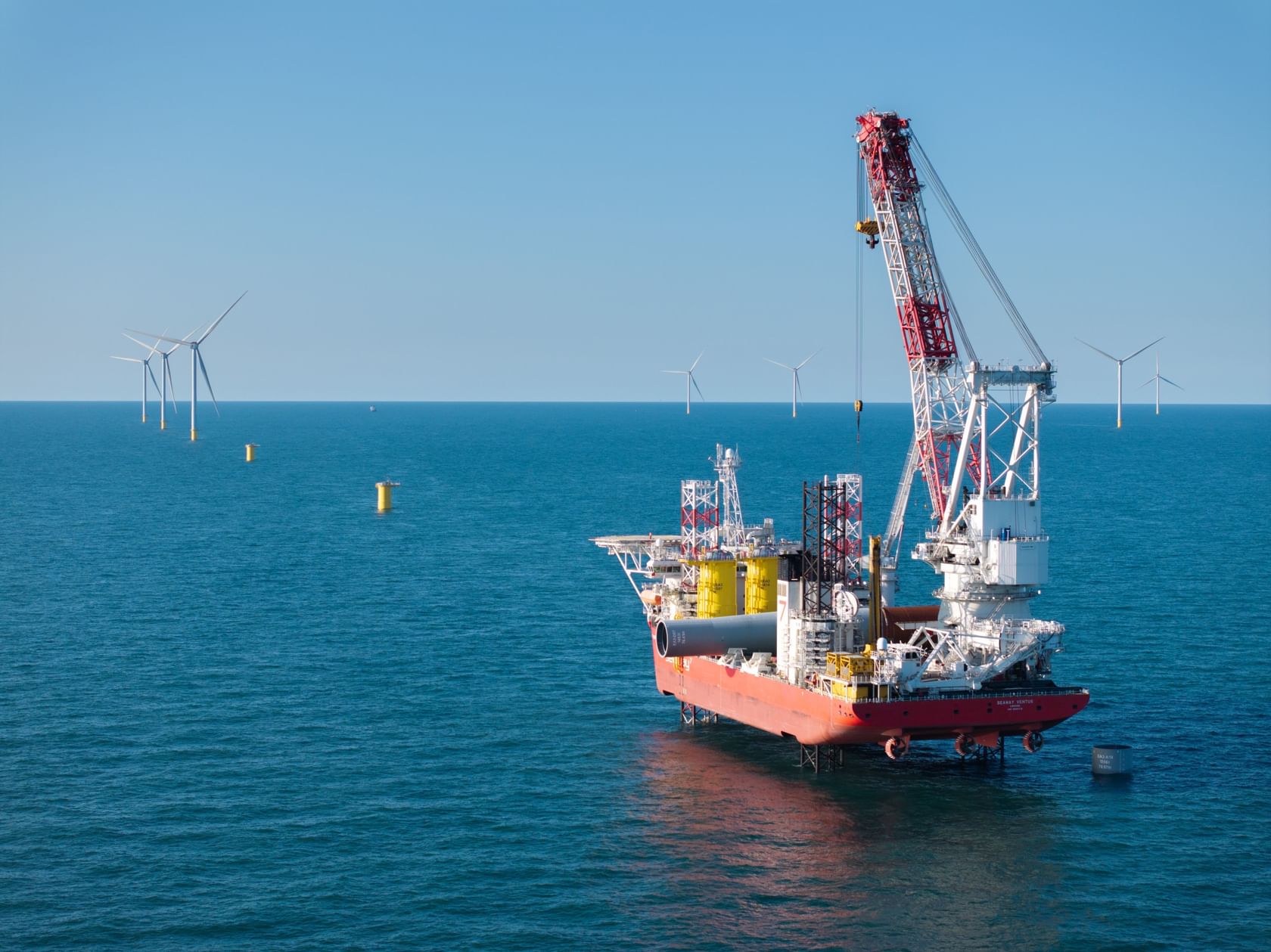

Abu Dhabi Future Energy Company PJSC (Masdar) and ScottishPower Renewables have completed installation of all 95 foundations at the £4 billion East Anglia THREE offshore wind farm off the Suffolk coast, marking a major construction milestone.
The monopiles, weighing between 1,200 and 1,800 tonnes, stand 67 to 84 metres tall and have a diameter of up to 10.6 metres. They are the largest monopiles to be installed from a jack-up vessel in Europe, the companies said.
Installation of all 95 transition pieces, each 20 metres high, 8 metres in diameter and weighing more than 400 tonnes, has also been completed.
Turbine installation is already under way, while offshore and onshore construction will continue over the coming months. The project is expected to become fully operational by the end of 2026, delivering 1.4 gigawatts of clean power to the UK.
Husain Al Meer, Masdar’s executive director for global offshore wind and UK, said completion of the foundations was a significant milestone and engineering achievement.
He said the project reflected the strength of Masdar’s partnership with ScottishPower and the expertise of the project team and contractors, particularly Seaway7.
East Anglia THREE is Masdar’s first 50:50 offshore wind joint venture in the UK and forms part of its long-term commitment to the country’s offshore wind industry, Al Meer said.
With electricity demand accelerating, offshore wind would be essential to delivering affordable, home-grown power at scale, he added.
Once operational, East Anglia THREE will provide 1.4GW of clean energy, helping meet rising demand and strengthen the UK’s energy security, Al Meer said.
ScottishPower Renewables CEO Charlie Jordan said East Anglia THREE was the company’s biggest wind farm and called completion of the foundation installation an engineering triumph.
More than 200,000 tonnes of steel have been anchored into a seabed area the size of almost 43,000 football pitches, Jordan said.
Installation of the 95 turbines, featuring 115-metre blades that are the biggest built and used in the UK, has passed the halfway mark, he added.
ScottishPower Renewables and Masdar have invested almost £2 billion in the domestic supply chain, supporting thousands of jobs during construction and around 100 jobs over the wind farm’s lifetime, Jordan said.
Seaway7 delivered the foundation installation, with East Anglia THREE the first foundation installation campaign completed by its jack-up vessel, Seaway Ventus.
Seaway7 CEO Lloyd Duthie said the company was proud to have supported ScottishPower Renewables and Masdar in reaching the milestone.
Seaway7 is continuing to install inter-array cables, Duthie said, bringing the project closer to delivering clean, reliable power to more than one million UK homes.
East Anglia THREE is the second project developed under Masdar and Iberdrola’s €15 billion strategic partnership and the first with ScottishPower in the UK.
The almost £2 billion invested in the UK supply chain includes foundation design by Wood Thilsted, turbine blade manufacturing at Siemens Gamesa’s factory in Hull, vessel charters from Norfolk-based NR Marine Services and OEG, and support from metocean and seabed consultants Partrac.
The project is supporting 2,300 jobs during construction and is expected to create around 100 long-term roles in the East of England.
Its 1.4GW capacity will generate enough home-grown clean power for more than 1.3 million homes, providing greater energy security for the UK.