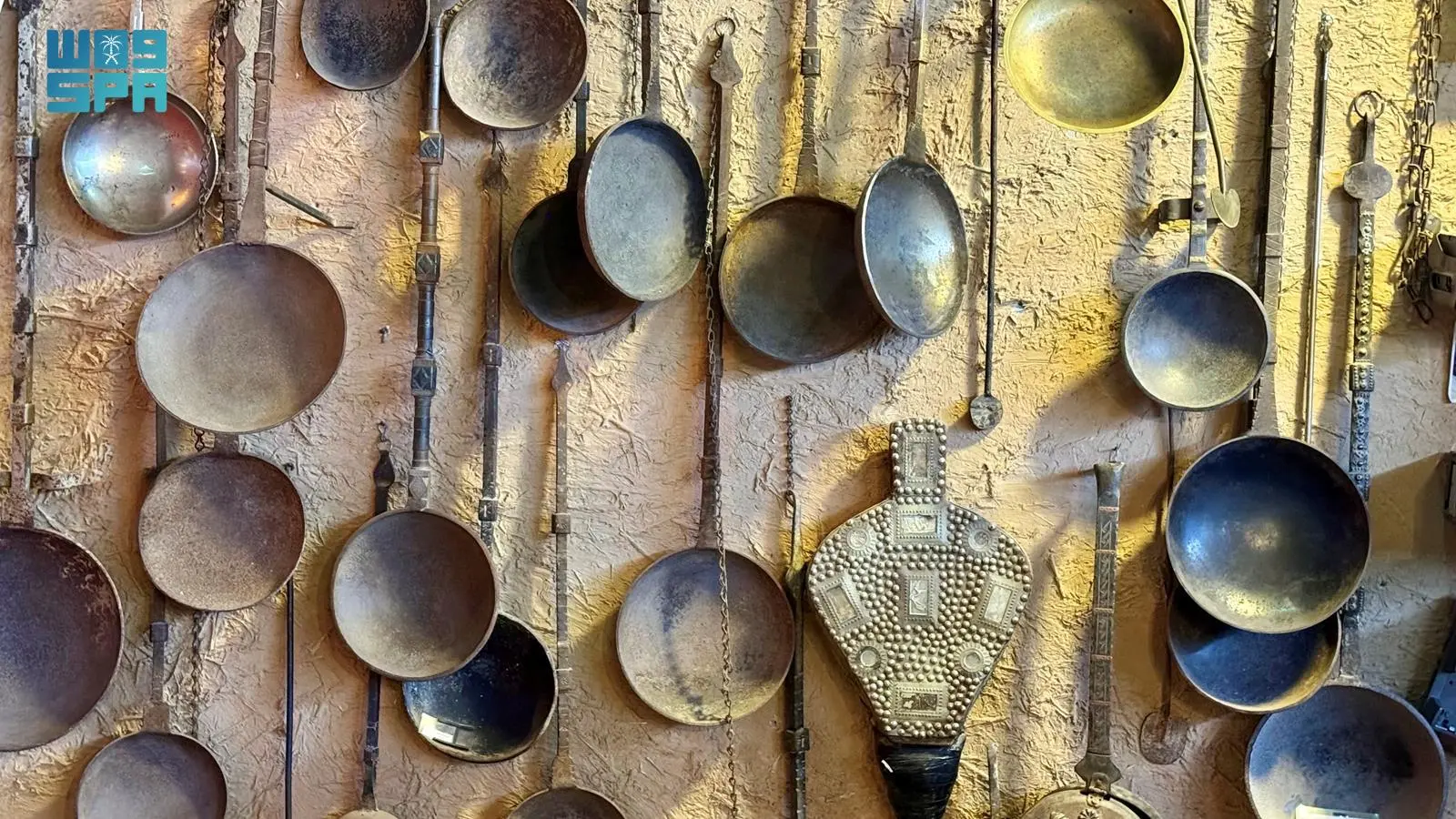

Rafha, Saudi Arabia — The traditional coffee roaster, known as the “mahmas,” remains closely linked to Saudi coffee culture and desert hospitality traditions.
Historically used to roast coffee beans over fire before grinding, the tool represents authenticity and generosity in Bedouin society.
The mahmas is typically made of thick iron or copper and consists of a hollow cylindrical disc with a long handle used to stir coffee beans during roasting.
Beans are roasted over fire until they turn golden and their husks fall off, before being transferred to a wooden container known as the “mibradah.”
After cooling, they are ground in a mortar and pestle before preparing coffee.
The dark color of the roaster symbolizes frequent use and abundant coffee preparation, reflecting traditions of hospitality among Bedouin communities.
Roasting methods varied across the Arabian Peninsula, including the Shaghdaliyah, Hijaziyah, Qatifiyah and Hasawi roasters.
The mahmas also appears in folk poetry as a symbol of generosity and hospitality, reflecting its cultural significance.