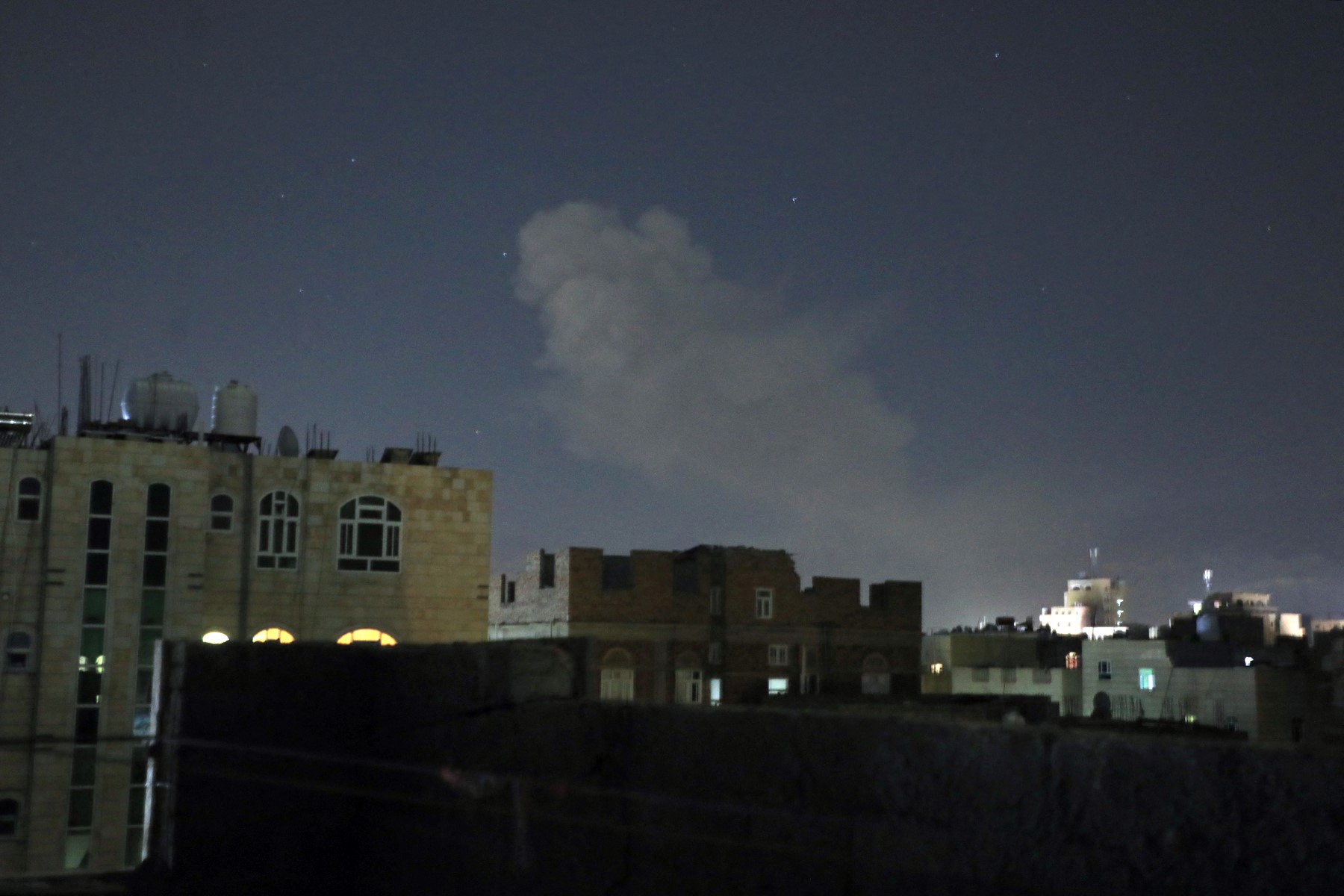

Washington, United States– The US military said Friday it had struck three underground storage facilities used by Yemen’s Houthis, as the Iran-backed rebels continue to launch attacks on shipping in the Red Sea.
US forces “conducted self-defense strikes against three Houthi underground storage facilities in Iranian-backed Houthi controlled areas of Yemen,” Central Command (CENTCOM) said in a statement.
It said US forces had also “successfully engaged and destroyed four unmanned aerial vehicles” in Houthi-controlled areas of Yemen throughout Friday, while also registering four anti-ship ballistic missiles fired by the Houthis toward the Red Sea.
“There were no injuries or damage reported by U.S., coalition, or commercial ships,” CENTCOM said.
The Houthis began attacking ships in the Gulf of Aden and the Red Sea in November, a campaign they say is intended to signal solidarity with Palestinians in Gaza.
They have vowed to target Israeli, British and American ships, as well as vessels heading to Israeli ports, disrupting traffic through the vital trade route off Yemen’s coasts.
The attacks have sent insurance costs spiraling for vessels transiting the Red Sea and prompted many shipping firms to take the far longer passage around the southern tip of Africa instead.