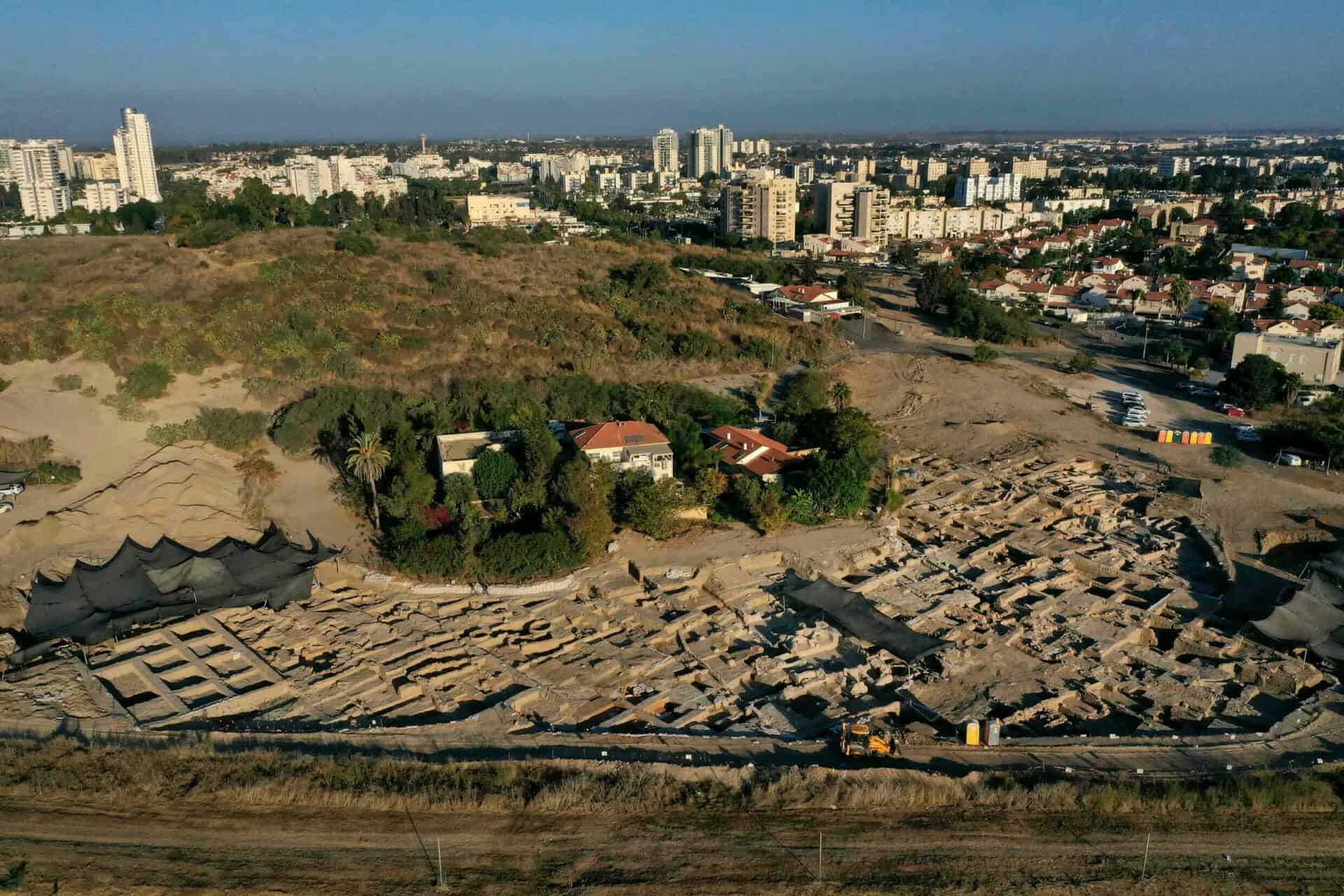

Israeli archaeologists on Monday, October 11, uncovered a Byzantine-era, industrial-scale wine complex.
The winery is said to have produced some two million liters of the drink annually, and was the world’s “largest” such center at the time.
The facility in Yavne is south of Tel Aviv, which was a Jewish settlement during biblical times, and a key city after the destruction of Jerusalem in 70 AD.
It is said to be comprised of five wine presses sprawling over a square kilometer (0.4 sq mile).
The 1,500-year-old site covers warehouses for ageing and marketing the wine, kilns for preparing the clay amphorae used to store the wine and “tens of thousands of fragments and intact earthen jars”, the Israel Antiquities Authority said of the “sophisticated” facility.
The produce was known as “Gaza and Ashkelon wine” due to the nearby ports from which it was exported, according to IAA excavators Elie Hadad, Liat Nadav-Ziv and Jon Seligman, who said the Holy Land wine was a prized product.
Fermenting grape juice into wine was a proven way in antiquity to avoid illness from contaminated drinking water.
The dig, which lasted two years, revealed Persian-era wine presses aged 2,300 years old at the same site.