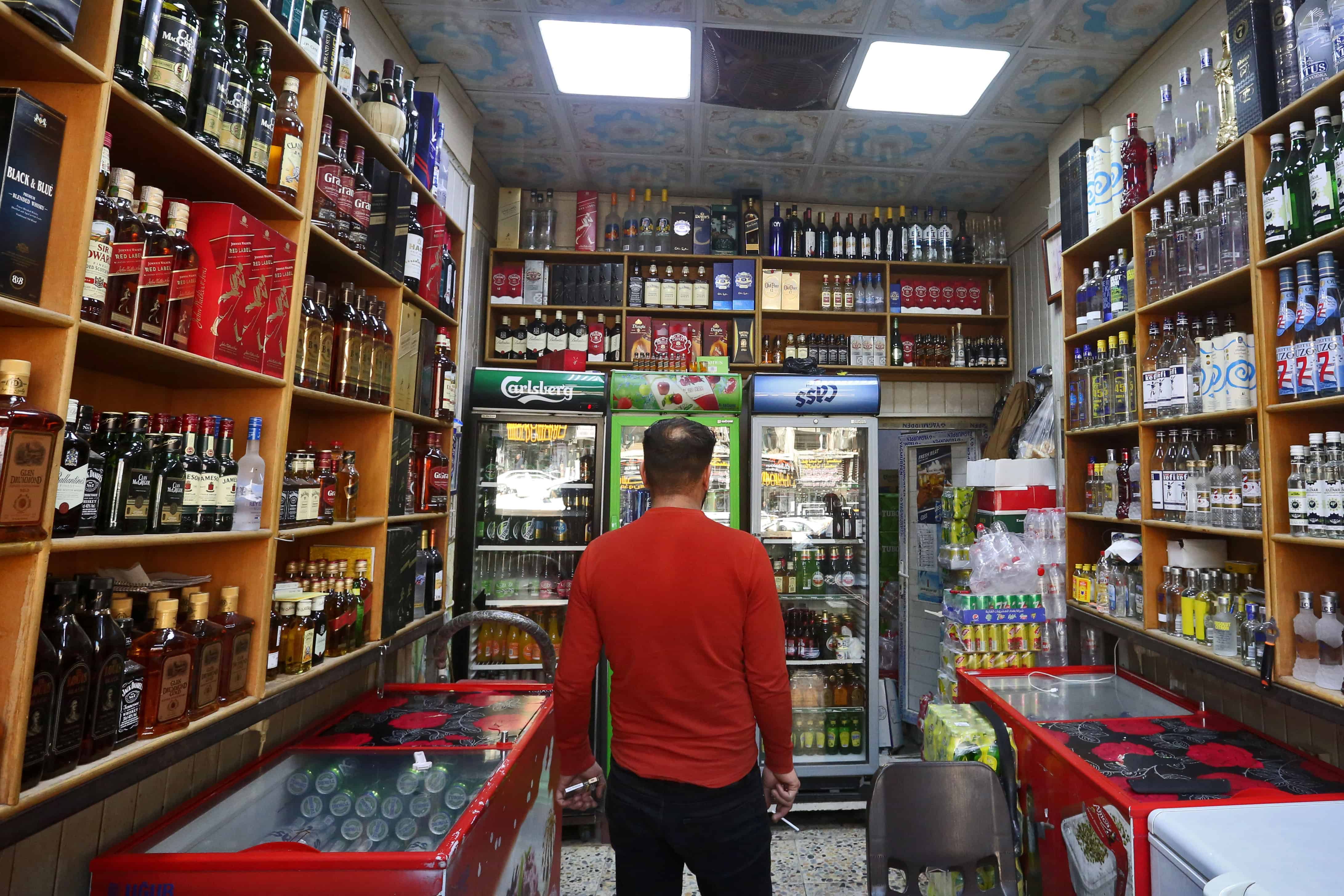

Baghdad, Iraq–Iraq’s customs department gave orders on Saturday to start enforcing a ban on alcohol imports that became law last month despite divisions over the legislation.
But the specialist retail stores that dominate alcohol sales in the virtual absence of bars or licensed restaurants remained open for business, at least in Baghdad, an AFP correspondent reported.
Public alcohol consumption is frowned upon in mainly Muslim Iraq but beverages can be readily purchased from liquor stores, many of them run by Christians or other non-Muslims.
The new legislation, which bans the sale, import or production of alcohol, was originally approved by parliament in 2016 but only became law following its publication in the official gazette on February 20.
“The General Customs Authority has given orders to all customs centres to ban the entry of all types of alcoholic drink,” the authority said in a statement.
The new law sets fines of between 10 million and 25 million dinars ($7,700-$19,000) for violations.
But it contradicts a government decree adopted less than a week earlier on February 14, setting duty at 200 percent on all imported alcoholic drinks for the next four years.
The legislation has drawn sharp criticism from rights activists and lawmakers representing Iraq’s dwindling non-Muslim communities.
Earlier this week, five members of parliament from the Christian bloc appealed to the federal Supreme Court, arguing that the ban was unconstitutional because it failed to respect the rights of minorities, lawmaker Duraid Jameel told AFP.
Yazidi activist Murad Ismael underlined in a tweet that even though non-Muslim faiths do not ban alcohol, “the legislation imposes the same restrictions” on their followers as on Muslims.
Mustafa Saadoon, of the Iraqi Observatory for Human Rights, said the alcohol ban formed part of a “comprehensive package aimed at restricting freedoms”.
He recalled a spate of arrests last month targeting “decadent content” posted on social media platforms.
Baghdad estate agent Sarmad Abbas, 44, said the ban would merely push alcohol sales onto the back market.
He acknowledged that Muslim teachings banned the consumption of alcohol. “But these are personal freedoms that you cannot forbid citizens from practising,” he added.
Although the alcohol ban is a federal law, it is unlikely to apply in Iraq’s autonomous Kurdish region, which operates its own customs posts on the northern border with Turkey.