
-
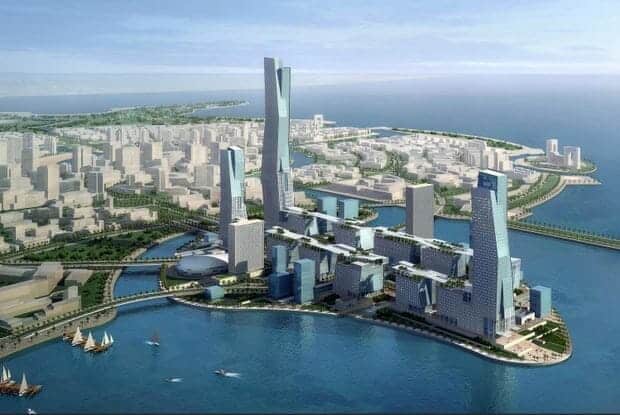
The $500-billion mega city has been planned as part of the drive to diversify away from oil
-
The city will have its own laws and regulations and will have a semi-government setup
It is supposed to be like no other free zone in the world. It will have its own laws and regulation, and its own authority as a semi-government. Welcome to Saudi Arabia’s NEOM that want to be the world’s most competitive free zone.
“NEOM is meant to be a model where this region will be a semi-independent free zone, it will have its own laws, it will have its own regulations and its own authority as a semi-government,” its CEO Nadhmi Al-Nasr told an online conference hosted by Nikkei, the Japanese media group. “The reason for this is because it is our vision to make this the most competitive free zone in the world,” he said.
The event, held in partnership with the Ministry of Investment of Saudi Arabia (MISA) and the Smart City Institute highlighted the investment appeal of the giga project which was originally revealed in October 2017 when Crown Prince Mohammed bin Salman introduced it to the world at the Future Investment Initiative conference in Riyadh.
The $500 billion mega-city planned as part of the drive to diversify away from oil, is destined to transform more than 26,500 sq. km in the Kingdom’s northwestern Tabuk region. Peter Terium, managing director of energy, water and fuel at NEOM, revealed the different types of renewable energy sources that were being developed on the project and the challenges involved.
“We are going to build a land of the future, and the future is about sustainability,” Terium said.
“Just to give you a feel for the size of what we’re talking about. We are thinking about a society in 2030 that will need 30 gigawatts or 30,000 megawatts of installed capacity to support its energy consumption; that is a lot and is comparable to the size of a country like Portugal or Austria,” he said.
Terium explained the development anticipated a high degree of electrification, “whether it is electric mobility, electric drones or using electricity as a carbon-free form of energy and applications where it is currently not done.”
In order to patch a desert the size of Belgium into a mega-city powered by renewable energy, certain technological advancements would be needed to meet the electricity consumption levels such as the use of micro grids, he said.