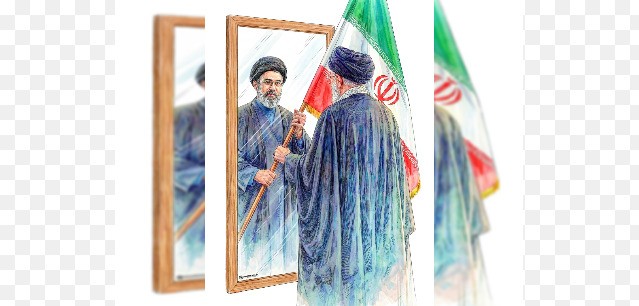

Iran’s supreme leader Ayatollah Mojtaba Khamenei has issued a strong statement asserting that the United States should have no role in the future of the Persian Gulf, while outlining Tehran’s intent to manage the strategically vital Strait of Hormuz.
The statement, released on Iran’s National Day of the Persian Gulf, also reaffirmed Iran’s determination to retain its nuclear capabilities—two positions that remain central sticking points in efforts to end the ongoing conflict involving the US and Israel.
“By the will and power of God, the bright future of the Persian Gulf region will be a future without America,” the statement said.
On control of the waterway, it added: “Foreigners who come from thousands of kilometers away, acting maliciously out of greed, have no place there, except at the bottom of its waters.”
Khamenei further signaled a shift in policy, stating Iran would implement “new legal frameworks and management of the Strait of Hormuz,” indicating no intention to relinquish influence over one of the world’s most critical oil shipping routes.
Hegseth Says Iran Ceasefire Pauses War Powers Deadline
US Defense Secretary Pete Hegseth told lawmakers that the ceasefire with Iran effectively halts the legal clock requiring congressional approval for continued military engagement.
Speaking ahead of the 60-day deadline under the War Powers Resolution, Hegseth argued that the pause in hostilities changes the administration’s obligations.
“We are in a cease-fire right now, which our understanding means the 60-day clock pauses, or stops, in a cease-fire,” he said during testimony before the Senate Armed Services Committee.
His interpretation has been challenged by legal experts, as the deadline typically compels a president to withdraw forces, seek authorization, or request an extension.
Hegseth also struck a combative tone toward critics of the war, stating: “The biggest adversary we face at this point are the reckless naysayers and defeatist words of congressional Democrats and some Republicans.”
Iran, US and Israel Exchange Sharp Signals Amid Fragile Ceasefire
Tensions remain high despite a ceasefire, with leaders across the region issuing pointed statements and military activity continuing.
Iranian President Masoud Pezeshkian criticized US actions, saying the naval blockade of Iranian ports amounts to an “extension of military operations” and is “intolerable”.
US President Donald Trump suggested the conflict could resume, stating “we might need” to restart war with Iran, while adding that “nobody knows what the talks are except myself and a couple of other people”.
Meanwhile, Iran’s Tasnim news agency reported that air defence systems in Tehran were responding to “small aircraft and reconnaissance drones”.
Elsewhere, Israeli strikes in southern Lebanon reportedly killed more than 30 people in a single day, further straining the already fragile US-backed ceasefire. In a separate development, Israel said it would transfer 175 activists from the Gaza-bound Global Sumud Flotilla to Greek authorities after detaining them in international waters.
UN Warns Hormuz Disruption ‘Strangling Global Economy’
António Guterres has warned that instability around the Strait of Hormuz is having severe global consequences, as maritime disruptions ripple through key industries.
“The consequences of the Middle East crisis grow dramatically worse with each passing hour,” he said in a social media post.
Highlighting the broader impact, Guterres added that restricted navigation through the waterway is disrupting “energy, transport, manufacturing and food markets” and is “strangling the global economy”.
He called for urgent dialogue and “solutions that pull us back from the brink”.