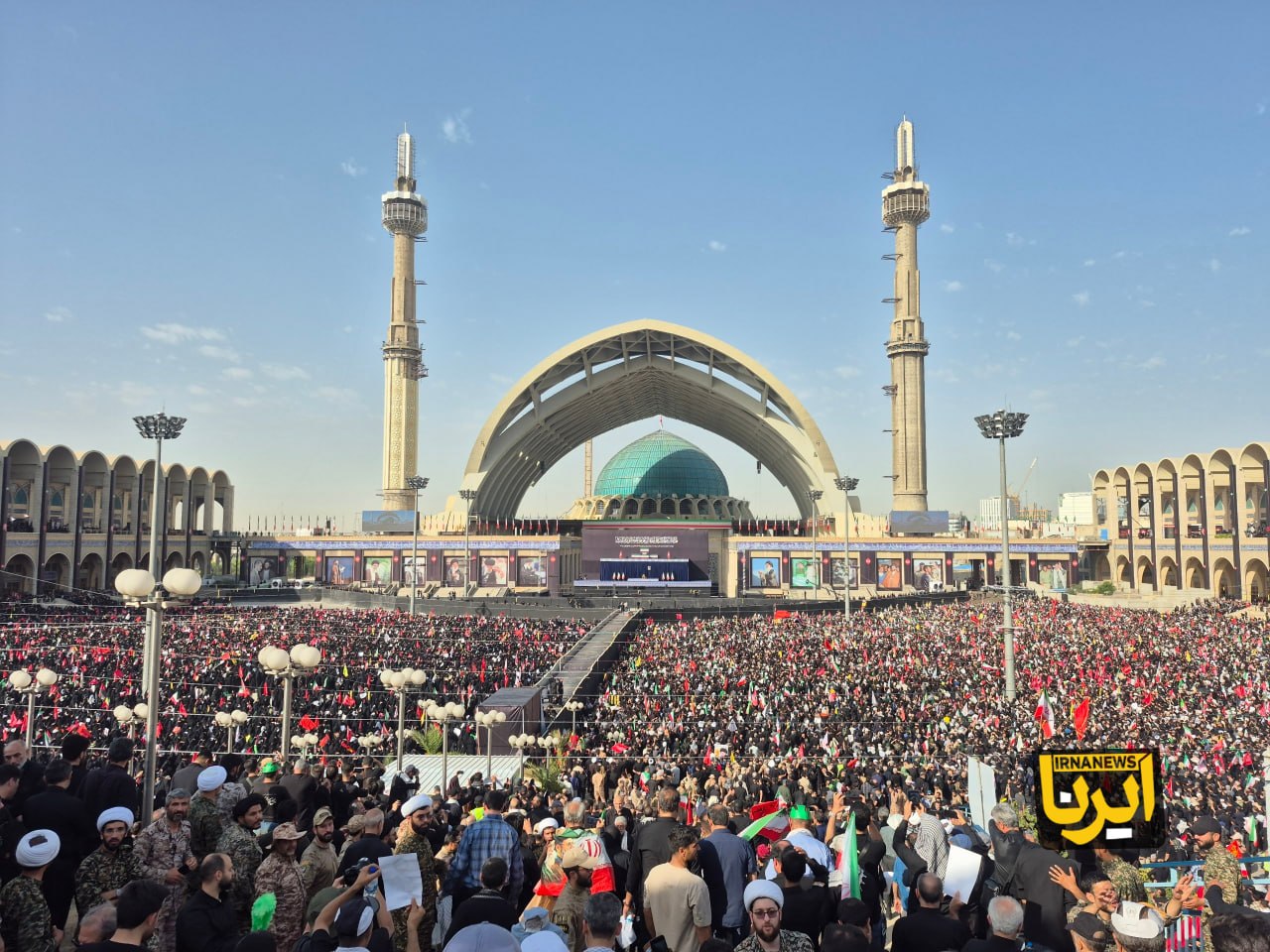

Iran on Saturday held the main public funeral ceremonies for assassinated Supreme Leader Ayatollah Ali Khamenei, with millions of mourners expected to descend on Tehran in one of the largest state commemorations since the 1979 Islamic Revolution, as the country’s new leadership sought to project unity and resilience following the US-Israeli war.
Foreign delegations from more than 100 countries were also expected to attend the ceremonies at Tehran’s Grand Mosalla, underscoring the international significance Iran has attached to the event.
Thousands of mourners filled the Grand Mosalla religious complex before dawn as the coffins of Khamenei and his slain family members, draped in Iranian flags, were unveiled before crowds dressed in black.
Images broadcast by Iranian state media showed emotional scenes as mourners wept, waved national flags and held aloft red banners traditionally associated with calls for revenge against those responsible for the leader’s killing.
The funeral marks the conclusion of nearly four decades of Khamenei’s rule, during which his office became the centre of Iran’s political, military and judicial system.
Analysts told Al Jazeera that Tehran intends the ceremonies to send a message of continuity to both domestic and international audiences, emphasising that the country’s strategic direction will remain unchanged despite the assassination of its long-serving leader.
Security remains exceptionally tight, with analysts suggesting that newly appointed Supreme Leader Mojtaba Khamenei is unlikely to appear publicly because of concerns over a possible Israeli attack.
Instead, the focus of the ceremonies has been on reinforcing confidence in the political transition while avoiding unnecessary security risks during what observers describe as a fragile period for the Islamic Republic.
Authorities have mobilised extensive logistical support for the influx of mourners, opening more than 5,000 schools and between 40,000 and 50,000 classrooms across the country to accommodate pilgrims travelling to Tehran for the funeral.