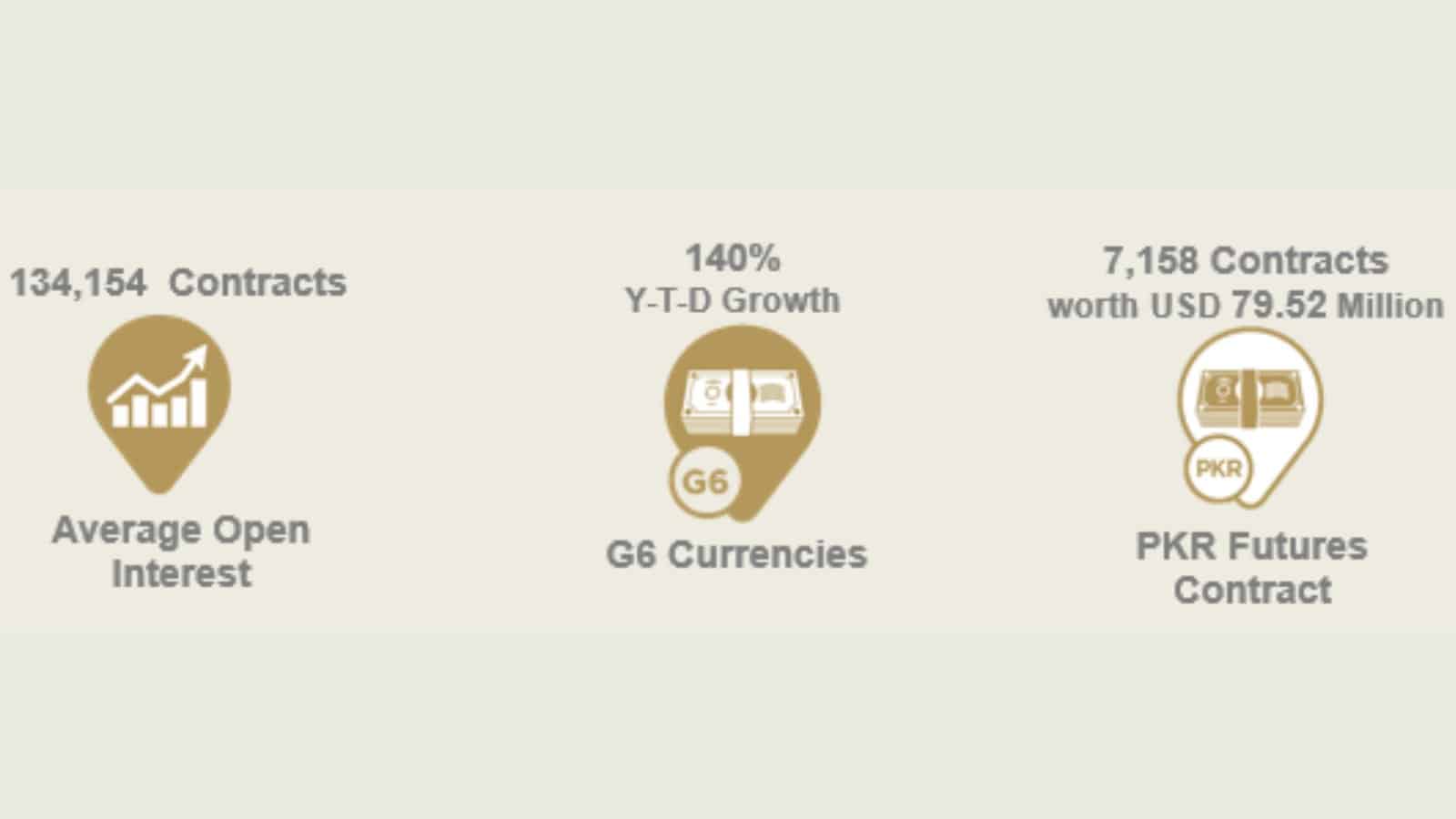

The Dubai Gold & Commodities Exchange (DGCX) recorded a monthly Average Open Interest (AOI) of 134,154 contracts during the month of March, and registered trading volume with a total value of $15.74 billion.
In response to further inflation, policy decisions and continued geo-political conflict around the globe, there was a surge in demand for the DGCX’s G6 Currency Future Contracts during March, as it recorded a year-to-date growth of 140.11 percent as compared to the same period last year, media reports said.
Among the G6 currency pairs, the Euro and British Pound Futures Contracts recorded a year-on-year (YOY) advanced growth of 527.5 percent and 261.5 percent respectively.
Trading volumes in the Japanese Yen as well as the Australian Dollar registered a significant YTD growth of 339.2 percent and 755.76 percent respectively.
Additionally, the DGCX’s Pakistani Rupee (PKR) Futures Contract also registered the highest monthly volume since its launch in 2021, registering a combined total of 7,158 lots valued at $79.52 million during the month.
Les Male, CEO of DGCX, said, “Trading activity for March was led by the DGCX’s currency portfolio, as market participants looked to manage currency risk in an uncertain climate arising from geopolitical events and changing monetary policies.”