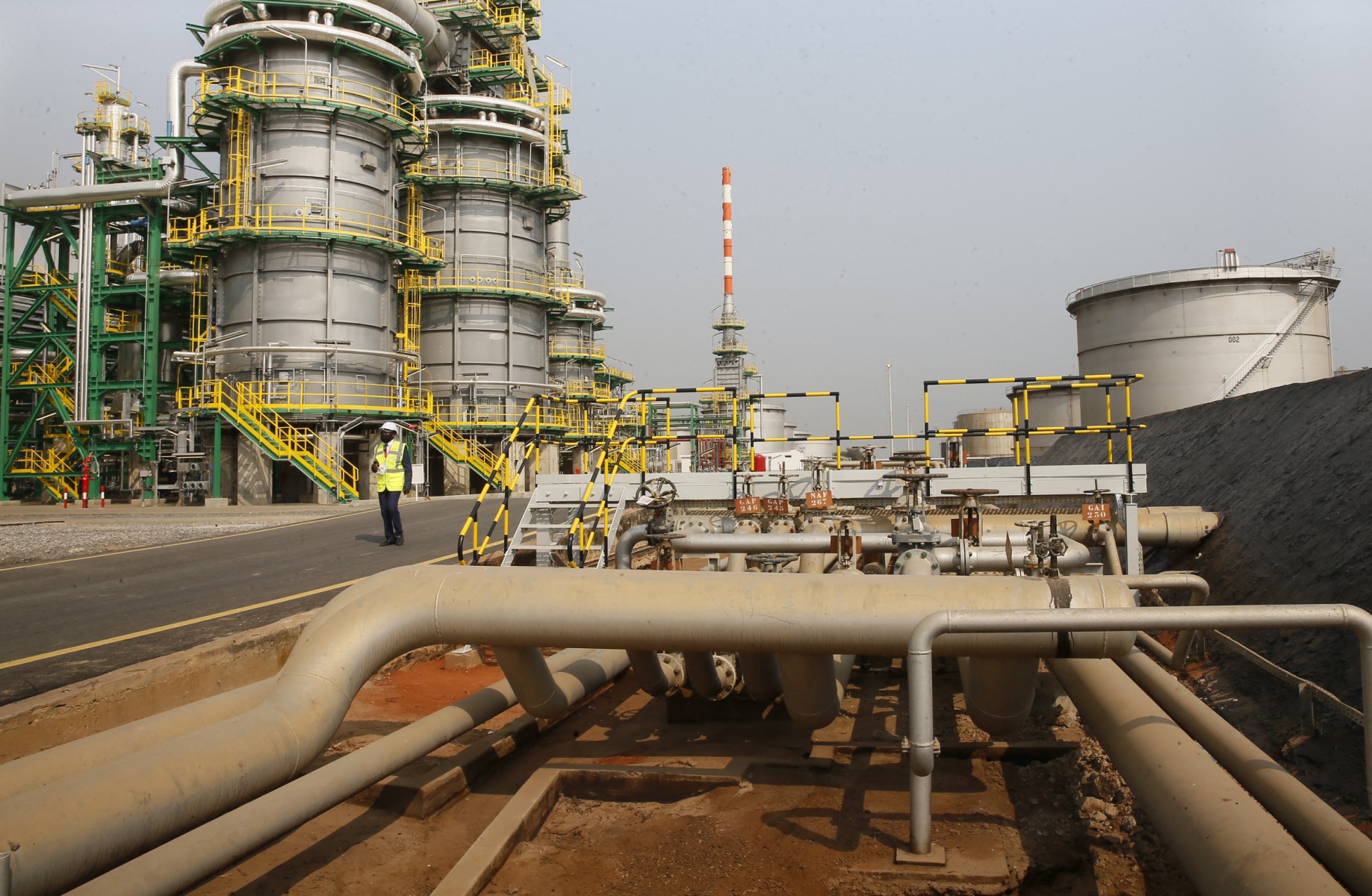

Lagos, Nigeria – Africa’s biggest diesel and aviation fuel refinery built by the continent’s richest man has started production, the company said on Saturday, calling it a “big day for Nigeria”.
The 650,000 barrel-per-day Dangote refinery could be a game changer when fully operational by helping end Nigeria’s reliance on fuel imports.
The delayed megaproject built by Nigerian billionaire Aliko Dangote said it hoped the products would be on the market this month, but it was not clear when the refinery will reach full capacity production or start refining petrol.
The facility sits on 2,635 hectares (6,500 acres) of land at the Lekki Free Zone on the edge of Lagos city and cost an estimated $19 billion, according to local media.
“Dangote Petroleum Refinery has commenced production of diesel and aviation fuel,” the group said. “This is a big day for Nigeria. We are delighted to have reached this significant milestone.”
Though one of Africa largest oil producers and the continent’s top economy, Nigeria relies almost totally on imported fuel and diesel because of a lack of refining capacity.
Nigeria swaps crude worth billions of dollars for petrol that it had subsidized for years to keep prices cheap for its domestic market.
Fuel imports and subsidies caused a huge drain on foreign exchange when Nigeria was struggling with dwindling oil revenues and foreign currency shortages.
The refinery, first scheduled to open in 2021, was officially inaugurated by then president Muhammadu Buhari earlier this year and was supposed to begin operations in June.
Since coming to office in May last year, President Bola Ahmed Tinubu has ended the long-standing fuel subsidy and floated the naira currency in economic reforms he says will attract foreign investment and build long term growth.