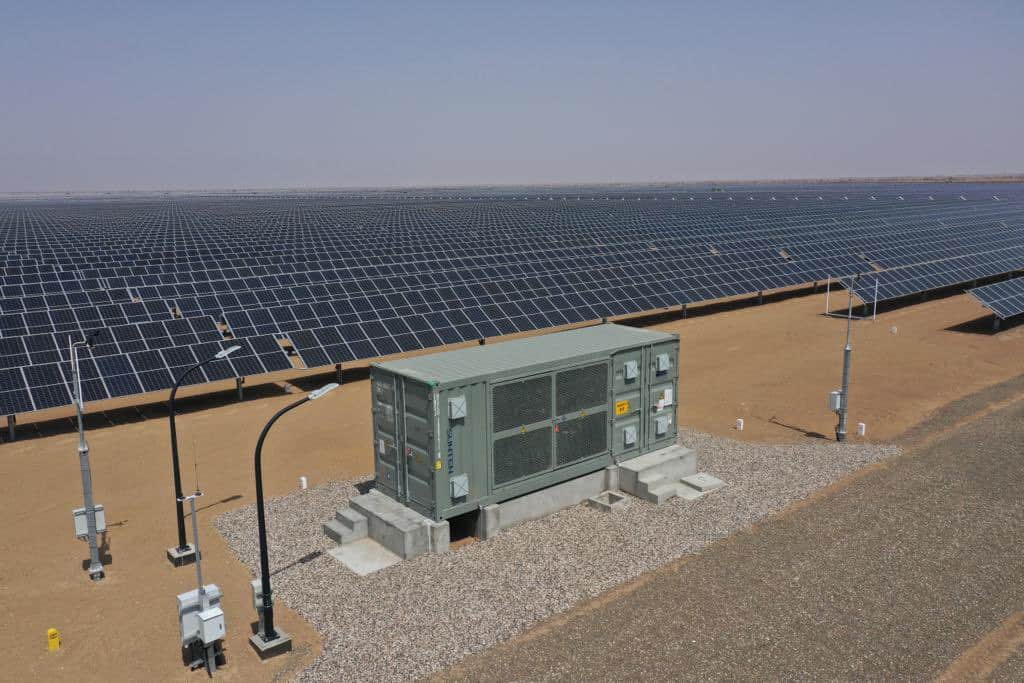

Ibri Solar Project, the largest renewable energy facility of its kind in the Sultanate of Oman, was opened at a ceremony held in the Wilayat of Ibri, Governorate of A’Dhahirah.
The 500 megawatt utility, which cost RO 155 million, figures among Oman Vision 2040 major projects aimed at optimizing available investment opportunities and protecting natural resources.
The ceremony was held under the auspices of Minister of Interior Sayyid Hamoud Faisal Al Busaidi.
The project is a public-private partnership. Oman Power and Water Procurement Company, an arm of Nama Group, partnered with a group of GCC investment firms led by ACWA Power, Gulf Investment Corporation (GIC) and the Alternative Energy Projects Company (AEPC) to set up, own and operate the plant.
Established on an area of 13 million square metres – of which 1.5 million was accorded to the double-sided solar panel – the project uses more than 7,000 square metres of cables.
Mohammed Abunayyan, Chairman of ACWA Power, said that the project will supply 50,000 homes with electricity and cut down CO2 emissions by 340,000 tons a year.