
China launched on Sunday the second of three modules needed to complete its new space station, state media reported, the latest step in Beijing’s ambitious space program.
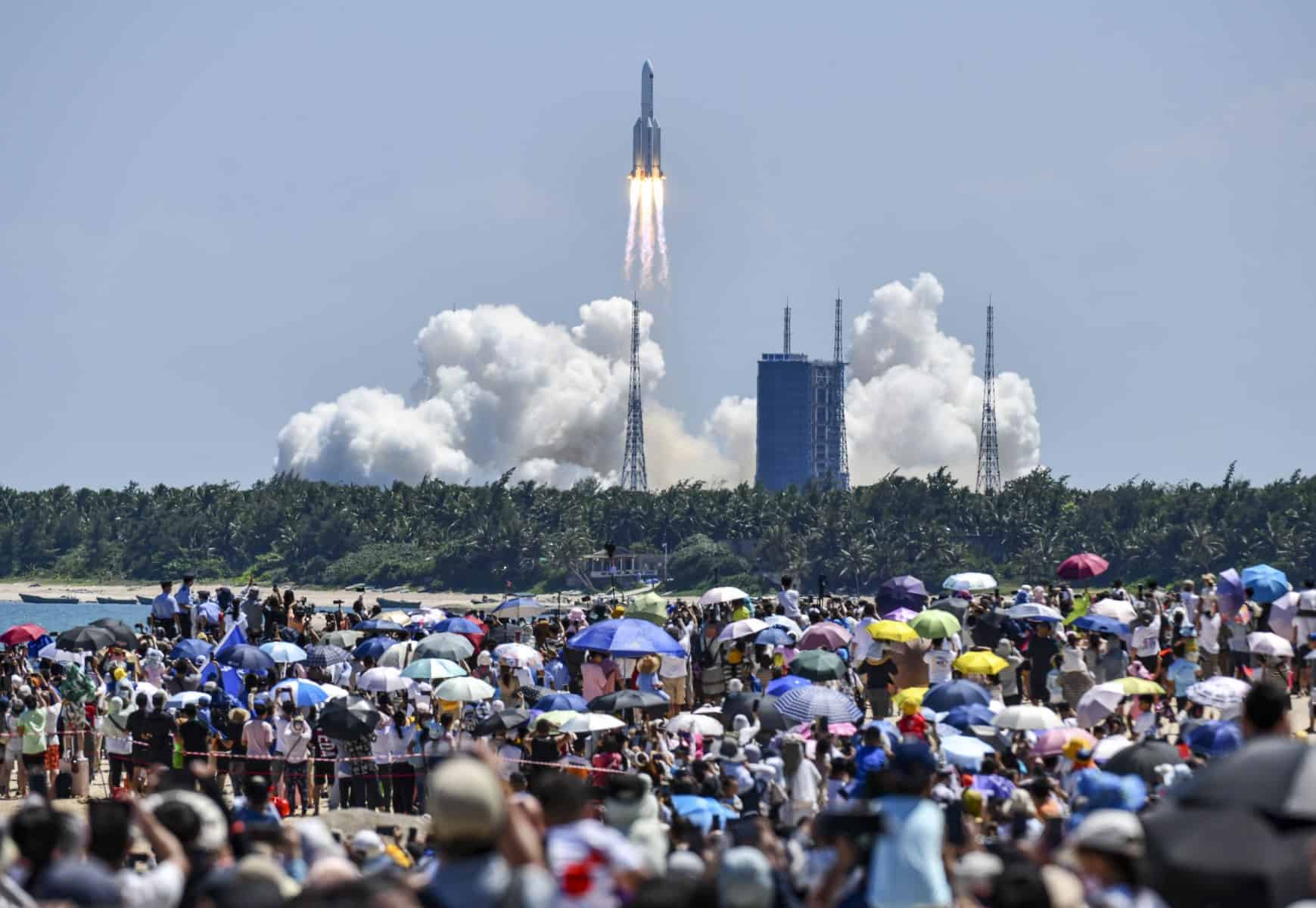
The uncrewed craft, named Wentian, was propelled by a Long March 5B rocket at 2:22 pm (0622 GMT) from the Wenchang launch center on China’s tropical island of Hainan.
Beijing launched the central module of its space station Tiangong — which means “heavenly palace” — in April 2021.
Almost 18 meters (60 feet) long and weighing 22 tons (48,500 pounds), the new module has three sleeping areas and space for scientific experiments.
It will dock with the existing module in space, a challenging operation that experts said will require several high-precision manipulations and the use of a robotic arm.
Wentian will also serve as a backup platform to control the space station in the event of a failure.
The final module to complete the space station is scheduled to dock in October, and Tiangong is expected to become fully operational by the end of the year.
The station will then assume its final T-shape, and be similar in size to the former Russian-Soviet Mir station.
Its lifespan should be at least 10 years.
The world’s second-largest economy has poured billions into its military-run space program, with hopes of having a permanently crewed space station and eventually sending humans to the Moon.