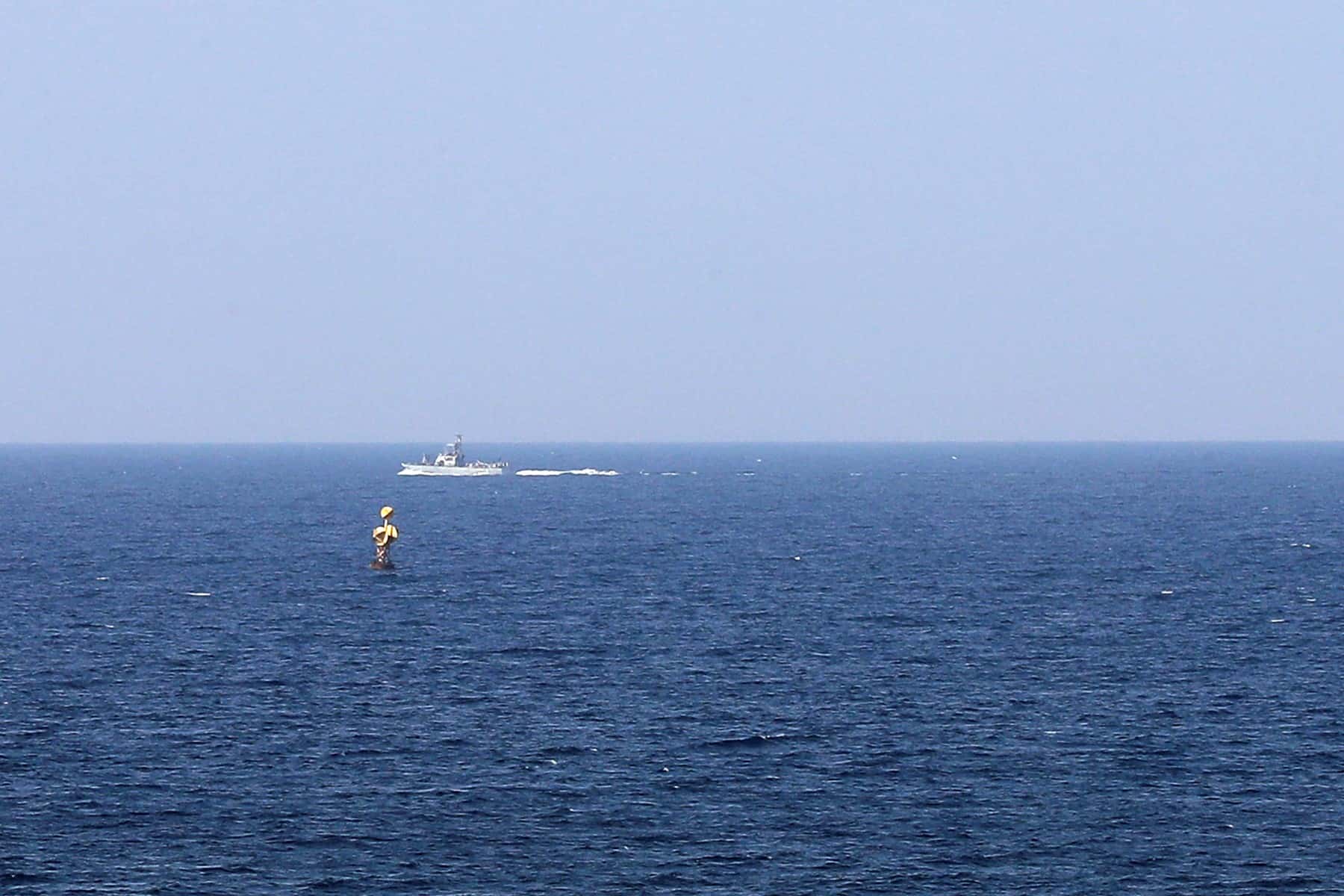

Beirut, Lebanon—Lebanon approved a US-brokered maritime border deal with Israel on Thursday, President Michel Aoun announced, unlocking significant offshore gas production for the eastern Mediterranean neighbors.
It comes after Israeli Prime Minister Yair Lapid on Wednesday said the agreement would make conflict with Lebanon’s Iran-backed militant group Hezbollah less likely.
“I announce the approval by Lebanon of the final version prepared by the American mediator to delineate the southern maritime border,” the Lebanese president said in a televised speech.
Aoun described the deal as an “historic achievement”, adding Lebanon was “able to recover a disputed area of 860 square kilometres (330 square miles)”.
“Lebanon did not concede a single square kilometre to Israel,” he said, adding that his country had seized full control over the Qana field, despite parts of it falling within Israel’s territorial waters.
“This indirect agreement responds to the Lebanese claims and fully preserves our rights,” he said.
He stressed that “no normalisation with Israel took place”.
The agreement between the countries that have remained technically at war since Israel’s creation in 1948 was earlier applauded by world leaders, including US President Joe Biden.
The deal had faced hurdles, with a major source of friction being the Karish gas field, which Israel insisted fell entirely within its waters and was not a subject of negotiation.
Lebanon reportedly claimed part of the field and Hezbollah, which holds huge sway in Lebanon, threatened attacks if Israel began production at Karish.
But Hezbollah said on Tuesday it would back the agreement if the Lebanese government officially endorsed it.