
Thousands of Tunisians protested on Sunday, hours after President Kais Saied officially replaced a judicial watchdog and gave himself powers to sack judges and ban them from going on strike.
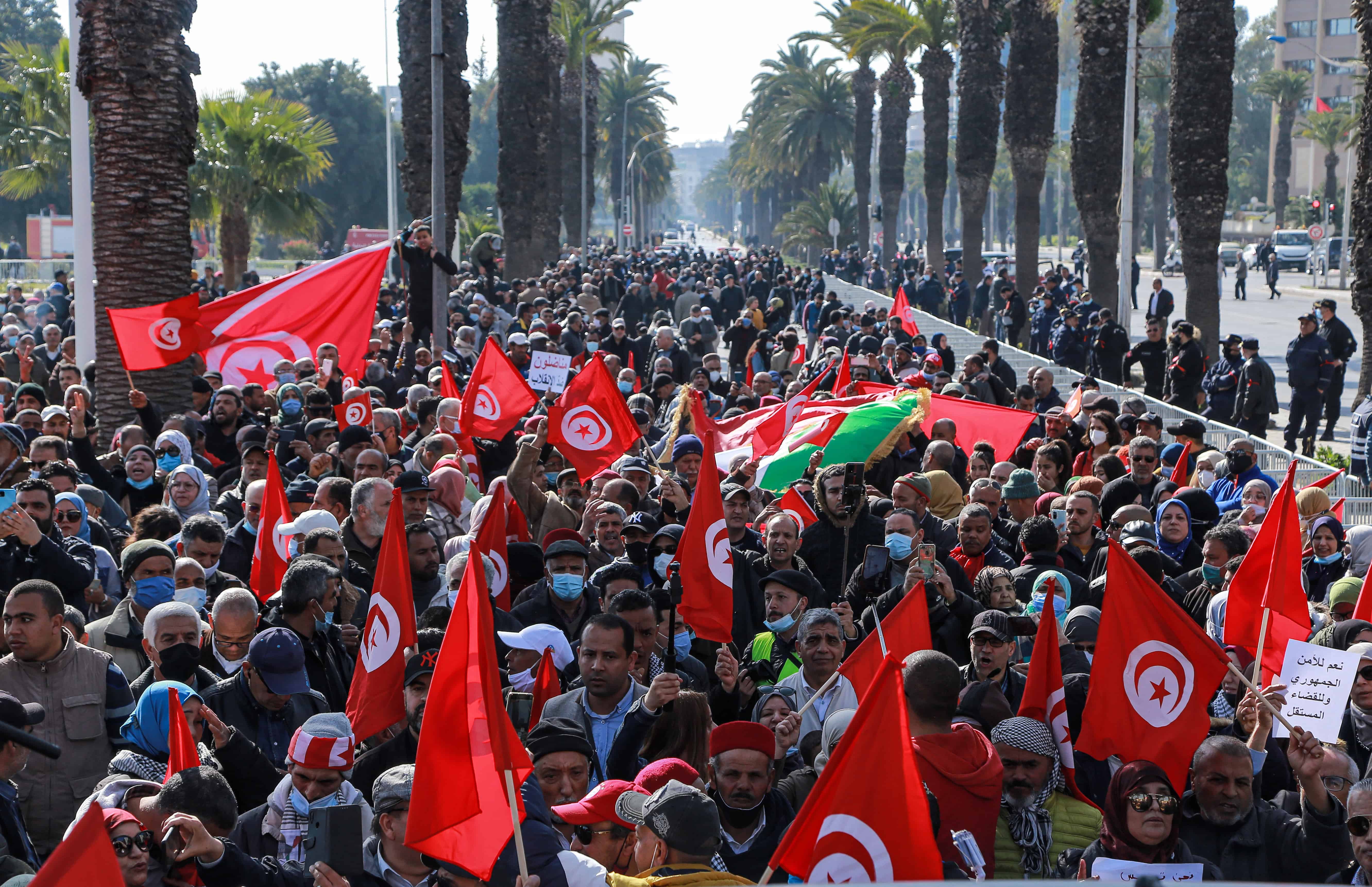
Hours after the decree was published early Sunday morning, more than 2,000 protesters gathered in central Tunis, many waving flags and chanting slogans in support of an independent judiciary.
“Freedom! Freedom! The police state is finished,” some chanted.
Saied’s decree came a week after he said he would dissolve the High Judicial Council (CSM), prompting a nationwide shutdown of courts by judges saying the move would infringe on judicial independence.
Sunday’s ruling, establishing a new 21-member “Temporary Supreme Judicial Council” — nine of whom are appointed by the president — also gives him powers to dismiss “any judge failing to do his professional duties”.
Moreover, “it is forbidden for judges of all ranks to go on strike or hold any organized collective action that could disturb or delay the normal working of the courts”, it read.
Saied last July sacked the government, suspended parliament and seized a range of powers before moving to rule by decree, sparking fears for what had been seen as the only democracy to emerge from the Arab Spring uprisings.
Saied had long accused the CSM of blocking politically sensitive investigations and being influenced by his nemesis, the Islamist-inspired Ennahdha party.
He has insisted he has no intention of interfering with the judiciary, but rights groups and world powers have criticized his move.
The International Commission of Jurists said Sunday that the decree “consolidates power in the hands of the President/executive and effectively ends any semblance of judicial independence” in Tunisia.
“It brings Tunisia back to its darkest days, when judges were transferred and dismissed on the basis of executive whim,” the commission said.
On Thursday, the CSM said in a statement that it “totally rejects the use of decrees to infringe on the constitutional structure of the judiciary” and that any alternative would have no legal basis.
Saied’s July power grab was welcomed by many Tunisians tired of political parties seen as corrupt and self-serving, but his critics accuse him of moving the country back towards autocracy.