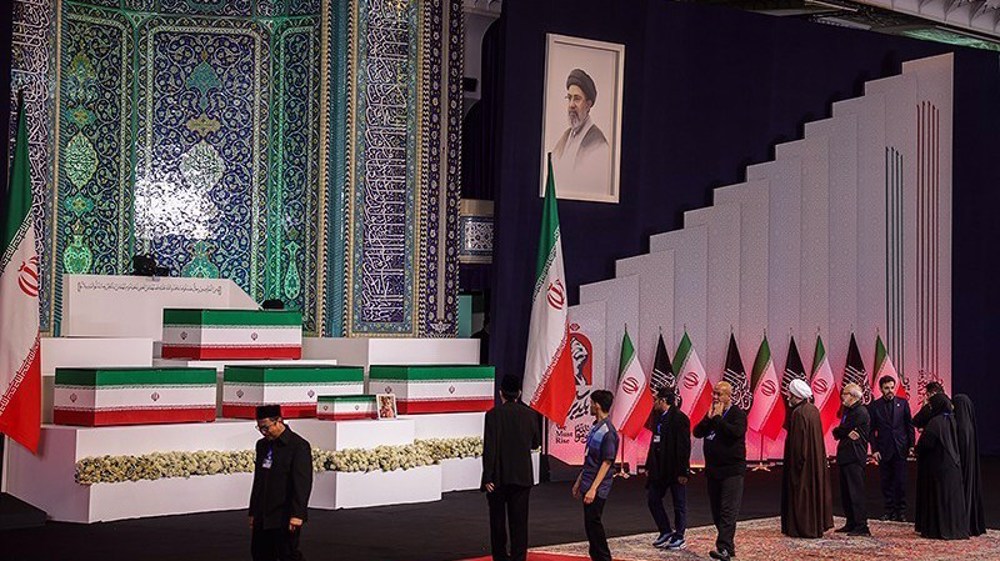

Dubai, UAE — Iran on Friday began funeral ceremonies for slain Supreme Leader Ayatollah Ali Khamenei, with his body arriving at Tehran’s Grand Mosalla religious complex ahead of what authorities expect will be one of the largest state funerals in the country’s history.
State media showed Khamenei’s coffin arriving at the sprawling prayer complex, where he will lie in state before a three-day period of public mourning culminating in his funeral on Saturday. Officials estimate that between 15 million and 20 million people could participate in the ceremonies across Tehran.
The funeral comes after Khamenei was killed in US-Israeli strikes on the first day of the Iran war, and follows a fragile ceasefire that has paused weeks of hostilities between Tehran, Washington and Israel.
Foreign dignitaries from various countries paid their respects to the assassinated leader.
Massive turnout expected
Iranian authorities have mobilised extensive security and logistical preparations ahead of the ceremonies, with roads around central Tehran closed and mourning banners draped across the capital.
Parliament Speaker Mohammad Bagher Ghalibaf urged Iranians to attend in large numbers, describing the funeral as a demonstration of national resolve after Khamenei’s death.
Several foreign delegations are expected to attend, including Pakistani Prime Minister Shehbaz Sharif, while China, Afghanistan and several neighbouring countries have also announced they will send representatives.
New IRGC chief appears publicly
Brigadier General Ahmad Vahidi, the newly appointed commander of the Islamic Revolutionary Guard Corps (IRGC), made his first public appearance since before the war by attending a mourning ceremony on Thursday night.
Iranian state media published images of Vahidi paying his respects beside Khamenei’s coffin after weeks out of public view. His appearance comes as he assumes a central role in Iran’s post-war military leadership and amid reports that he is closely involved in shaping Tehran’s negotiating position following the ceasefire.
Diplomacy to resume
The funeral ceremonies take place as Iran and the United States prepare to resume indirect negotiations following last week’s preliminary ceasefire agreement.
Iranian officials have repeatedly warned the US and Israel against any renewed military action during the mourning period, while insisting Tehran will continue pursuing diplomacy from a position of strength after the funeral concludes.