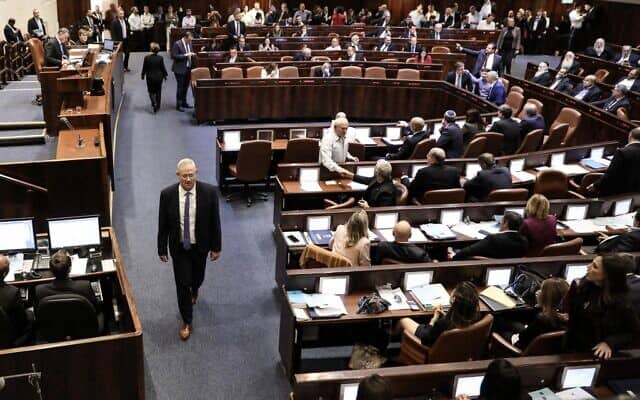

Members of Prime Minister Naftali Bennett’s outgoing coalition and the opposition led by ex-premier Benjamin Netanyahu have been sparring in Israel’s parliament, the Knesset, since last week over a dissolution bill.
The coalition said it wanted quick approval of the law after Bennett announced last week that his year-old, ideologically divided eight-party alliance was no longer tenable.
But Netanyahu and his allies have been holding talks seeking to form a new Netanyahu-led government within the current parliament, which would avert new elections.
The sides have traded legislative jabs but finally agreed late Monday to advance a bill that would be finalized as law by the end of Wednesday.
The opposition’s readiness to dissolve parliament suggested that Netanyahu’s efforts to form a new government had stalled.
Early Tuesday, the Knesset House committee approved the bill. It was then brought to the plenum for its first reading, which it passed 53-0.
According to the bill, parliament would dissolve, with new elections to be held on October 25 or November 1, with the date to be set after further negotiations.
The bill must then be approved in two further full Knesset votes.
At midnight after the bill’s secures final approval, Bennett will hand power to Foreign Minister Yair Lapid, in accordance with the power-sharing deal they agreed following inconclusive elections last year.
The Bennett coalition, a motley alliance of religious nationalists, secular hawks, centrists, doves and Arab Islamists, was imperiled by its ideological divides from its outset.
The final straw, according to the premier, was a failure to renew a measure that ensures Jewish settlers in the occupied West Bank live under Israeli law.
Bennett, the former head of a settler lobby group, said the measure’s expiration on June 30 would have brought security risks and “constitutional chaos”.
Dissolving parliament before the expiration date means the so-called West Bank law will remain in force until a new government takes office.