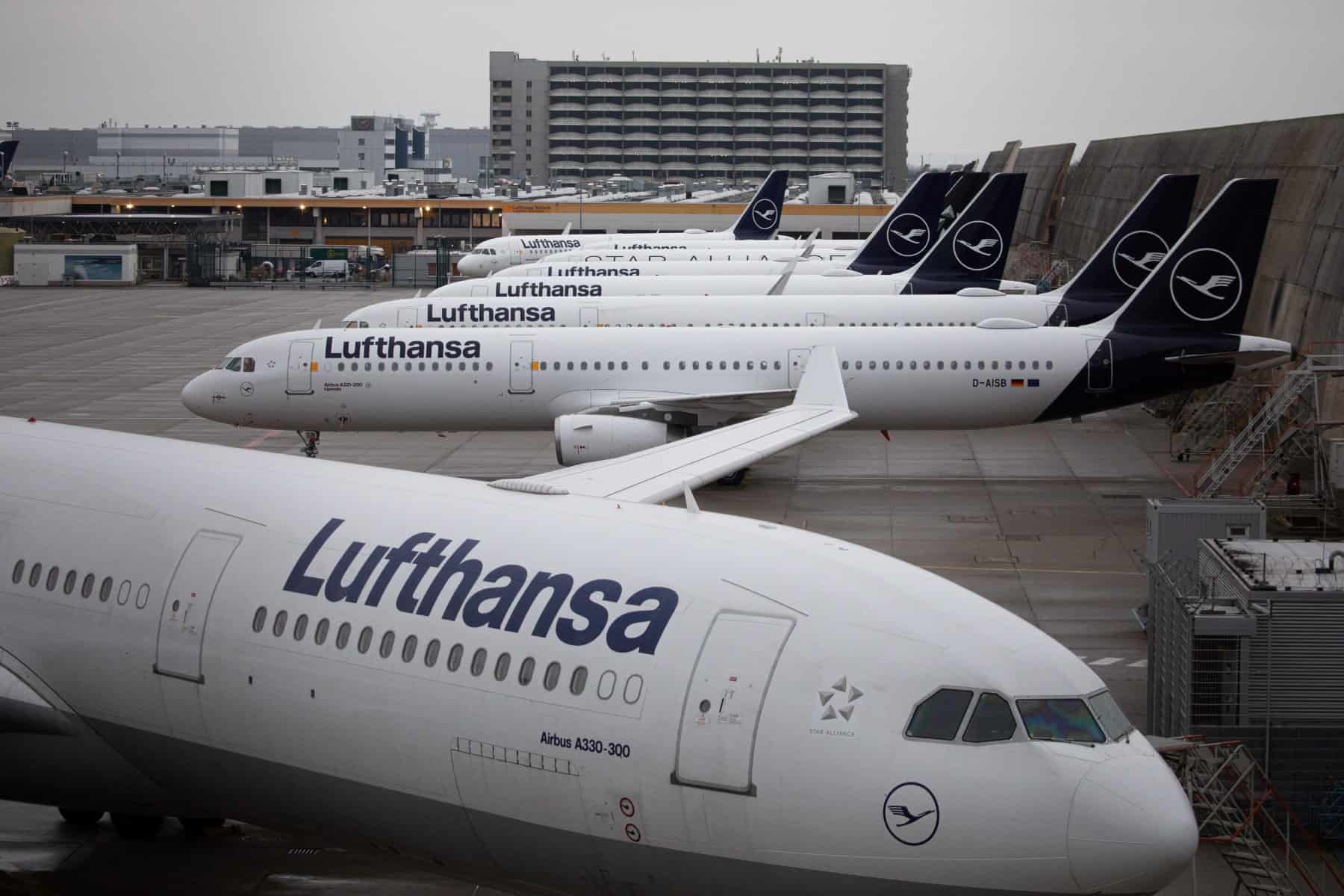

Frankfurt, Germany — Lufthansa said Tuesday it had ordered 40 planes from Boeing and 40 from Airbus for around $9 billion, as the German airline giant modernizes its fleet.
The Boeing aircraft are of the 737-8 MAX model, while the Airbus planes are A220-300s, Lufthansa said in a statement.
“We are accelerating the largest fleet modernisation in our company’s history,” said Lufthansa board member Detlef Kayser.
The Airbus planes are intended to be used by Lufthansa’s new regional carrier, City Airlines, which is due to start operating in summer 2024.
The aircraft, the first of which will be delivered in 2026, will be deployed on short-haul routes from Frankfurt and Munich.
The Boeing aircraft can be used on short- and medium-haul routes, with the first to be delivered in 2027. No final decision has been made about which of the Lufthansa Group’s airlines will use the planes.
The group’s carriers include Lufthansa, Eurowings, Austrian, Swiss and Brussels Airlines.
The new aircraft will be quieter and more comfortable, and will emit up to 30 percent less carbon dioxide than their predecessors, Kayser said.
Lufthansa aims to halve its net carbon emissions by 2030 compared to 2019, and to go carbon neutral by 2050.
The aviation sector, however, is among the toughest to decarbonise and is pinning its hopes on sustainable aviation fuel (SAF) — a biofuel that produces lower carbon emissions than traditional jet fuel but is currently more expensive to produce.
Lufthansa had to be bailed out by the German government when the coronavirus pandemic closed down air travel, but it has bounced back strongly.
In November, the group reported a surge in third-quarter profits after a strong summer travel season, and said it expected the boom to continue in the months ahead.