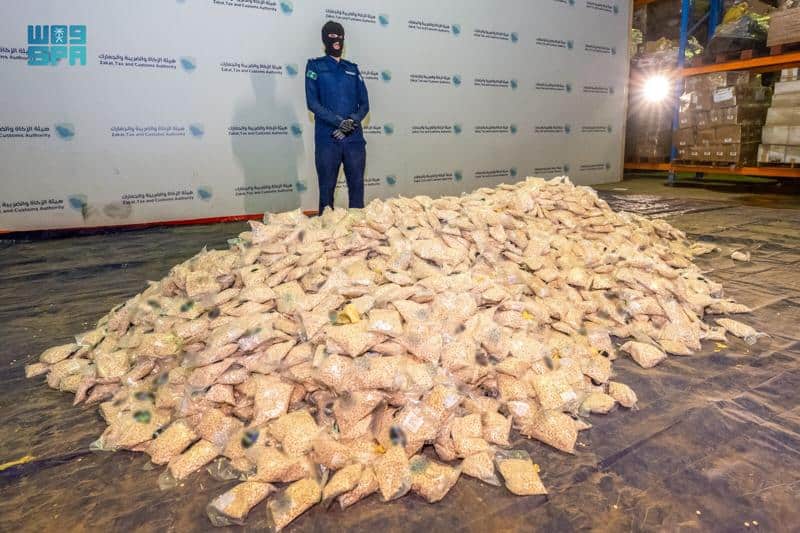

Riyadh, Saudi Arabia — Saudi customs authority foiled an attempt to smuggle more than 4 million tablets of captagon through the Al-Bat-ha land inlet, SPA reported Friday.
In a statement, the authority said that as many as 4,152,000 tablets of drugs were found hidden in a consignment shipped into the kingdom via the land port. Three persons were arrested on charges of smuggling the tablets.
On Tuesday, Saudi Arabia announced the seizure of more than 12 million amphetamine pills hidden in a shipment of pomegranate fruit, amid a crackdown on the widely used captagon drug.
Authorities thwarted “an attempt to smuggle 12,729,000 tablets of amphetamine” concealed in the shipment passing through the Jeddah port, local media reported.
Four people were arrested in connection with the case — two Egyptians, one Syrian and one Yemeni national, reports said.
Saudi Arabia regularly announces seizures of amphetamine pills without specifying whether they are captagon.
The oil-rich Gulf state is believed to be the largest market for the drug.
The vast majority of the region’s captagon, which derives its name from a once legal drug use to combat narcolepsy, is produced in Syria and Lebanon and smuggled to its main consumer market in the Gulf.
An AFP investigation in November found that Syria has become a narco state with the $10 billion industry in captagon dwarfing all other exports and funding both President Bashar al-Assad and many of his enemies.
The European Union on Monday imposed sanctions on cousins of Assad for captagon trafficking, a key source of income for the regime, following Western allies the United States and Britain.
Saudi Arabia cut ties with Syria in 2012 but has moved to restore them this year, welcoming Assad’s top diplomat Faisal Mekdad for a visit on April 13 and dispatching Saudi Foreign Minister Prince Faisal bin Farhan to Damascus less than a week later.
Following their April 13 meeting, a joint statement said the two sides “stressed the importance of enhancing security and combating terrorism in all its forms and enhancing cooperation in combating drug smuggling and trafficking.”