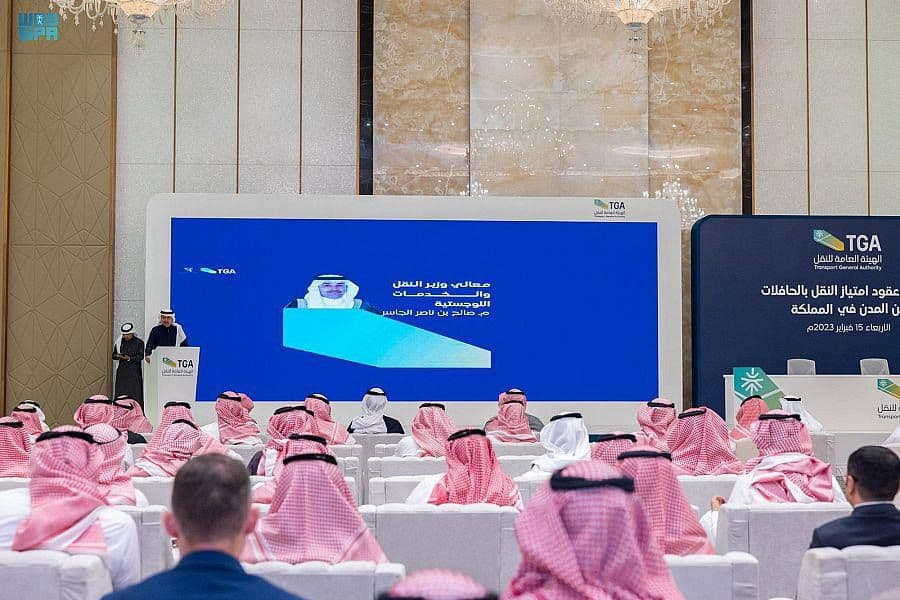

Riyadh, Saudi Arabia—Saudi Arabia’s Transport General Authority has signed the largest project for transporting passengers by buses through a network covering more than 200 cities and governorates.
The network is expected to serve more than 6 million passengers annually through 76 routes, with a new fleet of buses equipped with the latest technologies that allow the use of environmentally friendly vehicles.
Saleh bin Nasser Al-Jasser, Minister of Transport and Logistics Services and Chairman of the Board of Directors of the Transport General Authority, said three contracts were signed for intercity transportation projects with the participation of major global alliances aimed at finding and providing advanced quality bus services between the kingdom’s cities.
He stressed that the project will serve several other sectors, including supporting tourism development and the transportation movement and contribute to enhancing economic diversification and consolidating partnerships with the private sector.
The National Strategy for Transport and Logistics Services aims to increase the share of using public transportation in the Kingdom from 1 percent to 15 percent by 2030.
The project will also contribute to translating one of the most important objectives of the strategy, which establishes the quality of life in cities among its priorities, by reducing the percentage of carbon emissions for transportation to reach 25 percent by 2030.