
The UAE and France held discussions on energy challenges and opportunities for collaboration in order to maximize energy system efficiency and the deployment of low carbon technologies to support their net zero by 2050 ambitions.
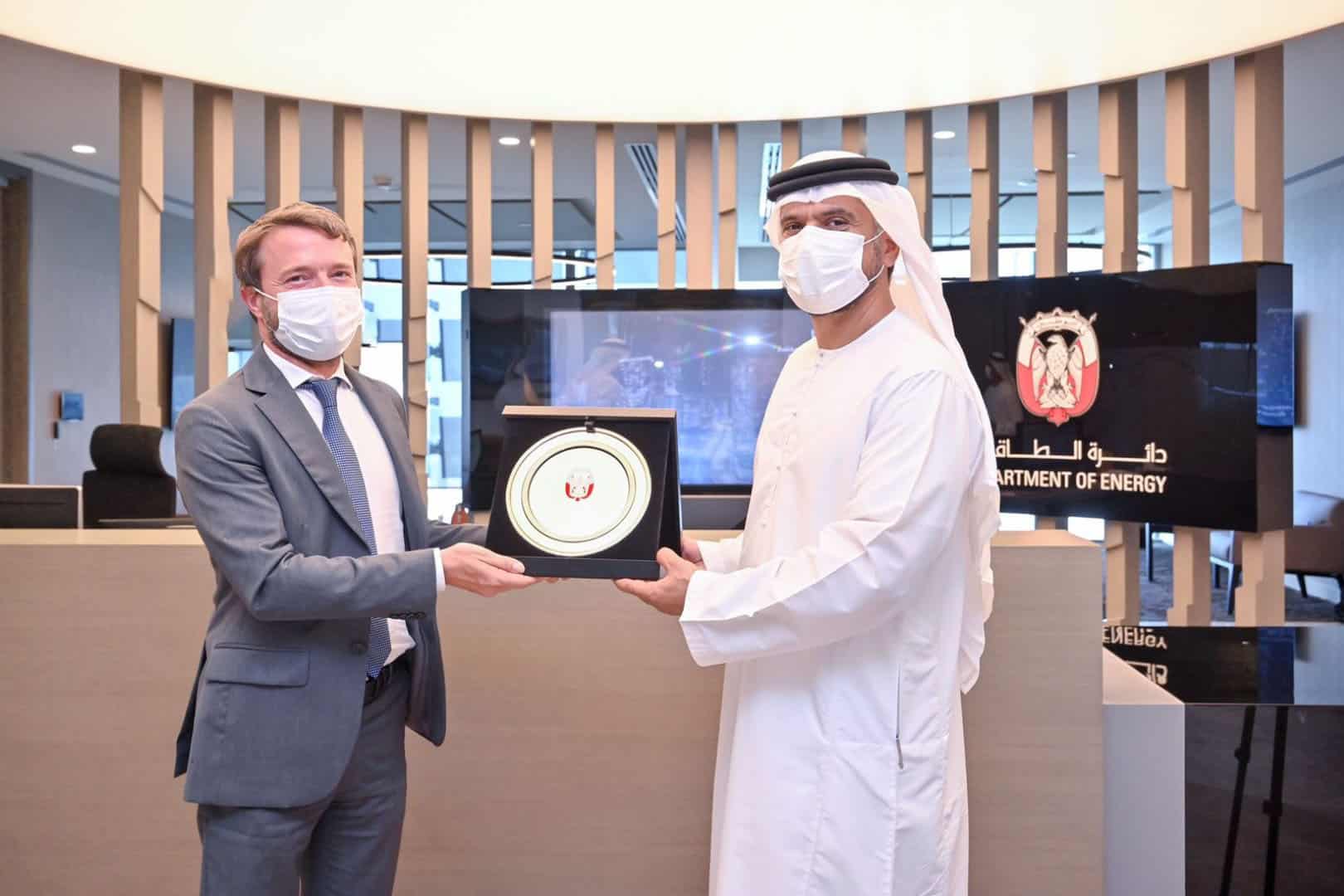
The discussion took place between Awaidha Al Marar, Chairman of the Abu Dhabi Department of Energy, and Xavier Chattel, Ambassador of France.
Al Marar and Chattel underlined the importance of leveraging partnerships, Research & Development, and policymaking capabilities to advance Abu Dhabi and France’s collaboration on new clean renewable energy carriers like green hydrogen and innovative nuclear energy technologies and new designs, such as small modular reactors, which are scientifically proven as viable zero-emission power generation solutions.
With the perspective of the upcoming UN Climate Change Conference COP28, which will be hosted in Abu Dhabi in 2023, the two parties acknowledged their mutual interest in building stronger clean energy and technology cooperation between Abu Dhabi and French private and public companies to achieve the objectives set forth by the 2015 Paris Agreement on Climate Change and the two countries’ shared aspirations for net zero by 2050.