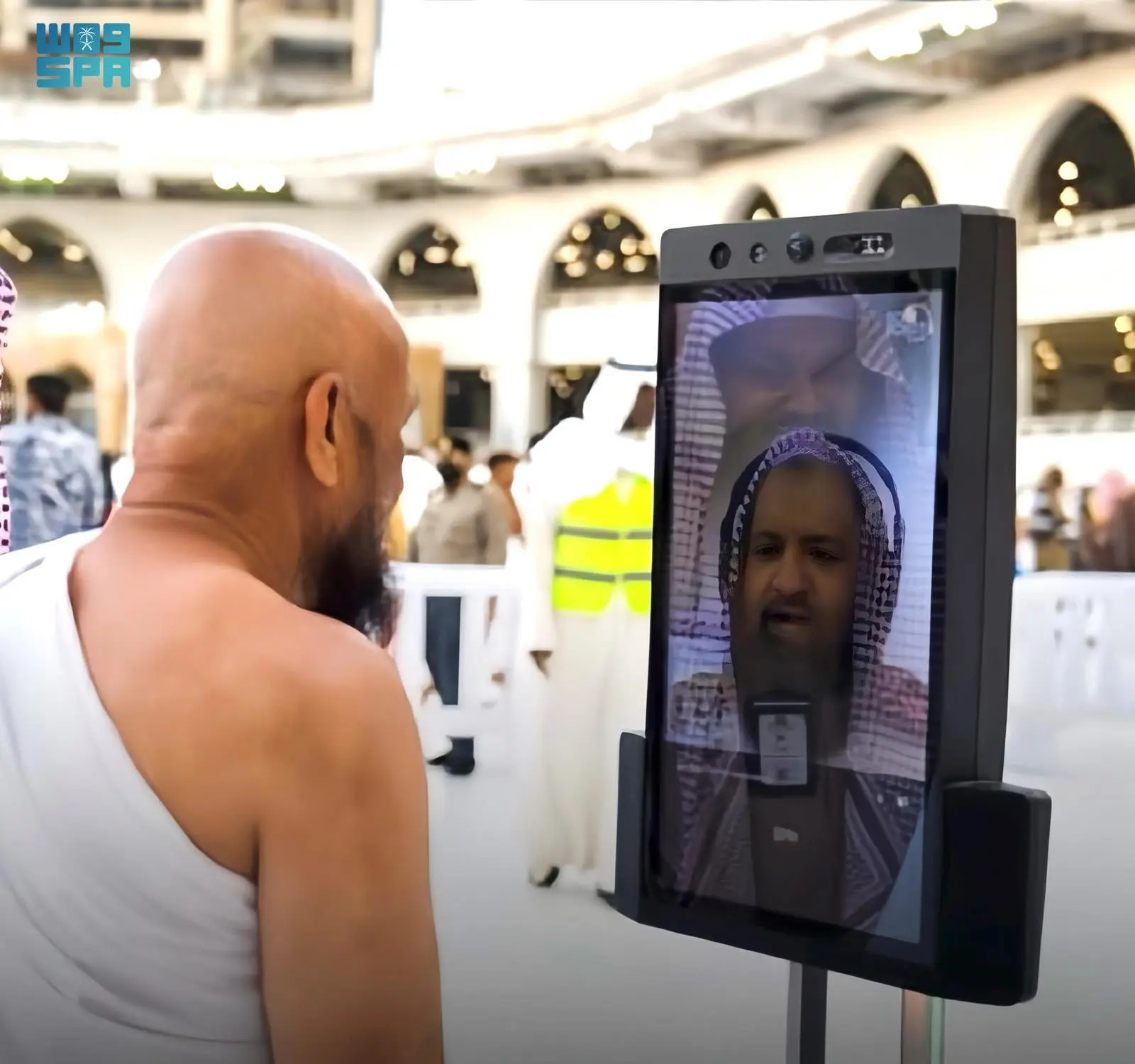

Makkah, Saudi Arabia — The Presidency of Religious Affairs at the Grand Mosque and the Prophet’s Mosque has deployed AI-operated robots to assist worshippers and visitors at the Grand Mosque in Makkah.
The robots provide information and guidance on a variety of topics, including how to perform the Hajj and Umrah rituals, Islamic rulings and fatwas, directions to different locations within the mosque, and translations in multiple languages.
Each robot is equipped with a touchscreen display, a high-definition camera, and a powerful speaker system. It can also connect to the internet via Wi-Fi, thus able to access real-time information, in 11 languages: Arabic, English, French, Russian, Persian, Turkish, Malay, Urdu, Chinese, Bengali, and Hausa.
During the 2021 Hajj, the second to be staged under the shadow of the Covid pandemic, Saudi authorities rolled out electronic “hajj cards” allowing contactless access to religious sites, accommodation and transport.
The plastic cards are available in green, red, yellow and blue. The colors correspond to markings on the ground guiding pilgrims through the different stages of the hajj.
The digital system also allows the authorities to guide the tens of thousands who attend the annual event, which in years past has at times been marred by deadly stampedes and accidents.
Read full story here: Smart cards and robots: Saudi Arabia’s ‘digital hajj’
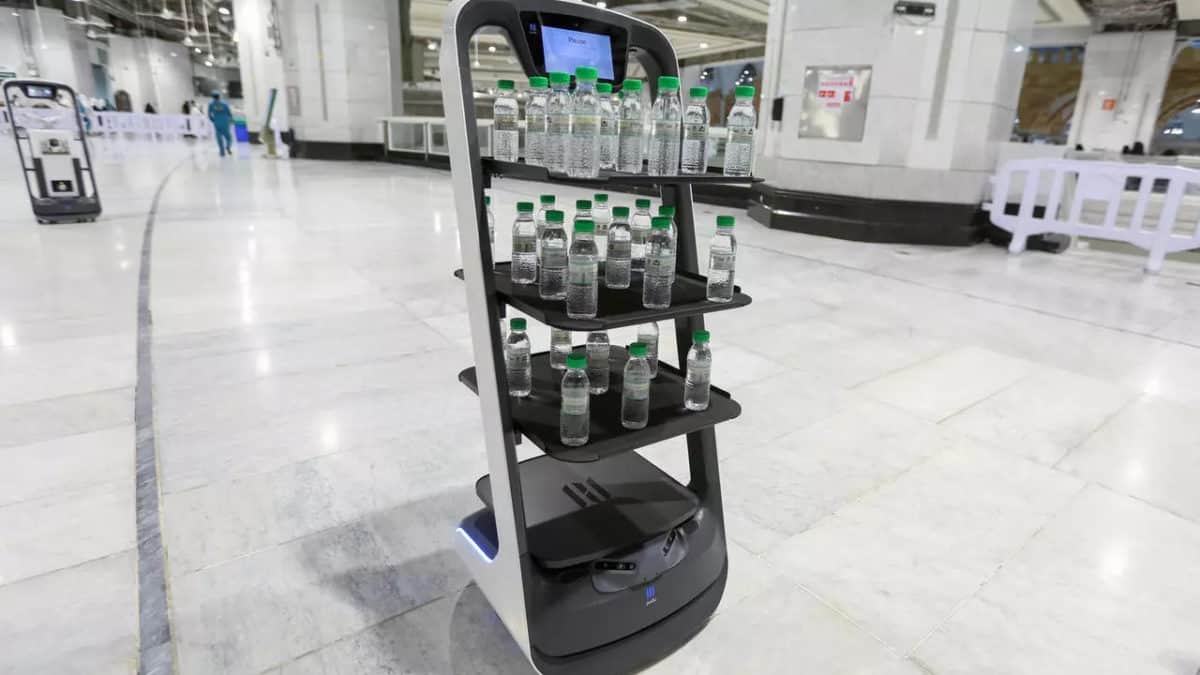
Also, hoping to reduce the threat of outbreak of Covid-19 at Islam’s holiest site in Mecca during the Hajj, the Saudi government deployed a raft of robots with bottles of sacred water to give away to worshippers.