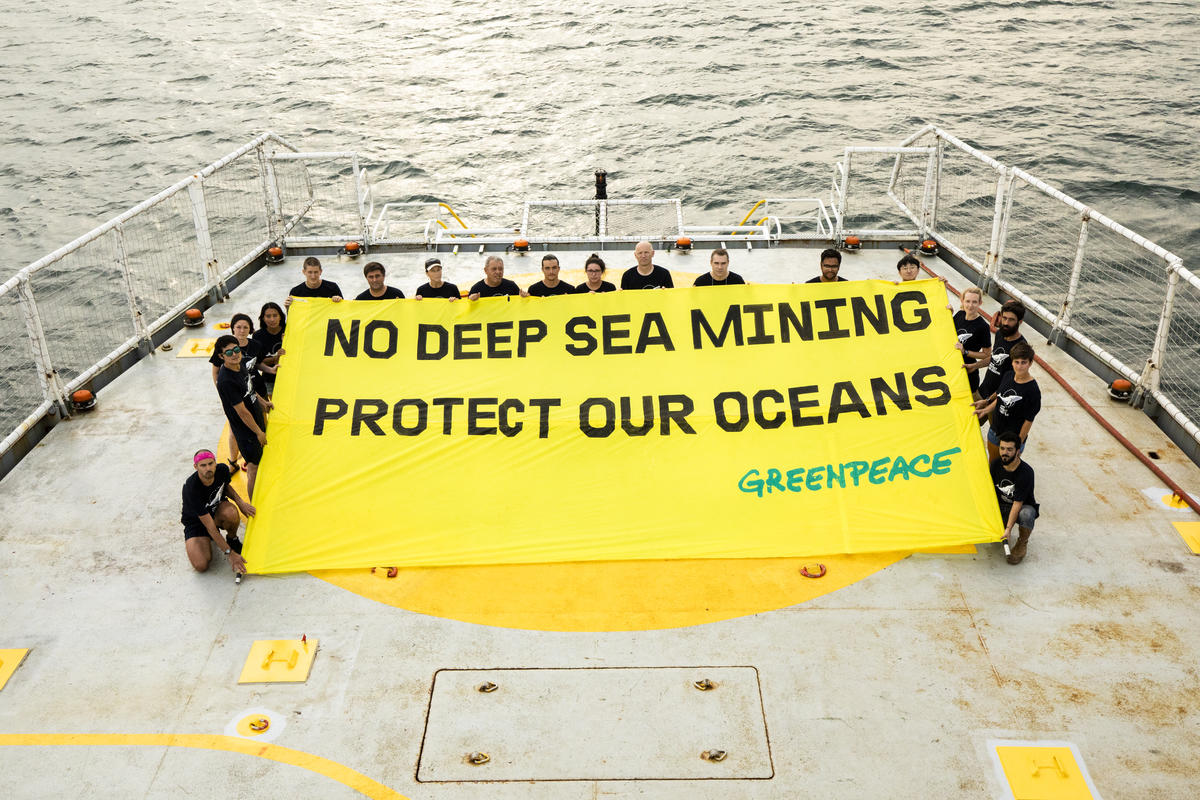

United Nations, United States–The International Seabed Authority’s member nations on Friday agreed on a two-year roadmap for the adoption of deep sea mining regulations, despite conservationists’ calls for a moratorium on mineral extraction they say would avert marine threats.
The ISA, an intergovernmental body tasked with protecting the seabed, and its member states have spent the last decade trying to hash out a mining code for the possible exploitation of nickel, cobalt and copper in deep seabed areas that fall outside of national jurisdictions.
But an agreement has so far been elusive.
In Friday’s decision, the ISA Council, which had been negotiating in Jamaica for the past two weeks, said it “intends to continue the elaboration” of regulations “with a view to their adoption at the 30th session of the Authority” in 2025.
“This is an indicative target,” rather than a deadline, said council chairman Juan Jose Gonzalez Mijares.
Since July 9, after the expiration of a deadline triggered by the small Pacific state of Nauru in 2021, the ISA is obligated to consider — though not necessarily grant — licenses for potentially environmentally devastating mining operations if governments request them.
That would go beyond the status quo, which has so far only seen the body grant exploration permits, as the deep sea mining sector itches to take off in earnest.
“We are no longer in a ‘what if’ scenario, but rather ‘what now’,” Nauru’s ambassador to the ISA Margo Deiye said during the session, adding that her government planned to soon apply for a mining contract .
But ocean campaigners remain worried about a possible green light for industrial exploitation of the high seas, with the ISA yet to have agreed on a process for reviewing license applications.
“This roadmap negotiated behind closed doors does not reflect the rapidly growing concern and opposition to deep sea mining,” said Sofia Tsenikli, speaking on behalf of the Deep Sea Conservation Coalition, Greenpeace and WWF, among other advocates.
“A mining application could be made at any time. A moratorium is urgently needed,” she added.
Next week, the ISA Assembly and its 167 member states will discuss for the first time a “precautionary pause” in mining, supported by about 20 countries, including France, Chile and Brazil.
NGOs and scientists say that deep sea mining could destroy habitats and species that may still be unknown but are potentially vital to ecosystems.
They also say it risks disrupting the ocean’s capacity to absorb carbon dioxide emitted by human activities, and that its noise interferes with the communication of species such as whales.