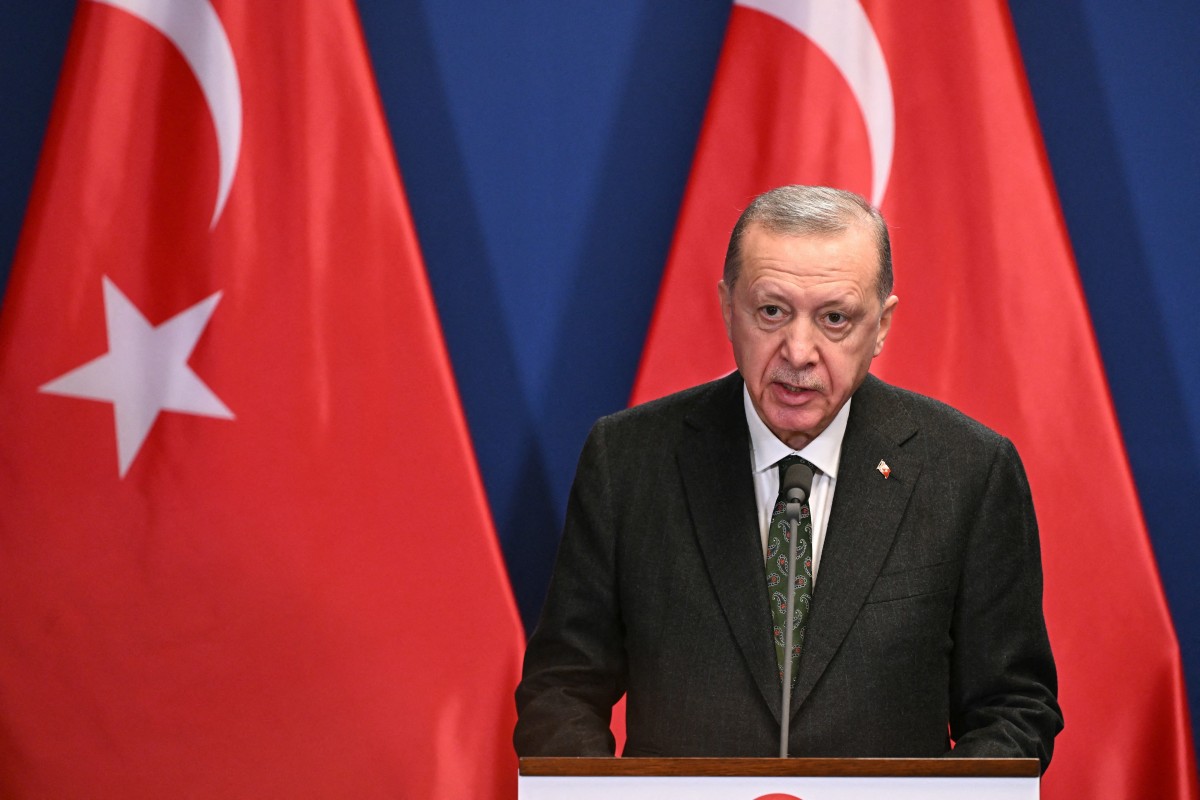

Istanbul, Turkey– Turkey’s President Recep Tayyip Erdogan on Friday said that the country’s March local elections would be his last, suggesting an end to his more than two decades in power.
It was the first time that Erdogan, who has been in power since 2003, has spoken about leaving office.
“I am working non-stop. We’re running around breathlessly because for me, it’s a final,” said the president at a meeting of the TUGVA young Turks foundation.
“With the authority that the law confers on me, this election is my last election.”
The 70-year-old leader expressed confidence that his conservative Justice and Development (AKP) party would nonetheless remain in power even after he has left office.
He said that the results of the March 31 local elections would be “a blessing for the brothers who come after me. There will be a transfer of confidence”.
The AKP is hoping to regain the mayorship of Istanbul in the elections later this month, having seen it taken by the opposition in 2019.
Erdogan was himself mayor of Istanbul from 1994 to 1998.
He was then elected prime minister in 2003 when the premier was the dominant figure in Turkish politics.
That changed when Erdogan was elected president in 2014, following three terms as prime minister.
A constitutional change in 2017 then turned Turkey from a parliamentary system into an executive presidency, abolishing the position of prime minister and ensuring that Erdogan’s grip on power remained unchanged.
Further election successes in 2018 and last year have meant that Erdogan’s often controversial rule has extended into a third decade.
Internet users were quick to pour scorn on Erdogan’s claim to be nearing the end of his political hegemony.
“Don’t believe it,” human rights activist Ercan Ozcan wrote on X, formerly Twitter.
“We know he tries to modify the constitution to ensure his re-election again and again.”
Erdogan has built up a reputation as an unbeatable leader since his AKP party came to power in 2002.
However, his drawing power has waned a little in recent years.
His candidates for the mayorship in Istanbul — the country’s economic hub — and the capital Ankara were both beaten in 2019.
And last May in the presidential election, he was taken to a second-round run-off for the first time.