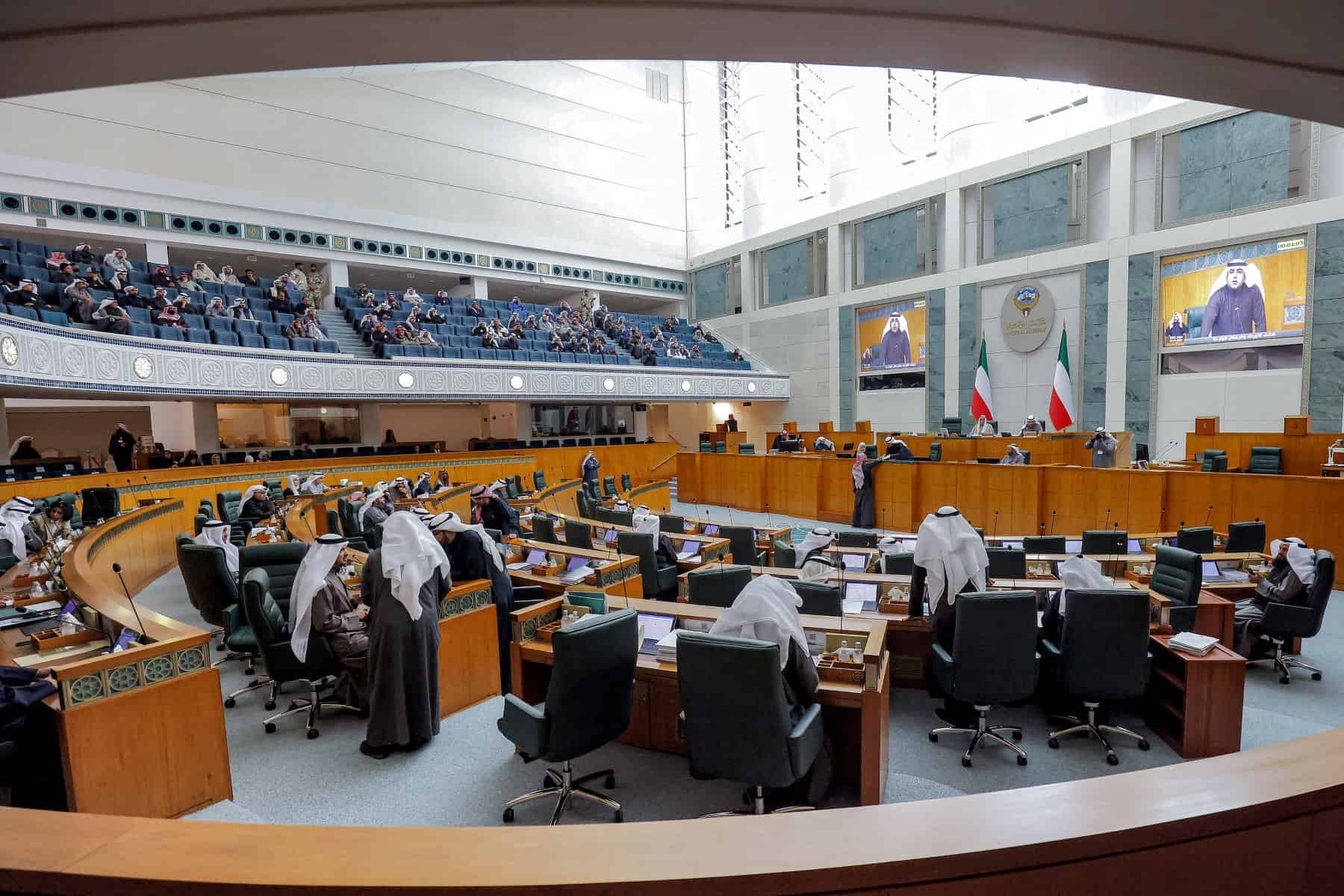

Kuwait’s emir approved a new cabinet Sunday two days after he dissolved the parliament elected only weeks earlier, and he and the new government assumed some of the assembly’s powers.
Sheikh Meshal al-Ahmed al-Sabah on Friday dissolved the most powerful elected legislature in the Gulf and suspended articles of the constitution, citing “interference” by lawmakers.
The new government — the small emirate’s 46th — is headed by Prime Minister Sheikh Ahmed al-Abdullah al-Sabah and comprises 13 ministers, two of them women.
Emad al al-Atiqi, Anwar Ali al-Mudhaf and Abdullah Ali al-Yahya retained their posts as oil, finance and foreign ministers respectively, according to the decree from the Emir of Kuwait Sheikh Mishal Al-Ahmad Al-Jaber Al-Sabah.
The former oil minister was tasked with forming the government last month, two weeks after the now-dissolved National Assembly was elected.
The outgoing premier, Sheikh Mohammad Sabah al-Salem al-Sabah, had refused to take up the post again amid ongoing tensions between the government and the 50-member National Assembly.
Kuwait’s Islamist-dominated opposition again dominated the most recent election in early April, maintaining their years-long hold over parliament which has been in a constant tug-of-war with the government and ruling family.
MPs have previously accused ministers of corruption, while the government has accused the legislature of hampering development plans.
Constant wrangling between lawmakers and executive authorities has resulted in a persistent stalemate in the oil-rich Gulf state, delaying much-needed reforms.
The decision to dissolve parliament is his second such move in a reign that is just months old.
Sheikh Meshal assumed the role of emir in December following the death of his predecessor and half-brother, Sheikh Nawaf al-Ahmed al-Jaber al-Sabah.