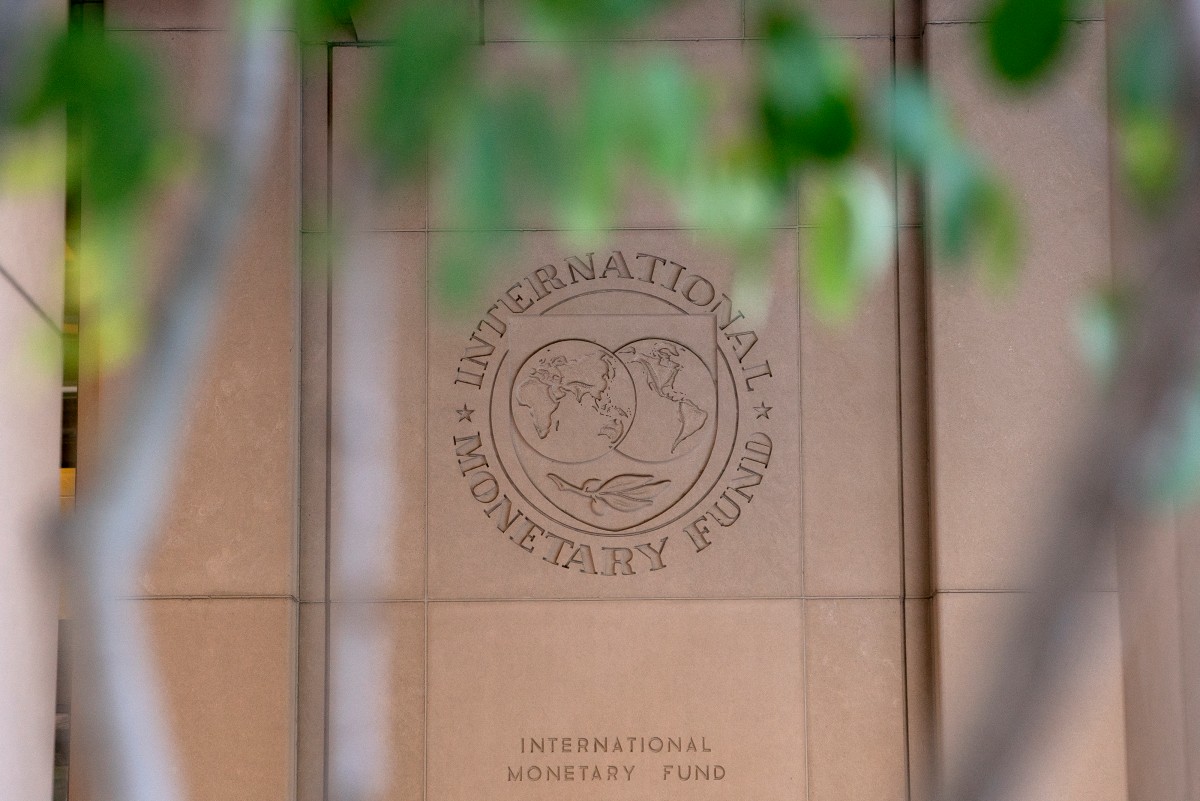

Dubai, United Arab Emirates — The International Monetary Fund revised its 2025 economic forecasts downwards for the Middle East and North Africa on Thursday, with trade tensions and increased uncertainty expected to weigh on growth.
“Growth is still projected to increase in 2025 and 2026, but at a considerably slower pace than anticipated last October,” the IMF said in its regional report published Thursday.
The lender lowered growth projections from 4 percent to 2.6 percent for 2025, and from 4.2 percent to 3.4 percent for 2026.
The revision reflects “spillovers from global trade tensions and high global uncertainty, a more gradual recovery in oil production, the lingering effects from conflicts in the region, and slower-than-expected progress on structural reforms in some countries”, it said.
Tariffs put in place by US President Donald Trump, however, are not expected to have a direct impact on the region.
“Economic integration between countries in the region and the United States is limited”, and the energy sector has been spared from the tariffs, Jihad Azour, director of the IMF for the Middle East and Central Asia, told AFP.
But uncertainty weighs worldwide on investment prospects, financial markets and oil prices, amplifying a downturn, he said.
In 2024, average growth in the region slowed to 1.8 percent — from 2.1 percent the year before — due to “ongoing conflicts and extended voluntary oil production cuts”.
Growth forecasts for 2025 for the region’s oil-exporting countries have been revised down by 1.7 percentage points compared to earlier estimates.
Significant disparities remain between the region’s oil-rich countries, with growth projected at 3 percent this year for Gulf states, while Iraq is expected to see a 1.5 percent decline.
In war-torn Sudan, Yemen and the Palestinian territories, economic prospects are bleak.
“International aid has decreased by about 25 percent since 2021”, a trend likely to accelerate, Azour said.
The IMF has not provided projections for Lebanon, which is still reeling from the effects of a devastating Israel-Hezbollah war and a 7.5 percent economic contraction in 2024.
No estimates were available for Syria, which is emerging from more than a decade of civil war.
Reconstruction could trigger recovery in those countries, but that would require significant funding, Azour said.
“Gulf countries are interested in helping conflict-scarred countries rebuild,” he said, “but it is important that these countries implement the necessary reforms to restore economic and social balance and regain trust”.