

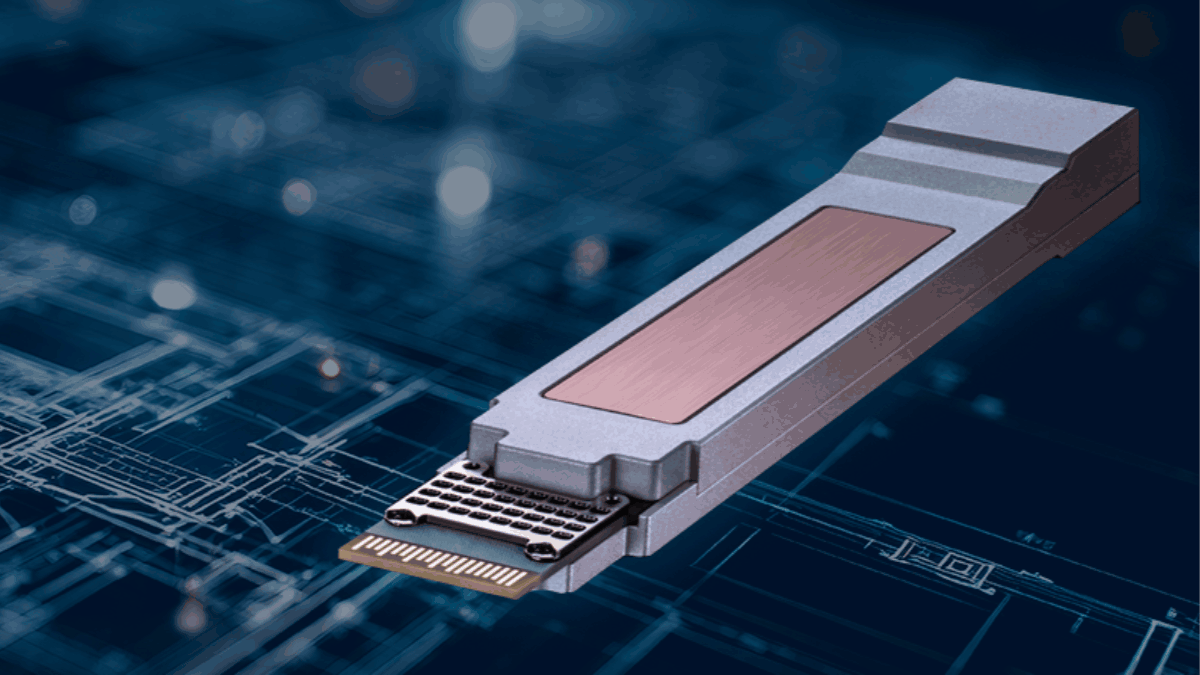

Cisco and Nvidia are collaborating on a high-density optical networking technology designed to help operators scale artificial intelligence infrastructure while reducing power consumption and network costs.
The companies announced plans for Ultra-Dense Small Form Factor Pluggable (USFP), a 400-gigabit-per-second (Gbps)-per-lane optical module aimed at next-generation AI data centres, which require greater computing capacity and faster data connections.
USFP is designed to support a transition from 200Gbps-per-lane to 400Gbps-per-lane Ethernet AI networks without requiring operators to overhaul existing data centre infrastructure.
The companies said the technology would deliver four times the bandwidth and front-panel bandwidth density, alongside approximately 1.3 times the power efficiency of comparable 200Gbps-per-lane pluggable modules.
The design would allow AI infrastructure operators to increase computing capacity within the same network footprint while reducing networking’s share of overall power consumption.
Nvidia and Cisco are working with TE Connectivity and Amphenol to develop USFP cages, connectors and modules, with additional industry partners expected to join the initiative.
The companies plan to establish an open industry specification through a community-led multi-source project, providing suppliers with a common design foundation for developing compatible high-density optical components.
The collaboration builds on their existing work to integrate Nvidia Spectrum-X Ethernet networking with Cisco Silicon One-based Ethernet networks. The companies said the integration was intended to simplify AI infrastructure deployment for enterprises, neocloud providers and sovereign cloud operators.
Gilad Shainer, Nvidia’s senior vice president, said the technology would enable more computing capacity to be connected with greater efficiency, while Cisco’s Bill Gartner said it was designed to increase bandwidth density without compromising the serviceability and flexibility of pluggable optics.