
Dubai, UAE — The United States launched a new wave of military strikes across southern Iran early on Thursday, saying the attacks were retaliation for Iranian missile strikes against U.S. forces in Jordan, ending nearly a week of relative calm and sharply raising the risk of a wider Middle East conflict.
The renewed bombardment came after Washington had paused military operations in the hope of reviving diplomatic contacts with Tehran. Instead, the conflict spread across multiple fronts, with coordinated U.S.-Saudi strikes against Iran-aligned armed groups in Iraq, renewed tensions on Israel’s northern border and fresh confrontation over shipping through the Strait of Hormuz.
U.S. Central Command (CENTCOM) described the operation as a “powerful response” to what it called Iran’s attempted attacks on American forces stationed in the Middle East.
Iranian authorities reported strikes in several southern provinces, including Hormozgan, Khuzestan, Bushehr and Fars, while residents reported explosions on the islands of Qeshm and Kish overlooking the Strait of Hormuz.
Strikes hit southern Iran
CENTCOM said dozens of targets linked to Iran’s Revolutionary Guards were struck, including command centres, missile and drone facilities, coastal surveillance sites and maritime capabilities.
The command said the attacks were intended to reduce threats posed by Iran and its regional allies to U.S. personnel, commercial shipping and Gulf states, adding that more than 50,000 U.S. troops deployed across the region remained on high alert.
Iranian officials said a residential building on Qeshm Island was hit, trapping several members of a family beneath the rubble.
Officials said two injured children were rescued and taken to hospital while emergency workers continued searching for three other relatives.
Authorities also reported temporary electricity outages on Qeshm before power was restored later in the day.
Iranian state media said explosions were also heard near Abadan, Ahvaz, Bandar Abbas and Bushehr, although officials said some reported blasts in Bandar Abbas were echoes from strikes elsewhere rather than direct attacks on the city.
Trump vows tougher response
The strikes followed increasingly forceful warnings from U.S. President Donald Trump after Iran targeted American military facilities in Jordan earlier this week.
“We’ll be hitting them hard… We are going to beat the ‘effing s’ out of them,” Trump said before the operation.
According to U.S. officials, the latest campaign was launched after Iran attempted missile attacks on American forces stationed in Jordan, ending Washington’s short-lived effort to restart negotiations with Tehran.
Earlier this week, Trump had said talks with Iran had been constructive but warned military operations would resume if diplomacy failed.
Iran vows resistance
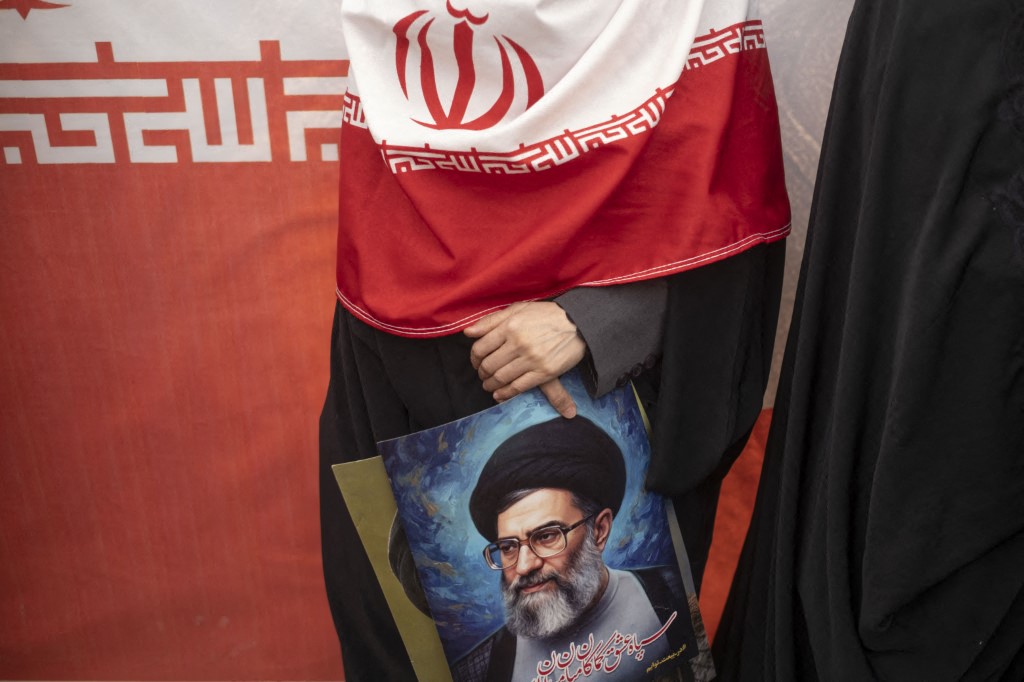
Iran’s Revolutionary Guards said they had targeted U.S. military assets in Jordan and warned that operations would continue.
“As long as the threats against the Islamic Republic of Iran continue… the resistance will continue,” the Guards said.
Iranian media also reported attacks on three commercial tankers approaching the Strait of Hormuz, with Tehran insisting it retained “full control” of the strategic waterway.
The United States simultaneously announced fresh sanctions against companies it accused of helping the Revolutionary Guards extort commercial vessels transiting the strait.
The dispute further heightened concerns over global energy supplies after Iran maintained restrictions on shipping through the narrow channel, through which a significant share of the world’s seaborne oil passes.
Conflict spreads across region
The fighting widened beyond Iran.
The United States and Saudi Arabia carried out joint strikes against Iran-aligned armed groups in Iraq after Riyadh blamed Tehran-backed militias for repeated drone attacks on Saudi oil facilities.
The U.S. military said logistics centres and weapons storage sites were targeted.
Iraq’s Popular Mobilisation Forces (PMF), also known as Hashed al-Shaabi, said at least 20 of its members were killed and condemned the operation as a “dangerous escalation”.
Two PMF officials said five Iranian military advisers were among those killed.
Baghdad denounced the operation as a violation of Iraqi sovereignty, saying it rejected “all acts of aggression” regardless of who carried them out, while pledging to prevent Iraqi territory from being used to threaten neighbouring states.
Trump, however, told Fox News that the operation had been coordinated with the Iraqi government.
The latest violence followed growing U.S. pressure on Baghdad to curb the influence of Iran-backed armed factions operating inside Iraq.
Israel and Lebanon tensions simmer
On Israel’s northern border, the Israeli military accused Lebanon’s Hezbollah movement of launching a drone against an Israeli vehicle, calling the incident “a blatant violation of the ceasefire”.
Israel, which participated in the opening phase of the U.S.-led campaign against Iran earlier this month, has not publicly joined the latest strikes.
The incident nevertheless underscored the risk that multiple fronts across the Middle East could reignite simultaneously, drawing additional regional actors into the conflict.
Oil markets remain on edge
Financial markets remained volatile as investors weighed the prospect of prolonged fighting around one of the world’s most important energy corridors.
Oil prices retreated modestly after surging in the previous session, although Brent crude remained near $90 a barrel as tankers continued sailing despite the expanding conflict.
The closure of the Strait of Hormuz has increased the strategic importance of alternative export routes through the Red Sea and Saudi Arabia’s east-west pipeline network.