
Yemen’s Houthis have resumed attacks on the Red Sea port city of Mocha, killing seven people and wounding 30, according to the Yemeni military.
Four members of the armed forces and three civilians were killed in the attack, the military said in a statement early on Monday.
Air defences intercepted and shot down 11 Houthi drones involved in the attack, the military said.
Footage broadcast by Houthi-affiliated Al Masirah TV showed several ballistic missiles and drones being launched. Houthi military spokesperson Yahya Saree said in a Telegram post that the weapons targeted Saudi troop concentrations and weapons depots.
The Yemeni military said the attacks also targeted residential neighbourhoods in Mocha and civilian infrastructure, as well as armed forces.
Trump says US is ‘low-keying it’ with Iran
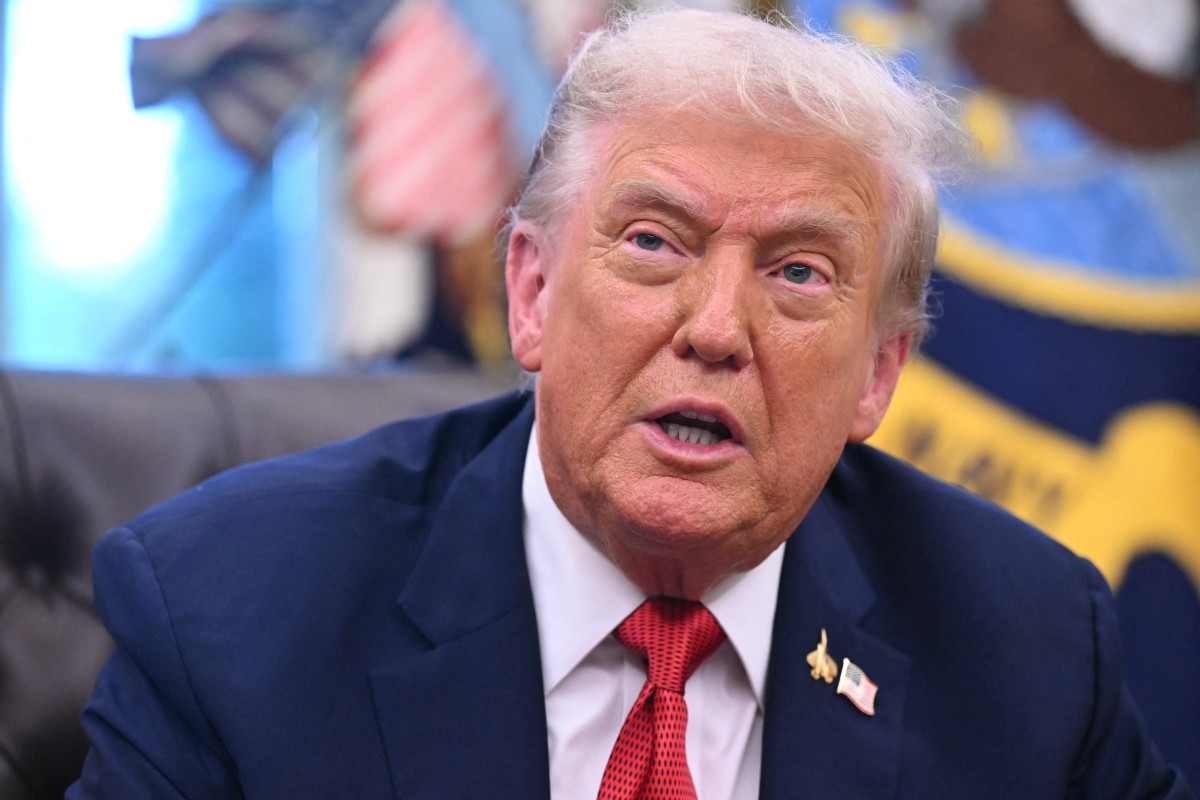
US President Donald Trump said Washington is relying on economic pressure rather than new military strikes to push Iran towards a deal.
“We are low-keying it,” Trump said in an Axios interview on Sunday, describing a more cautious approach after months of conflict. He added that Washington is “only semi-negotiating” with Tehran while monitoring the toll the war has taken on Iran’s economy.
Trump said Iran is in “very bad shape” financially, citing high inflation and difficulty paying its own troops. He credited a US naval blockade, in place since April, with deepening that pressure.
Trump also said falling oil prices, now just above $75 a barrel, had eased the economic impact on American consumers.
“It will work out. It always works out. It’s like a chess game,” he said.
Trump’s remarks came as talks mediated by Oman over reopening the Strait of Hormuz to shipping appeared close to a breakthrough.
Iran’s foreign ministry has said the talks have reached their “final” stages, with Tehran and Muscat nearing agreement on coordinates for a new shipping route through the strategic waterway.
Iran ties Hormuz reopening to US concessions
Iranian Foreign Minister Abbas Araqchi said on Sunday that an agreement with Oman on the Strait of Hormuz was in its “final stages”, but reiterated that Tehran would not reopen the channel unless Washington met certain demands.
Iran said it was nearing a final pact with Oman defining new shipping lanes between the two countries through the strait, but said reopening the waterway depended on US concessions.
Araqchi said the United States would need to pay compensation for damage caused by widespread attacks on Iran.
Tehran has also demanded an end to sanctions and military threats, as well as the lifting of the US naval blockade and a halt to military action.
Iran has stressed that it will not fully reopen the waterway until the United States “corrects its behaviour”.
A ceasefire reached in June collapsed weeks later amid disputes over control of the strait, with fighting subsequently resuming.
Since then, Iran has continued intermittent strikes on US bases in Kuwait, Bahrain and Jordan, while Yemen’s Houthis, aligned with Tehran, declared a separate naval blockade against Saudi Arabia last month.
Recent reporting has also suggested friction between Washington and Israel over the pace of US efforts to wind down fighting on multiple fronts, including Gaza and Lebanon.