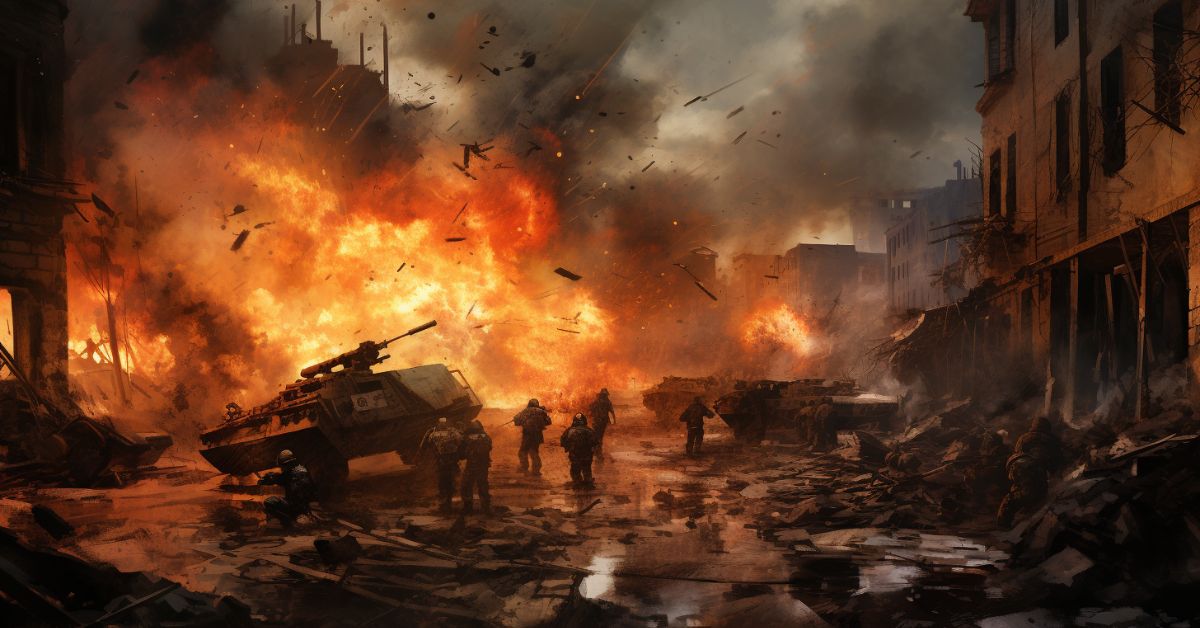



US President Donald Trump said on Thursday that the United States could launch further attacks on Iran, warning that he might have to destroy what remains of the country.
“I would rather not destroy the rest of the country, if possible, but maybe I’ll have to. And you’ll know soon enough,” he told reporters at the White House.
He estimated that Iran would need 25 years to rebuild following the US-Israeli military campaign, which began in February and has continued for more than eight months.
Trump framed the decision as a choice between stopping further escalation and ensuring that Iran could never again revive its nuclear capabilities.
“Now we’ll make a decision: Do we want to go further and just certify it, by certifying it meaning it will never happen again?” he said.
Asked about reports that Tehran had submitted a fresh nuclear proposal through mediators, Trump asserted that Iran could not pursue its nuclear programme without Washington’s approval.
“They’re not doing anything without our approval. It doesn’t make a difference what they’re looking at. They’re not going to have a nuclear weapon,” he said.
Trump also claimed that the United States had achieved its objectives in Iran, saying Washington controlled “everything that we’ve wanted to control”.
His remarks followed a meeting with senior national security advisers as his administration weighed whether to resume large-scale military operations, maintain economic pressure or pursue a negotiated settlement.
The Axios news website reported that US Central Command was preparing for a possible return to major combat operations, although it had not received a new order from Washington. The discussions came after Democrats made significant gains in the US midterm elections, raising fresh political questions about the cost and duration of the conflict.
Tehran puts nuclear proposal on negotiating table
Iran has reportedly submitted a proposal concerning its nuclear programme to the United States through Qatari mediators, in a fresh diplomatic effort to prevent another escalation.
Washington is reviewing the proposal, while Tehran is waiting for the US to meet seven demands it has presented as conditions for further negotiations, according to reports.
The nuclear proposal is understood to have been submitted separately from Iran’s broader conditions for ending the conflict, with the two tracks linked to the prospects of a wider settlement.
Trump’s response appeared to leave little room for an agreement on Tehran’s terms, with the US president insisting that Washington would determine the limits of Iran’s future nuclear activities.
Iranian officials have meanwhile maintained that negotiations cannot proceed until their conditions are addressed. Mohsen Rezaei, secretary of Iran’s Supreme National Security Council, has reiterated that Tehran will not reopen the Strait of Hormuz or enter negotiations before the United States fulfils its seven demands.
Iran warns regional states against helping US
The Islamic Revolutionary Guard Corps (IRGC) has warned that any country assisting the United States in renewed attacks against Iran would be considered a legitimate target.
The warning raises the risk of the conflict spreading across the Gulf, particularly as Washington considers its next military move and regional governments seek to prevent further destabilisation.
Iranian Foreign Minister Abbas Araghchi has stepped up diplomatic contacts with regional counterparts, speaking with officials from the United Arab Emirates, Saudi Arabia, Oman and Qatar.
In a telephone conversation on Thursday, Araghchi and UAE Foreign Minister Sheikh Abdullah bin Zayed Al Nahyan discussed regional developments and diplomatic efforts to maintain stability.
Sheikh Abdullah stressed the importance of de-escalation, according to the UAE’s official news agency WAM.
The conversations followed growing concerns about the possibility of renewed US military action against Iran.
Hormuz tensions threaten energy and shipping
The Strait of Hormuz remains another major flashpoint, with Iran’s navy reporting that two additional oil tankers caught fire after striking naval mines.
The incidents brought to at least five the number of vessels that caught fire in a 24-hour period while using what Iranian authorities described as unauthorised shipping routes.
The developments underscore the continuing risks to commercial shipping and energy supplies through the strategic waterway, which has been at the centre of the conflict.
Oil prices, meanwhile, remained on course for a substantial weekly decline amid expectations that the conflict could move towards de-escalation following the US midterm elections.
Brent crude futures rose 1.6 percent to $99.86 a barrel, while US West Texas Intermediate gained 1.2 percent to $91.62.
Despite the recovery over two sessions, Brent was heading for a 12 percent weekly decline and WTI for a 12.1 percent drop. Both benchmarks had fallen sharply on Wednesday, with Brent settling at its lowest level in two months.
Gaza and West Bank violence continues
The conflict’s wider regional consequences continued to unfold, with three Palestinians killed and several others wounded in an Israeli air attack targeting al-Shati refugee camp west of Gaza City.
In the occupied West Bank, Israeli forces arrested more than 50 Palestinians, demolished residential buildings and displaced dozens of families, according to the Palestinian news agency Wafa.
Five residential buildings containing 12 apartments were demolished in Biddu, northwest of occupied East Jerusalem, displacing 105 Palestinians.
Amnesty International also called for the immediate and unconditional release of Palestinian farmer Ghassan Najjar, who was arrested during an Israeli raid on the village of Burin on October 27.
Erika Guevara Rosas, Amnesty’s senior director for research, policy, advocacy and campaigns, described his detention as another example of the repression faced by Palestinians resisting dispossession and settlement expansion.
Yemen conflict adds another regional flashpoint
In Yemen, forces affiliated with the internationally recognised government said they had carried out nearly 1,300 targeting operations since launching Operation Dawn of Yemen on October 5.
Military spokesman Colonel Majed Abdullah al-Nazili said the operations had resulted in 440 Houthi fighters being killed or otherwise neutralised and 132 vehicles, armoured units and heavy weapons destroyed or disabled.
The offensive aims to retake Sanaa and other areas controlled by the Houthis but has settled into a war of attrition.
Separately, the Saudi-led coalition said it had intercepted a Houthi ballistic missile launched towards the Medina region, a claim rejected by the Houthis.
The United Nations also called for an investigation into the death of its employee Mohammad el-Shami in Houthi detention, citing serious concerns about possible ill-treatment and the circumstances surrounding his death.