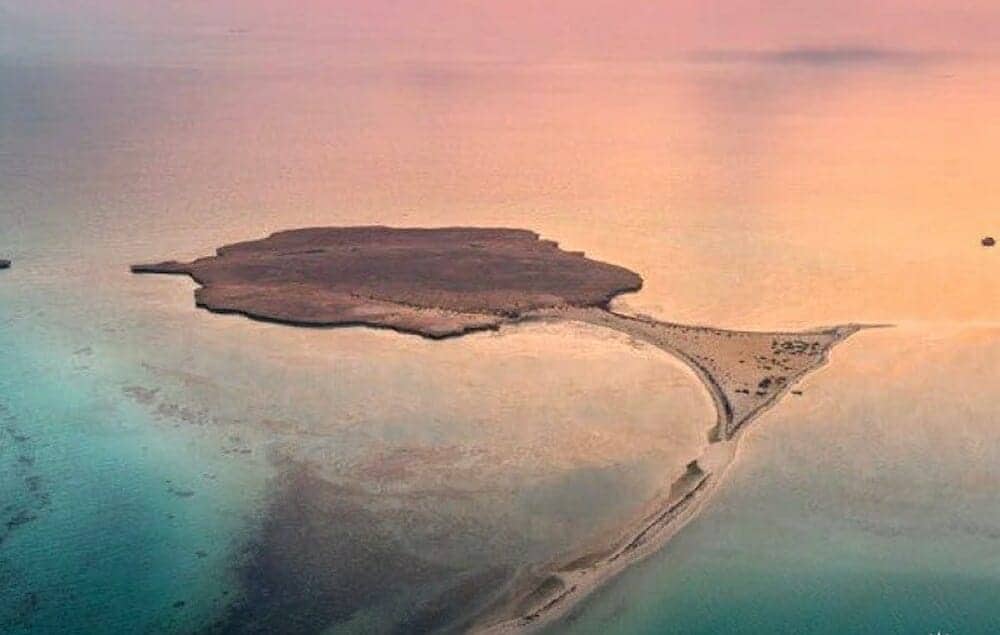

The United Nations Educational, Scientific and Cultural Organization, or Unesco, has registered the Farasan Island Marine Sanctuary in its Man and Biosphere Program, the global body has announced.
The registration was reportedly made during the 33rd meeting of the coordination committee of the program that was held earlier this week, according to Saudi Arabia’s National Committee for Education, Culture and Science, and the Saudi Heritage Preservation Society.
The society had for three years been attempting to get the islands registered as a biosphere.
It is said to have made the efforts to convince the program that Farasan Islands and their beaches enjoy a unique environmental diversity and wildlife.
The step is expected to contribute to realizing the aspirations of the Ministry of Culture and targets of the Saudi Vision 2030 through improving and enhancing the presence of the Kingdom of Saudi Arabia in international events, mainly Unesco lists.
It is also expected to improve the quality of life on Farasan Islands by applying the MAB program’s standards and criteria.
Saudi Arabia is currently looking to diversify its economy to reduce dependence on oil, and one area it is focusing on is tourism.
Given the biodiversity on the Farasan Islands, they could very well be developed — albeit in a responsible way — to support eco-tourism.
According to Unesco itself, the Farasan Islands are home to some really diverse flora and fauna.
They are said to support the largest population of idmi gazelle in Saudi Arabia, and high concentrations of greater flamingo, pink-backed pelican, Eurasian spoonbill, and osprey.
A variety of snake is also believed to be endemic to the islands.
They are also home to birds like the sooty falcon, crab-plover, white-eyed gull, lesser crested tern, white-cheeked tern, and Red Sea (brown) noddy.
The sea surrounding the area is inhabited by dugongs, whales, dolphins, green turtles, hawksbill turtles, and manta rays.
The seas are also said to contain a wide diversity of corals, mollusks, crustaceans, and reef fishes.