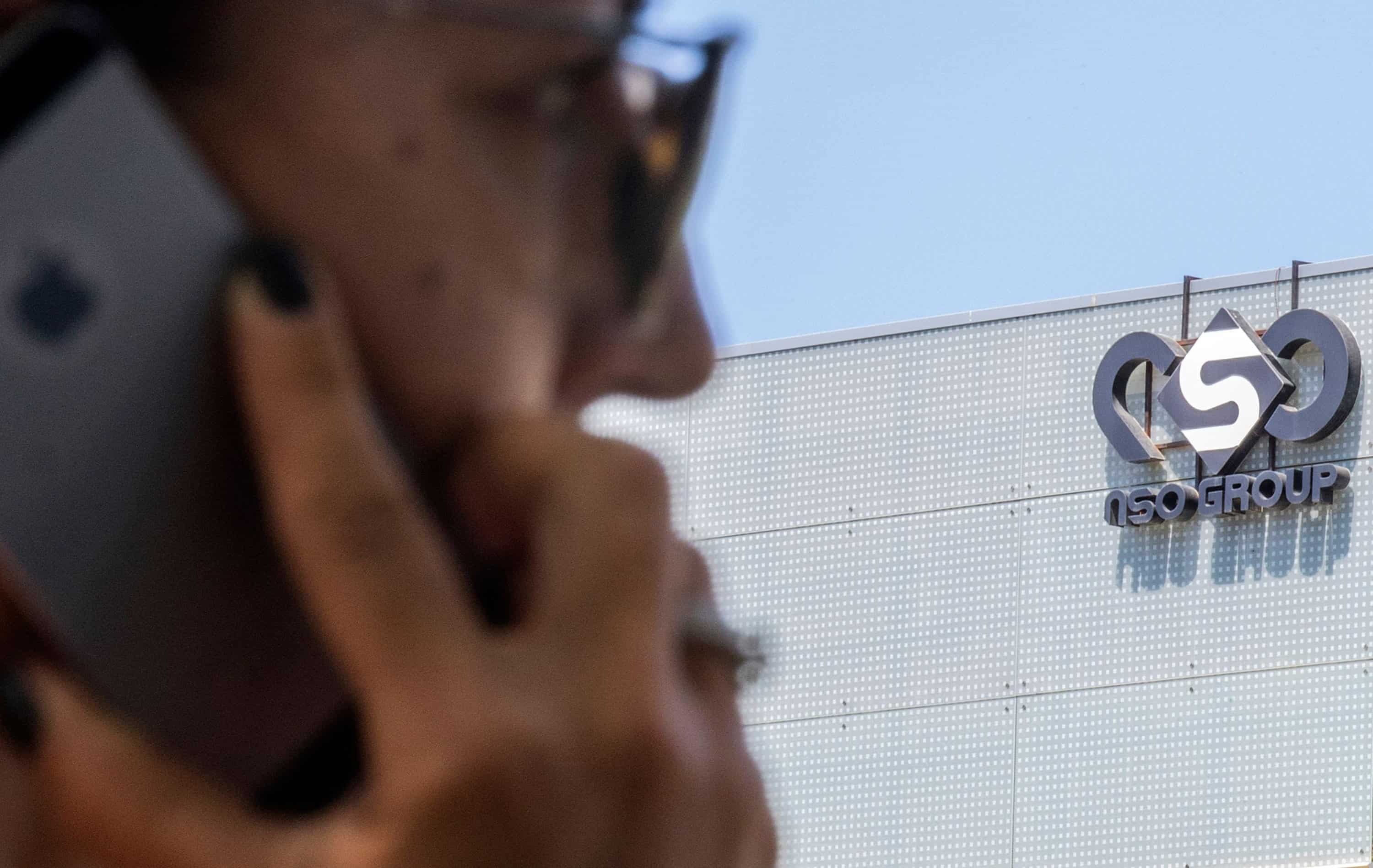

Israel laid down the law on Monday, December 6, on the use by foreign governments of its cyber exports, after the private Israeli developer of Pegasus spyware became engulfed in scandal abroad.
The defense ministry-linked agency for military exports, in a statement, specified that a foreign state seeking a cyber or intelligence system must only use it to combat terrorism and “serious crimes”.
Smartphones infected with Pegasus spyware developed by the private Israeli firm NSO Group are essentially turned into pocket spying devices.
This allows the user to read the target’s messages, look through their photos, track their location and even turn on their camera without them knowing.
US authorities last month blacklisted NSO by restricting exports to it from American groups over allegations the Israeli firm “enabled foreign governments to conduct transnational repression”.
An updated Israeli end user certificate issued Monday, to be signed by buyers, listed terrorism as including offences committed with the aim of “seriously intimidating a population” or “unduly compelling a government” through crimes such as hostage taking and potentially fatal attacks upon a person’s life.
“An act of expressing an opinion or criticism, as well as presenting data regarding the state, including any of its institutions, shall not, in and of itself, constitute a Serious Crime,” or terrorism, the certificate says.
Violation of the provisions would result in the spyware being restricted or disconnected, the agency warned.
“The system shall not be used, under any circumstances, to inflict harm on an individual or a group of individuals, merely due to their religion, sex or gender, race, ethnic group, sexual orientation, nationality, country of origin, opinion, political affiliation, age or personal status.”
The military exports agency said the provisions follow “a series of measures” taken in the last few years in which Israel “approves the export of cyber systems solely to governments for the purposes of investigation and prevention of terrorism and crime.”
In the latest in a string of commercial cases, Apple last month sued the Israeli spyware maker, seeking to block NSO Group from targeting the more than one billion iPhones in circulation.
NSO has consistently denied any wrongdoing and defended use of its software.
In July a collaborative investigation by The Washington Post, The Guardian, Le Monde, and other media outlets raised privacy concerns and revealed the far-reaching extent to which the NSO software could be misused.
They investigated a data leak of up to 50,000 phone numbers believed to have been identified as people of interest by clients of NSO since 2016.
The numbers included those of activists, journalists, business executives and politicians around the world.