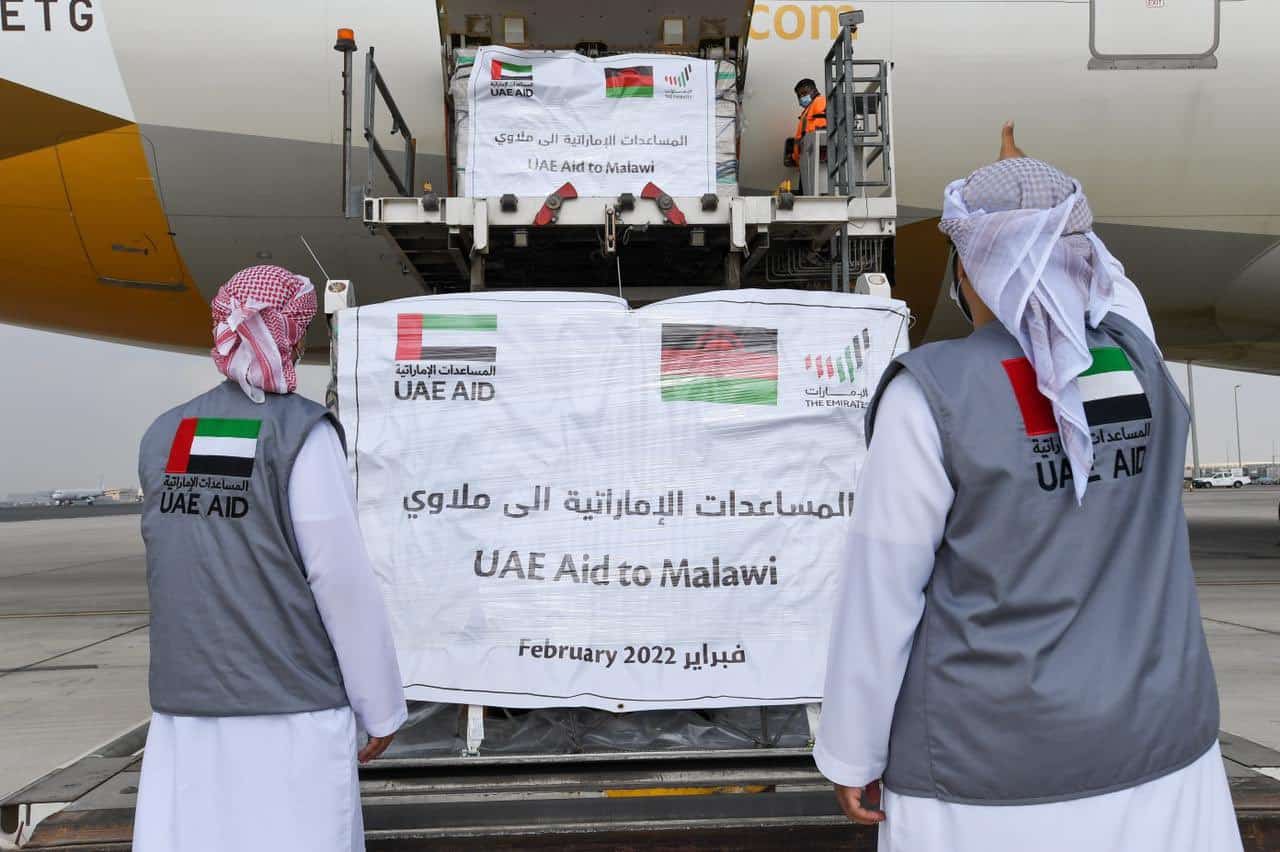

The United Arab Emirates has sent a plane carrying 46 tons of food supplies to Malawi, as part of the UAE’s ongoing assistance to friendly countries, according to a report from the official Emirates News Agency.
The aid is expected to support efforts to meet children’s essential needs for food and nutritional supplements in a number of villages and regions in the African nation.
“Sending essential food supplies to the friendly Republic of Malawi is an embodiment of the good relations between the two countries,” said Khalifa Abdulrahman Mohamed Almarzooqi, the UAE’s non-resident ambassador to Malawi.
He underlined the UAE’s commitment to a humanitarian approach that supports emergency relief for countries in need.
Especially targeted are those suffering from natural disasters, including floods, droughts and hurricanes, all of which have resulted in a large shortfall of essential aggregate food supplies.
Almarzooqi said, “The food supplies sent by the UAE included 5 tons of medical supplies to address the Covid-19 pandemic, and help medical teams perform their duties efficiently.”
Over the past 10 years, the UAE has reportedly sent relief supplies to Malawi amounting to AED85.3 million ($23.23 million).
The aid is said to have covered sectors including transport, warehousing, social services, food commodities, education, water, and health, besides other developmental and humanitarian areas.