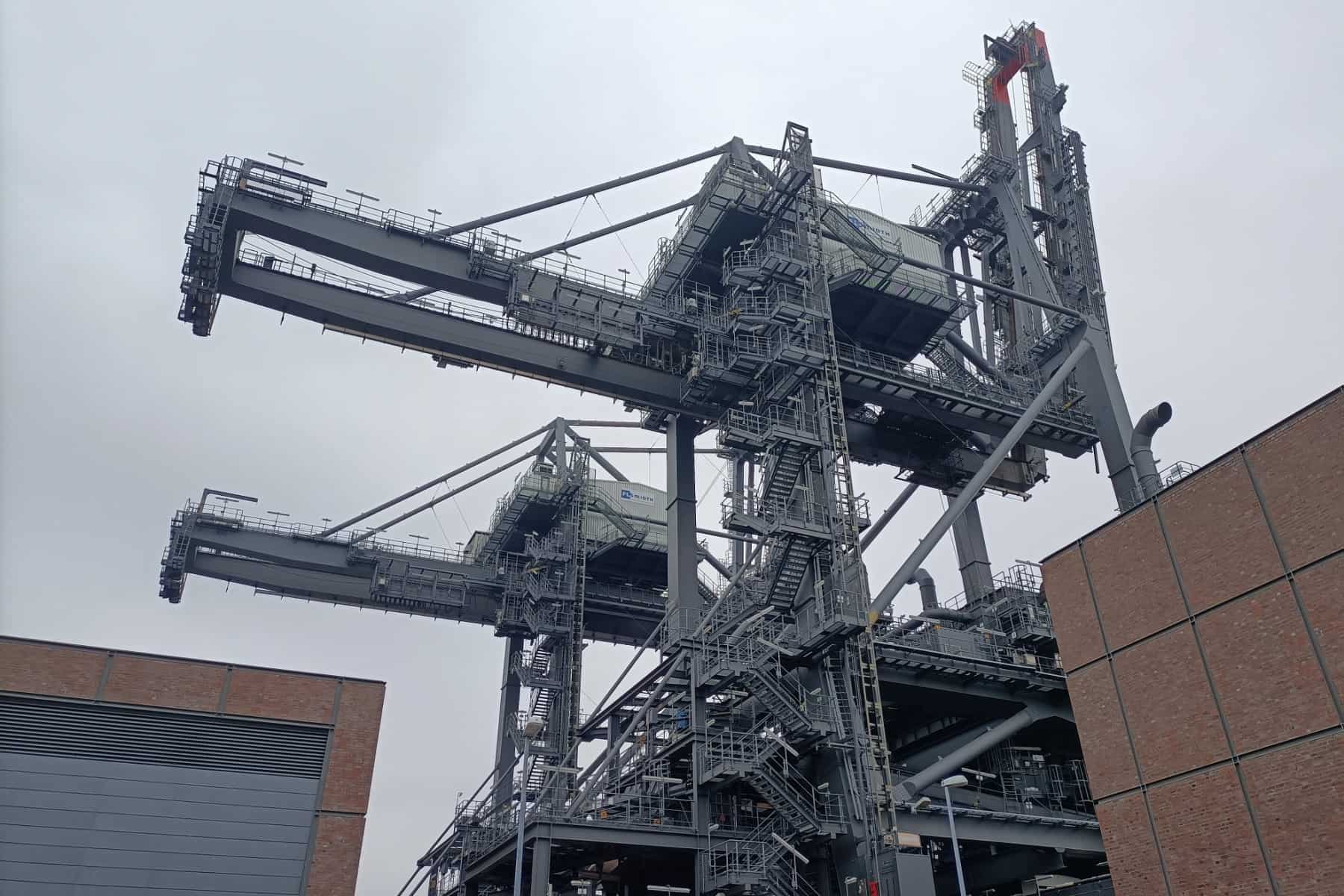

A year after the last wisps of smoke disappeared into the skies from the imposing chimneys of the Moorburg coal plant, hopes had grown that the mothballed site would see new life as Germany scrambles to secure energy supplies.
Russia’s curtailing of gas exports to Germany in the wake of the Ukraine war has forced Berlin to make the radical decision to restart coal power stations, at least temporarily.
But infrastructure issues, manpower shortages and logistical problems are proving to be major obstacles for the restart.
At Moorburg, operator Vattenfall has dashed hopes of new operations, saying simply that “restarting it would be neither technically, economically nor legally feasible”.
“Many parts have been dismantled and sold,” said Robert Wacker, director of the site.
Even power plants that had not been completely shut, but put in reserve to generate power only occasionally, are struggling with a complete reboot.
Further south from Moorburg, energy group Uniper will on Monday fire up its Heyden 4 site, which had been a reserve plant since mid-2021.
But the company warned that its output would be affected by railway capacity limits in ferrying hard coal to the site.
Dismantled
Germany began winding down its coal-fired power plants in the last few years, in view of meeting a target to end usage of the fossil fuel by 2030.
But Russia’s invasion of Ukraine has upended plans as Moscow reduced energy exports to Germany in what Berlin believes is retaliation for its support for Kyiv.
Chancellor Olaf Scholz’s government has said it would stick to the 2030 coal exit timetable, but in the meantime, it authorised the restart of 27 mothballed plants or those put in reserve to help fill the energy gap until March 2024.
With a capacity of 875 megawatts (MW), Uniper’s Heyden 4 figures as the largest on the list.
But the Moorburg plant, located in the suburb of Hamburg, had been one of the most modern in the world.
It was shut down in the summer of 2021, just six years after it was put into service, in exchange for a public subsidy programme aimed at cutting coal from Germany’s energy mix.
Since then, the operator has started dismantling and selling the parts that are not necessary for hydrogen — a priority for Germany’s future energy sources.
Before it closed, the plant churned out around 11 billion kilowatts per year — the equivalent of the electricity consumption for the city of Hamburg.
But now, the installation is no longer complete.
In the turbines hall, thousands of small components have been packed away into boxes. A rotor, an element that allows the turbine to turn, is packed in aluminium, ready to be sent off.
The transformer is also no longer functioning.
“Without the transformer, the power plant is no longer linked to the network and cannot produce any electricity,” said Vattenfall.
Pointing at rust that has accumulated on the components over the last year, the operator’s spokesman Gudrun Bode said: “We can’t restart a plant just like that.”
Retired
With winter round the corner, the race is getting tighter for Germany to ramp up its power generation capacity.
But so far, only one — the Mehrum plant with a capacity of 690 MW, has restarted.
Besides technical issues, power suppliers are struggling with an acute worker shortage.
In Moorburg, “most of those who left have found a job, or are retired,” said Wacker.
Energy giant RWE told AFP it is seeking several hundreds of workers as it prepares to reopen three plants with a capacity each of 300 MW.
Logistics was also turning out to be tricky, with a drought further putting pressure on the distribution network.
The river Rhine has been a key route for coal transport to power plants in the west of the country.
But record low water levels over the last week have limited shipments and forced suppliers to turn to rail transport — putting further pressure on strained cargo trains.
Uniper has said Heyden 4’s operation will be “limited partly by limits of rail transport capacity bringing coal to the site.”
Energy supplier STEAG has also said that it would bring into operation two coal-fire plants from its reserve.
It has targeted November as a possible restart date, but it also noted that current rules require sites to have coal supplies for 30 days — something that would be unachievable “given the current tight logistics situation on rail transport”.
In a bid to unblock the jam, Berlin decided Wednesday to prioritise coal and oil cargo over passenger travel this winter.