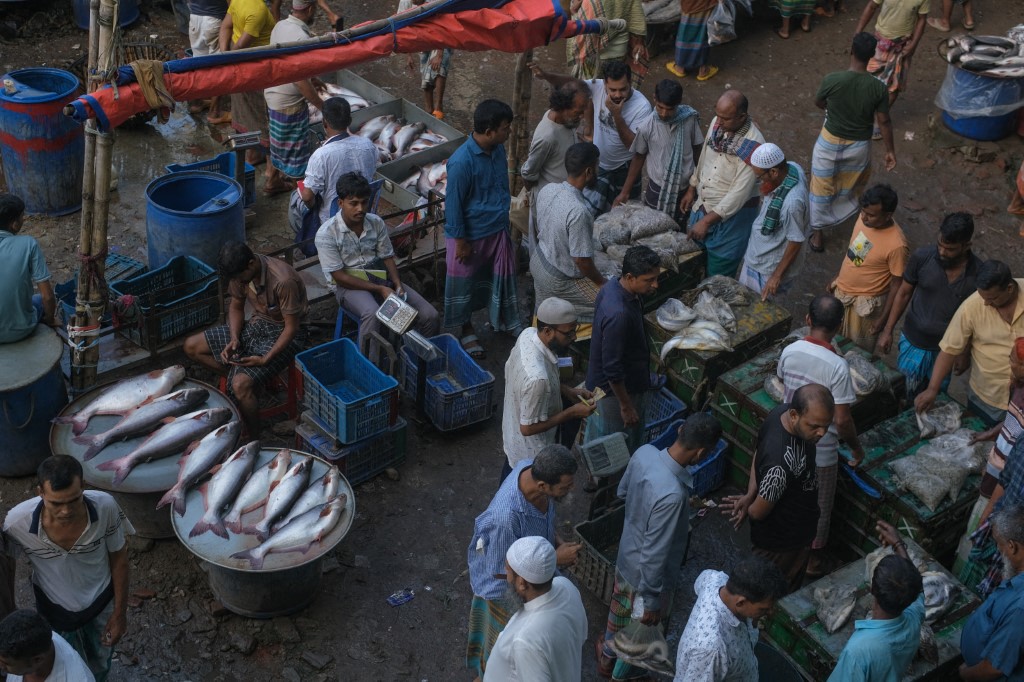

Dhaka, Bangladesh — Bangladesh’s defense force said it has deployed warships and patrol aircraft as part of a special surveillance operation to protect a prized fish from illegal fishing during its spawning season.
The herring-like hilsa, Bangladesh’s national fish and a much-loved delicacy in West Bengal in neighboring India, return from the Bay of Bengal to rivers each year to lay eggs.
Bangladeshi authorities said on Saturday they had imposed a three-week ban on fishing from October 4-25 to safeguard the spawning areas.
The defense force’s Inter-Service Public Relations said in a statement that 17 navy warships and patrol helicopters had been deployed to enforce the ban and protect the fish.
“The warships and state-of-the-art maritime patrol aircraft have been conducting round-the-clock surveillance to prevent the intrusion of domestic and foreign fishermen into the deep sea,” it said.
Millions in Bangladesh depend on the fish, which can cost up to 2,200 taka ($18.40) a kilogram in Dhaka.
Indian fishing fleets trawl the brackish waters of the River Ganges and its vast delta, feeding demand in the megacity of Kolkata and the wider state of West Bengal, which has a population of more than 100 million people.
Overfishing to meet such demand can deplete stocks as the hilsa return to spawn.
Environmental experts say fish stocks have also been hit by changes to the ecologically sensitive and low-lying deltas, threatened by rising seas driven by climate change.
However, they also fear the ships could disturb the spawning hilsa at a critical time.
Md Abdul Wahab, former head of the Eco Fish project at WorldFish, told AFP the hilsa needed “calm and undisturbed waters for spawning” and suggested the use of drones instead.
The Bangladesh government has allocated 25 kilograms of rice per fishing family to compensate for the ban during the spawning period.
Some said that was not enough.
“These three weeks are very difficult for fishermen, as we have no other means of survival,” said Sattar Majhi, a 60-year-old fisherman.