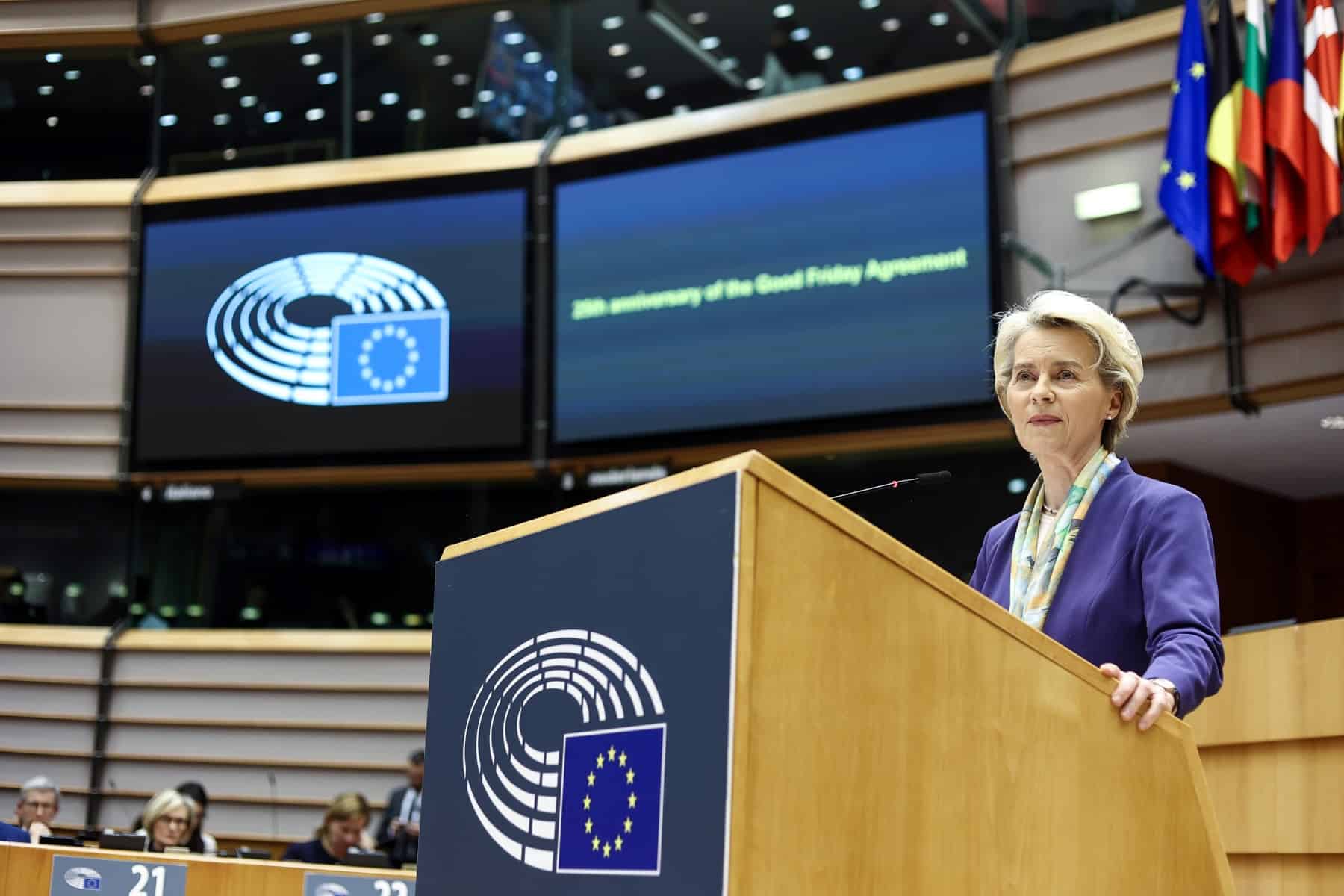

Brussels, Belgium – The European Parliament adopted tough rules Thursday that will force EU businesses to be transparent about salaries to ensure equal pay between women and men, and introduce potential fines for wage discrimination.
Women earn on average nearly 13 percent less per hour than men for the same work in the 27-nation European Union, according to official data for 2020.
Under the new rules, workers can demand to know individual and average pay levels, broken down by gender, in their workplace.
“Pay secrecy will be banned,” the parliament said in a statement.
Other rules stipulate that if a company has at least 100 employees, they must publish information regularly on the gender pay gap.
Companies must also negotiate with staff representatives if there is a discrepancy of five percent. Those who break any of the rules face sanctions, including fines.
Employees who believe they are a victim of discrimination can seek compensation.
“Equal work deserves equal pay. And for equal pay, you need transparency,” Ursula von der Leyen, head of the European Commission, said Wednesday before the parliament’s vote.
“Women must know whether their employers treat them fairly. And when this is not the case, they must have the power to fight back and get what they deserve,” she added.
The gender pay gap is varied across the bloc.
The gap is only 0.7 percent in Luxembourg but reaches 15.8 percent in France and 18.3 percent in Germany while in Latvia, it is 22.3 percent.
The commission, the EU’s executive arm, first proposed the rules in March 2021.
Before they are adopted, they must be formally signed off by the European Council, which represents member states.
EU countries will then have to start putting the rules into their national laws within three years after its publication in the bloc’s official gazette.