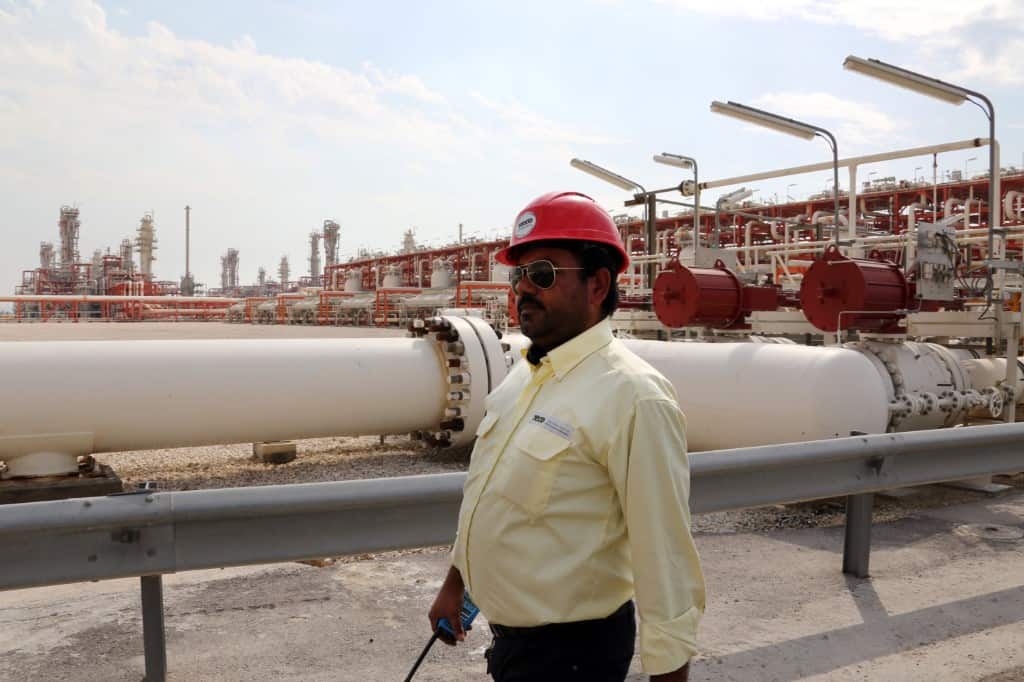

Tehran, Iran — Iranian authorities have arrested managers at a major petrochemical company for backing a workers’ strike over pay and conditions in an energy-producing region in the south, Iranian media reported Wednesday.
“A number of managers” were arrested for “having supported the acts of counter-revolutionary elements” and “organized strikes” at South Pars projects, Fars news agency said.
More company officials will be arrested “in the coming days”, it added.
The offshore South Pars field in the Gulf — the world’s largest known gas reserve, which Iran shares with Qatar — employs some 40,000 workers.
In April, an official in charge of the Islamic republic’s oil and gas sector in Bushehr province said 4,000 of the workers on strike would be replaced.
The Iran Labour News Agency (ILNA) reported that South Pars employees “have continued to put forward their collective demands”, calling for “a 79-percent increase in wages” as well as an “end to discrimination” and the right to “freedom of association”.
In 2022, Iran witnessed several waves of strikes by teachers and bus drivers who protested low wages and high living costs.
Iran’s supreme leader Ayatollah Ali Khamenei, who has the final say in major state policies, said last month that some labor protests have been helpful to the country.
“These protests are actually helping the government and the system and making them understand” the demands of workers, Khamenei said in a meeting with labor representatives.
Since 2018, Iran’s economy has been hit by US-led sanctions and spiraling inflation, along with record depreciation of the rial against the dollar, after Washington withdrew from a landmark nuclear deal with Tehran.