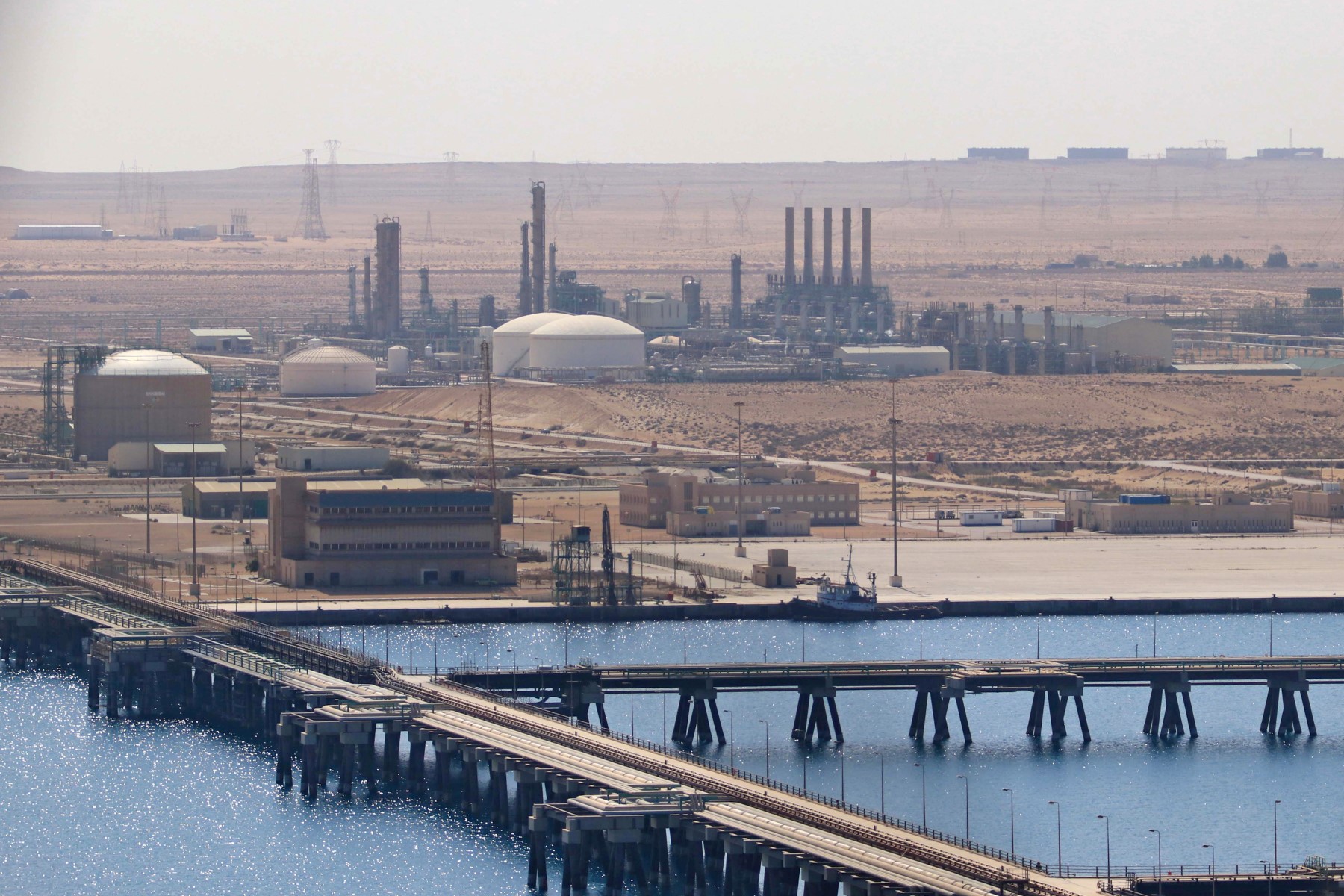

Tripoli, Libya– The head of Libya’s east-based administration threatened Saturday to block oil and gas exports from territory under its control, claiming the UN-recognized government in Tripoli was wasting energy revenues.
Oussama Hamad also said in a statement that he had “frozen” 2022 oil revenues “equivalent to more than 130 billion dinars (around $27 billion)” as a first step.
The east-based government, which does not recognize the authority of the Government of National Unity based in Tripoli, is ready for more steps, including an oil blockade, and would seek a legal ruling, he said.
“We are ready to raise the red flag, stop… the export of oil and gas and declare force majeure,” said Hamad who was appointed in May by the east-based parliament.
Force majeure is a legal measure allowing companies to free themselves from contractual obligations in light of circumstances beyond their control.
Hamad accused the government in Tripoli of wasting energy revenues by making “extravagant spending”, without elaborating.
He also demanded a “fair distribution of oil revenues”.
Libya sits atop Africa’s biggest oil reserves but has been engulfed by conflict since a NATO-backed revolt toppled longtime dictator Moamer Kadhafi in 2011.
The country is split between the Tripoli government of interim Prime Minister Abdulhamid Dbeibah’s and the east-based administration backed by military strongman Khalifa Haftar.
Control of oil resources, infrastructure and revenues has been a key driver of the long-running conflict, involving multiple foreign powers and a myriad of militias.
Haftar’s forces have in the past blockaded Libyan oil fields.