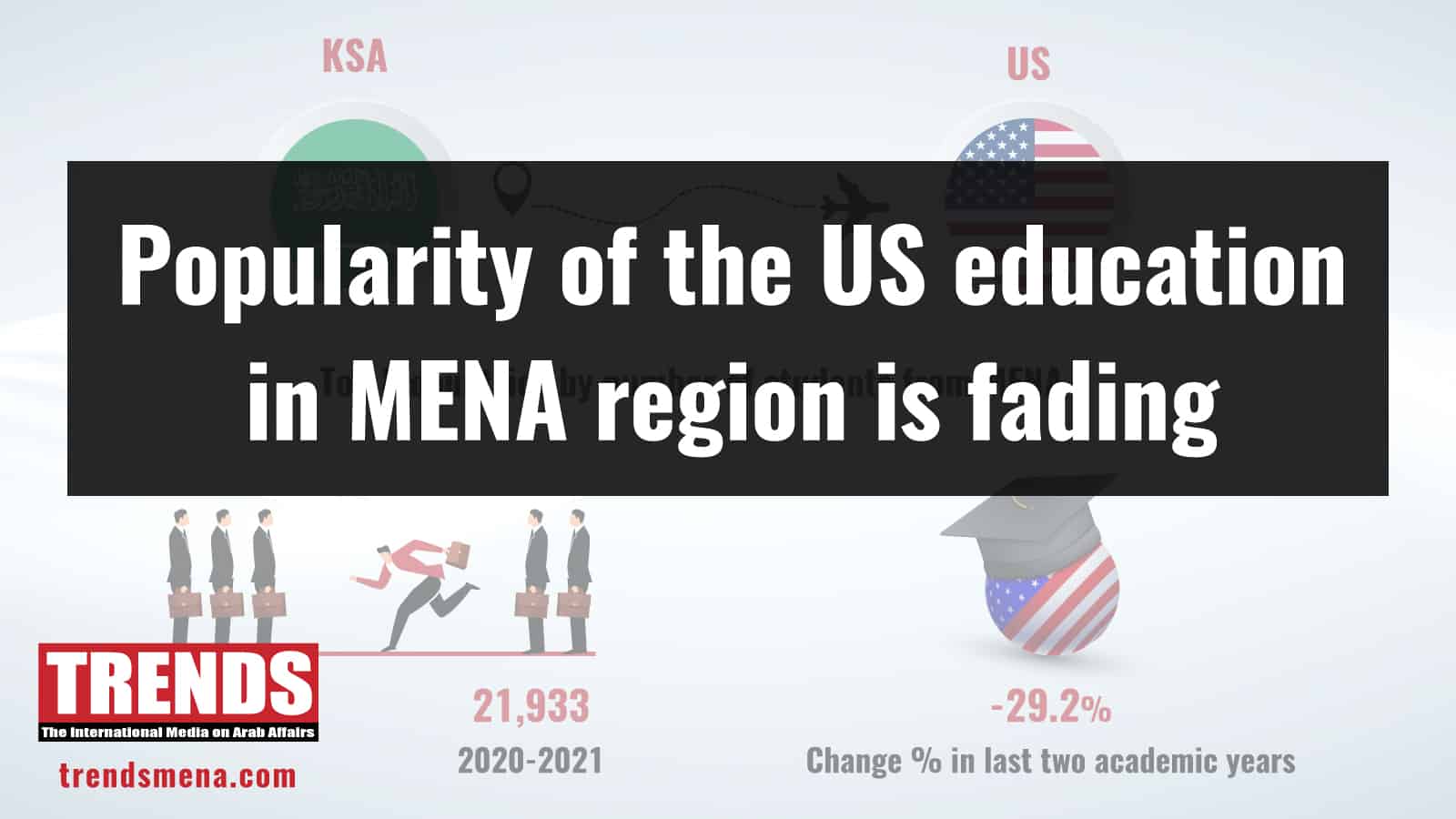

Students from the Middle East and North Africa region going to the United States for education at various levels have been a constant, but their numbers have changed over the years.
The factors that draw many of them to the US — besides the curriculum — include a more diverse learning environment, a wider global perspective, and better prospects of employment.
However, over the years, these reasons are diminishing in significance due to a variety of changes happening in the region.
For one, US universities are either tying up with their Mena counterparts, or opening separate campuses in the region.
And then, due to the Covid-19 pandemic, many US schools have switched to online learning, which has done away with the necessity of students from the region traveling to a different continent.
Of course, the proliferation of online-learning platforms and their own tie-ups with big-ticket US universities have also led to a change in the number of students from the Mena region traveling abroad for higher education.
Here’s how the number of students from the region going to the US to study has changed in the recent years: