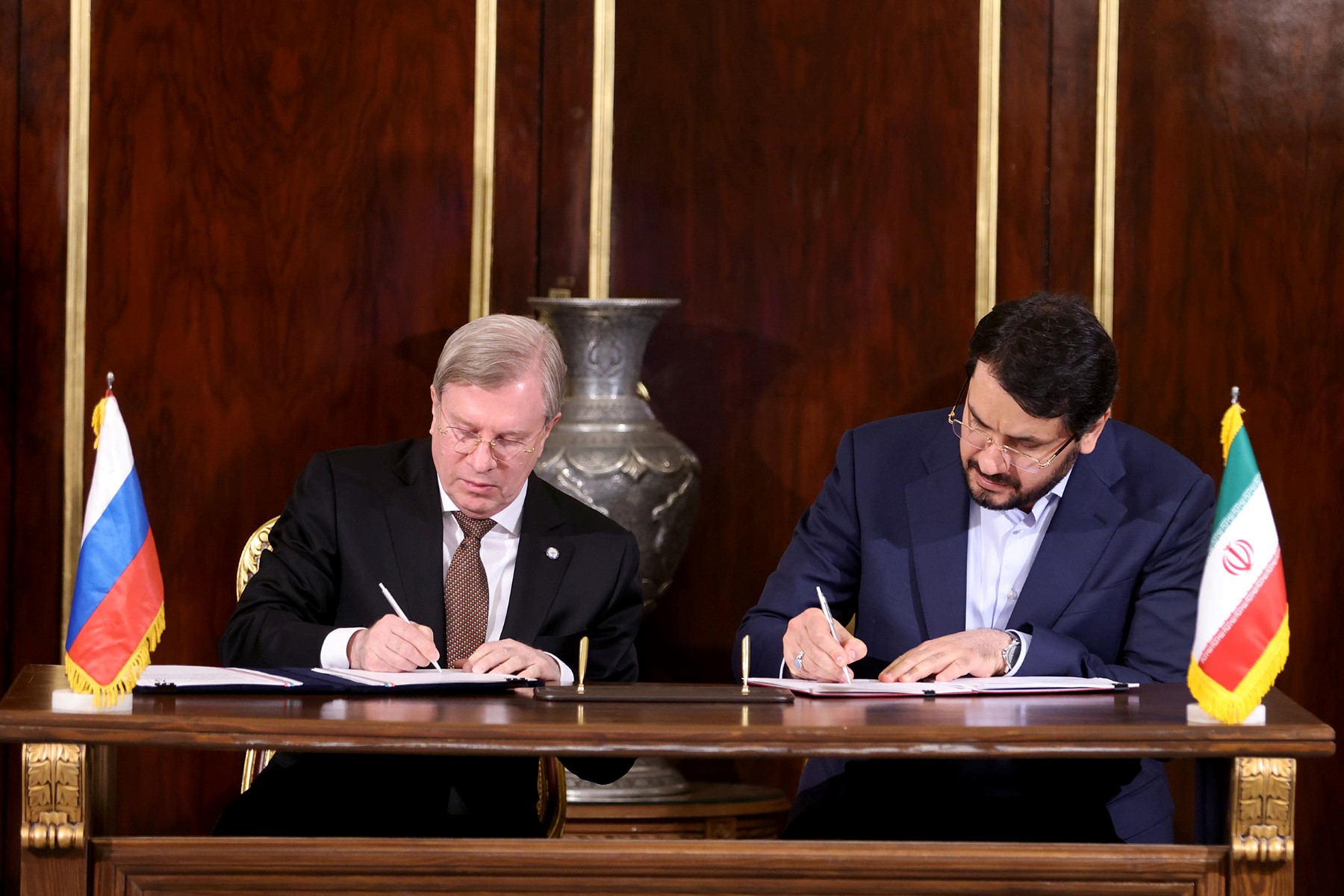

Tehran, Iran – Iran and Russia on Wednesday signed an agreement to construct the final part in the International North–South Transport Corridor (INSTC) that connects Russia to the Gulf and India.
The INSTC, a freight network of ship, rail and road routes, covers some 7,200 kilometers (4,475 miles) between Russia, Azerbaijan, Iran and India.
The agreement signed in Tehran entails Russian-Iranian cooperation in the construction of a 164-kilometre railroad between the Astara border crossing between Iran and Azerbaijan and Rasht, a city in northern Iran.
Iranian Transport Minister Mehrdad Bazrpash said the “process of construction” of the Rasht-Astara railway — the INSTC’s only missing link — “has started and we will finalize it within the next three years”.
Iranian President Ebrahim Raisi told the signing ceremony the INSTC will boost regional trade, and said: “Today, with the determination that exists… this big project is taking shape.”
Raisi said there was “great potential” in ties with Russia, calling the latest agreement “an important strategic step on the path of cooperation between the Islamic Republic of Iran and the Russian Federation.”
His Russian counterpart Vladimir Putin, who spoke at the ceremony via videoconference, praised the “obvious economic benefits” for both Moscow and Tehran in the form of new jobs and investments.