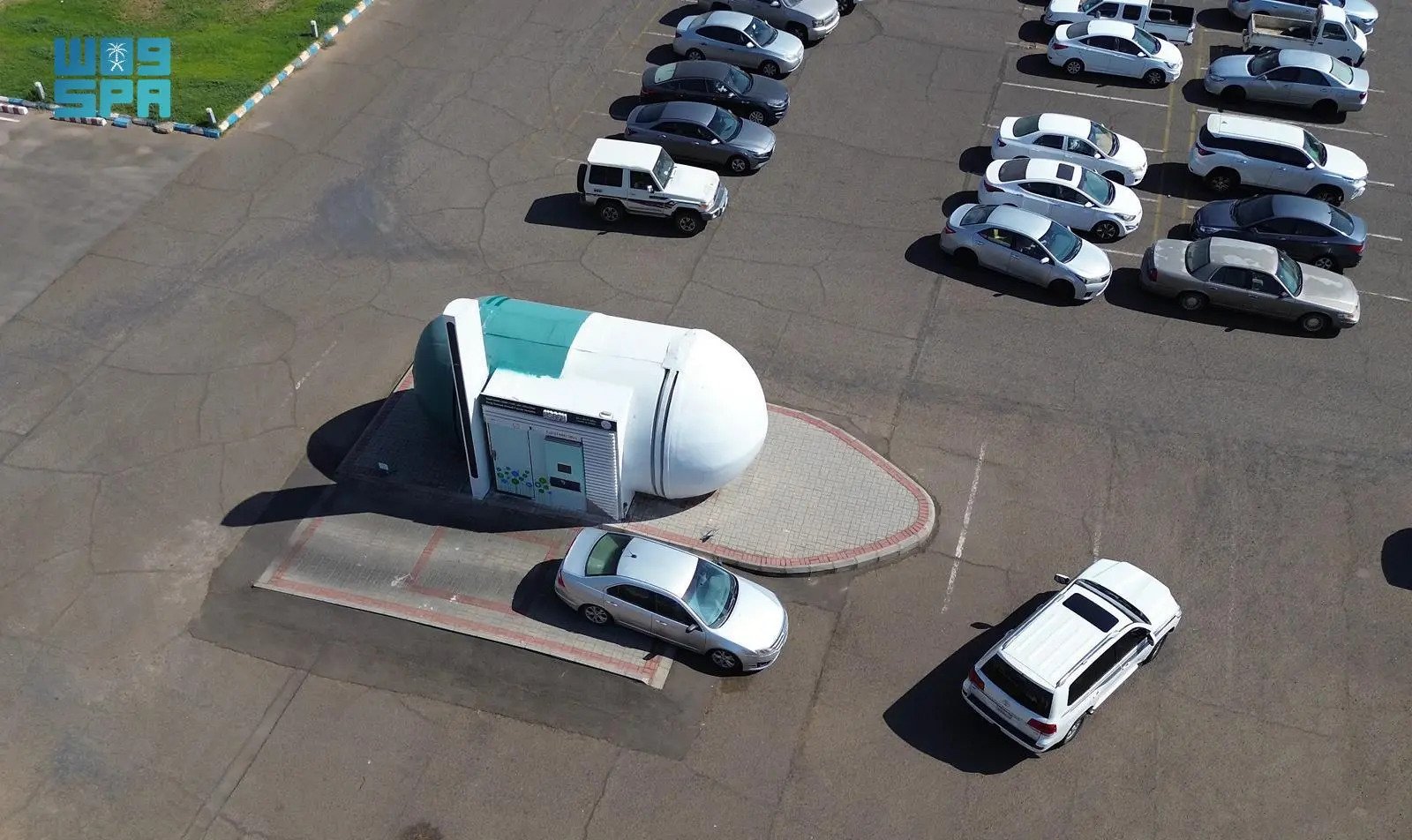
Tabuk, Saudi Arabia — King Salman Hospital in Saudi Arabia’s northwestern region has installed the world’s first automated medication dispensing machine, transforming the way medications are distributed without requiring hospital visits.
The machine consists of a workstation that handles the prescription barcode, a screen for interaction with the beneficiaries, a specialized operating system and a messaging platform that notifies beneficiaries while the medication is being packaged ahead of delivery.
With a storage capacity ranging from 102 to 700 medical prescriptions, the machine is capable of filling prescriptions containing multiple medications, while ensuring extremely high protection against damage, tampering, or theft.
It provides statistical data on the dispensed medications to the beneficiaries on a daily, monthly, or yearly basis.
The beneficiaries submit requests to get their prescriptions filled by scanning the barcode attached to the prescription, the director of the hospital’s pharmacy department Olayan Alatawy said.
The user then fills out the required information and selects the nearest dispensing machine to their location, Alataway said. Subsequently, a pharmacist verifies the beneficiary’s prescription data through an electronic system.
Once the prescription request is accepted, a text message is sent to the beneficiary with a code, the location of the device, and the status of the request.
Beneficiaries can then get their medication within 48 hours from the machine by filling in the required data and entering the verification code sent to their phone, added Alatawy.