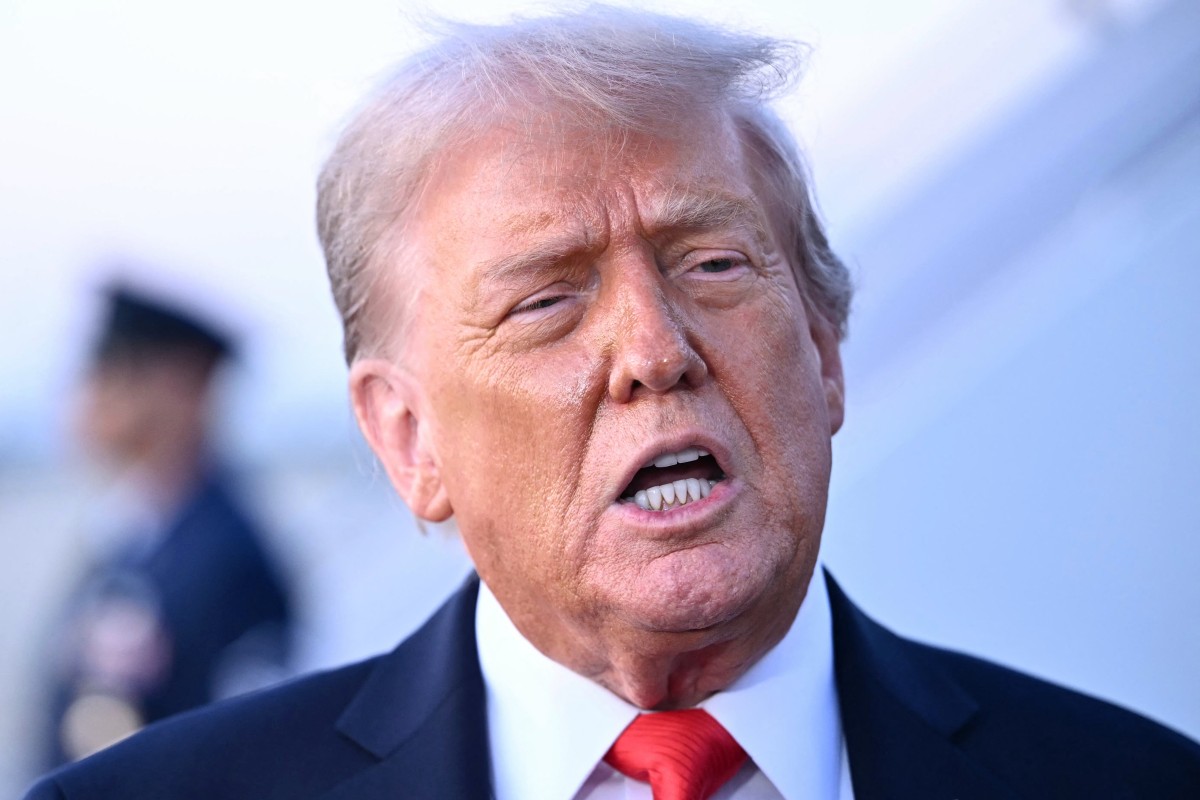

US President Donald Trump said Washington was “hopefully toward the end” of its war with Iran, while claiming he had spoken directly with Iranian representatives.
Trump’s comments came as diplomatic efforts continued alongside fighting involving Iran-aligned groups and mounting pressure on regional energy and shipping routes.
Iranian national security chief Mohsen Rezaei said the United States would need to take practical steps to build Tehran’s confidence, according to Al Jazeera’s live coverage.
Iranian Foreign Minister Abbas Araghchi separately described consultations with Chinese officials as successful and endorsed Chinese President Xi Jinping’s four principles for regional peace. Those principles include peaceful coexistence among neighbouring countries, respect for sovereignty and territorial integrity, adherence to international law, and a balance between security and economic development.
Fighting spreads across regional fronts
The conflict continued to affect Yemen and Saudi Arabia, with the United Nations calling for de-escalation and diplomacy as fighting intensified between the Houthis and Saudi Arabia.
Saudi Arabia said it had intercepted and destroyed a drone launched by the Houthis towards Mecca. The Houthis denied targeting the Islamic holy city. The UAE condemned the reported attempted attack as a violation of Saudi sovereignty and said it supported measures to protect the kingdom.
Malaysia, the Maldives and Bangladesh also condemned Houthi attacks on Saudi Arabia, while calling for restraint and protection of Islamic holy sites.
The United States said its advisers were supporting Saudi partners as fighting intensified. The developments have added to concerns about the conflict spreading beyond the direct US-Iran confrontation.
Hormuz remains a major pressure point
The Strait of Hormuz remained central to the conflict’s economic impact, with the US military saying commercial traffic through the waterway was continuing despite an Iranian maritime blockade and attacks on commercial vessels.
US Central Command spokesperson Captain Tim Hawkins said traffic “continues to flow” and said US forces had helped commercial vessels move more than 900 million barrels of crude through the strait since early May. Iran and the United States have continued to make competing claims over control of the strategic waterway.
South Korea, meanwhile, said it had not decided whether to deploy military forces to the Strait of Hormuz. Foreign Minister Cho Hyun said Seoul was reviewing the issue, with the safety of its citizens and freedom of navigation among its considerations.
Oil markets respond to alternative routes
Oil prices fell as Saudi Arabia offered additional crude cargoes through Oman, easing concerns about supply disruptions.
Brent crude fell $1.24, or 1.2 percent, to $104.59 a barrel at 0049 GMT on Thursday, while US West Texas Intermediate declined $1.14, or 1.1 percent, to $101.29. Both contracts had fallen about $3 on Wednesday.
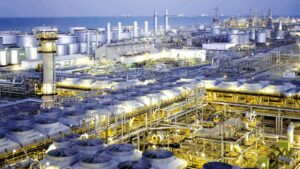
The move followed reports that Saudi Arabia was offering additional crude shipments through ship-to-ship transfers off Oman’s Sohar port after drone attacks damaged the kingdom’s East-West pipeline.
In the United States, the administration temporarily relaxed hours-of-service rules for truck drivers carrying petrol and diesel, citing supply-chain disruptions and concerns about fuel shortages and higher prices.
Washington maintains economic pressure
Despite Trump’s comments about the war nearing an end, the US House of Representatives approved legislation extending the Iran Sanctions Act for five years.
The Lindsey O Graham Sanctioning Russia and Iran Act of 2026 passed the House by 262-159 after being approved 86-11 in the Senate. The measure now goes to Trump for signature.
The legislation extends the Iran Sanctions Act of 1996, which was due to expire this year, while broader provisions of the bill target Russia.
The developments leave diplomacy and military pressure running in parallel, with Trump signalling that direct contacts with Iran could point towards an end to the conflict while Tehran continues to demand concrete steps before confidence can be restored.