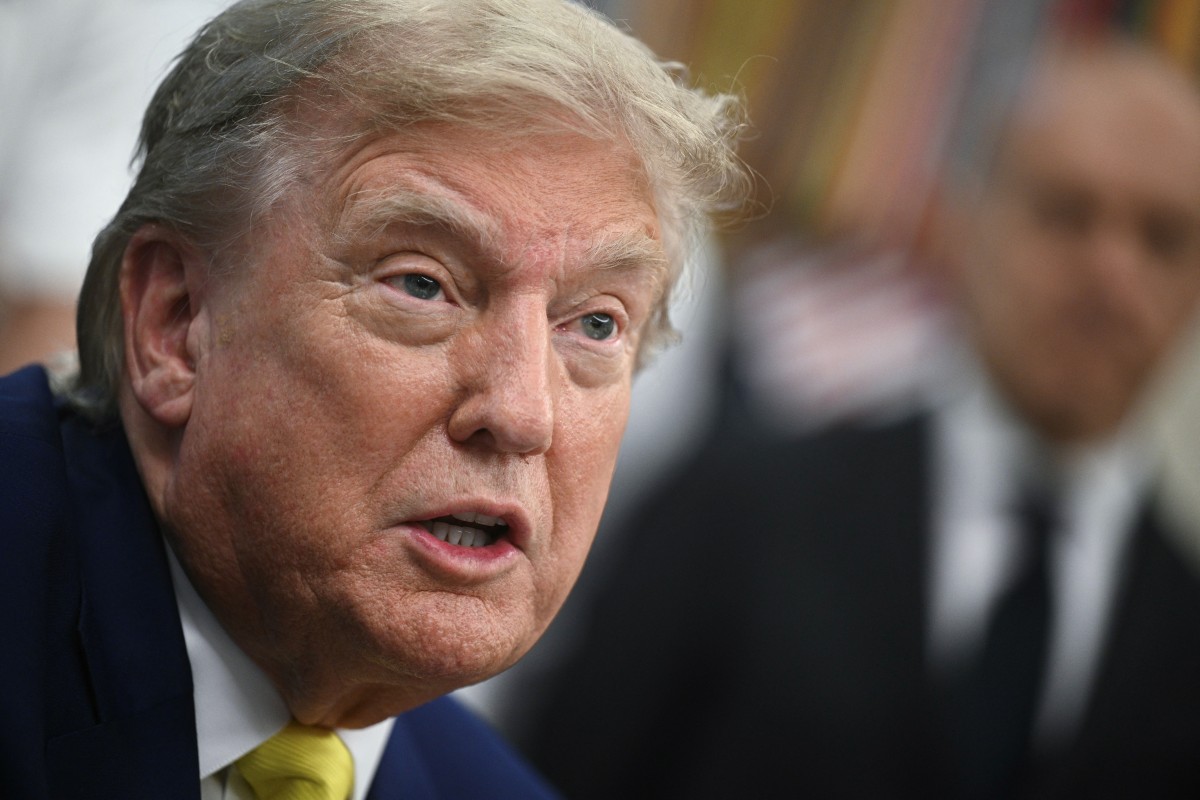

US President Donald Trump on Monday announced that Israel and Hezbollah had agreed to stop fighting, raising hopes of easing tensions in Lebanon after days of escalating hostilities and fears of a wider Israeli ground offensive.
In a post on social media, Trump said he had spoken with Israeli Prime Minister Benjamin Netanyahu and that Israel had agreed not to proceed with a planned advance towards Beirut’s southern suburbs.
“I had a very productive call with Prime Minister Bibi Netanyahu, of Israel, and there will be no Troops going to Beirut, and any Troops that are on their way, have already been turned back,” Trump wrote.
Trump also said Hezbollah had agreed to halt attacks.
“Likewise, through highly placed Representatives, I had a very good call with Hezbollah, and they agreed that all shooting will stop — That Israel will not attack them, and they will not attack Israel,” he said.
The announcement came amid concerns that ceasefire efforts could collapse after Iran warned that Israel’s plans to intensify military operations in Lebanon could derail negotiations.
Trump dismissed suggestions that talks had been suspended, saying he had not been informed of any Iranian pause in negotiations.
“Talks are continuing, at a rapid pace,” he said.
Shortly after Trump’s statement, the office of Lebanese President Joseph Aoun said an arrangement had been proposed under which Israeli strikes on Beirut’s southern suburbs would stop in exchange for Hezbollah refraining from attacks on Israel.
According to the presidency, the proposed ceasefire would initially cover Beirut’s southern suburbs and could later be expanded to the rest of Lebanon. The office said it had received confirmation from Hezbollah that the group had agreed to the proposal for a mutual cessation of attacks.
The development comes as thousands of residents have fled parts of Lebanon amid Israeli military operations and fears of a broader conflict.
Israel threatens strike on Beirut suburbs as cease-fire faces new test
Beirut was bracing for a possible Israeli bombardment on Monday after Israel announced plans to strike the city’s southern suburbs, raising fears that the fragile cease-fire between Israel and Hezbollah could unravel.
Prime Minister Benjamin Netanyahu said he had ordered the Israeli military to attack the southern outskirts of Beirut, known as Dahiya, a Hezbollah stronghold. The Israeli military also issued evacuation warnings, prompting thousands of residents to leave the area.
The warning led to severe traffic congestion as families rushed to safer locations. Many residents said repeated evacuations had become part of daily life after years of conflict.
“I lost count of how many times I’ve evacuated,” said Zahra Khomasi, 43, as she sat in her car in Tayouneh on the outskirts of Dahiya.
Khomasi said she had fled during previous rounds of fighting and returned only after the latest cease-fire took effect in April.
“We’ve somehow become used to this,” Ms. Khomasi said.
The current tensions follow renewed hostilities that began after Hezbollah resumed attacks on Israel in support of Iran during the U.S.-Israeli conflict with Tehran. Although a U.S.-brokered cease-fire was announced in April, both sides have continued exchanging fire.
Lebanese President Joseph Aoun said his government would continue pursuing diplomacy despite the latest threats.
“Some regrettably consider negotiation to be surrender,” President Joseph Aoun of Lebanon said in a statement. “It is not that, nor is it a concession. It is a solution to stop wars with the least possible harm.”
The continued uncertainty has left many residents exhausted.
“I’m really exhausted by this. It’s been nearly three years we’ve been suffering from this tension and stress,” said Batoul Hassan Srour, 47. “It’s enough. We’ve had enough.”
Later, while sheltering outside Beirut, she expressed little confidence in the truce.
“I don’t believe in this cease-fire; we heard this many times but we need action not just talk,” Ms. Srour said.
U.N. Calls for Restraint as Civilians Flee Southern Lebanon
The United Nations voiced deep concern over Israel’s military activity in southern Lebanon and warnings of possible strikes on Beirut’s southern suburbs.
U.N. spokesman Stéphane Dujarric urged all parties to avoid further escalation and refrain from targeting civilian infrastructure.
Dujarric said the U.N. was witnessing heavily congested roads across parts of Lebanon as residents fled threatened Israeli strikes. Shelters in the cities of Tyre and Saida had reached capacity, while many displaced people were taking refuge in open areas.
The U.N. Security Council is scheduled to hold an emergency meeting on Monday at France’s request to discuss Israel’s military operations in Lebanon, including its reported capture of the historic Beaufort Castle, a Crusader-era fortress in southern Lebanon.
Iranian Adviser Warns Against Escalation in Strait of Hormuz
Mohsen Rezaei, a senior military adviser to Iran’s supreme leader, warned that Tehran would not tolerate a continued blockade of the Strait of Hormuz or expanded Israeli military action in Lebanon.
In a post on X, Rezaei said the strategic waterway was under Iranian control and cautioned that Tehran’s patience was limited.
“The patience of the armed forces of the Islamic Republic of Iran has its limits.”
His remarks came after Iran’s semiofficial Tasnim News Agency reported that Iran and allied groups were considering measures that could include closing the Strait of Hormuz and opening additional fronts, including in the Bab el-Mandeb Strait near the Red Sea.
However, it remained unclear whether Rezaei’s comments reflected official Iranian policy or the position of Supreme Leader Mojtaba Khamenei.
Oil Prices Jump on Reports of Possible Iranian Withdrawal from Talks
Global Markets: Oil prices surged on Monday after Iran’s semiofficial Tasnim News Agency reported that Tehran could halt its participation in negotiations amid escalating tensions in Lebanon.
Brent crude, the international benchmark, rose about 5 per cent to more than $96 a barrel, while West Texas Intermediate, the U.S. benchmark, climbed roughly 7 per cent to above $93 a barrel.
The report, published by Tasnim, which is affiliated with Iran’s Revolutionary Guards, suggested that Iran would stop engaging in negotiations because of Israel’s military actions in Lebanon.
The report did not cite any government source, and its claims could not be immediately verified.
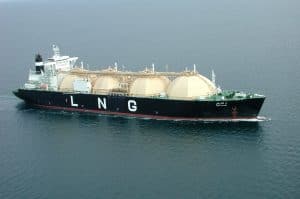
The sharp rise in oil prices reflected growing investor concerns that a further deterioration in regional security could threaten energy supplies and disrupt shipping through key Middle Eastern waterways, including the Strait of Hormuz.
Trump sends tougher Iran peace proposal, officials say
US President Donald Trump has revised and toughened the terms of a proposed framework agreement aimed at ending the conflict with Iran and has sent the amended document back to Tehran for consideration, according to three officials familiar with the matter.
The specific changes made to the agreement were not immediately disclosed. However, two officials said Trump was concerned about provisions that would involve unfreezing Iranian funds as part of a broader settlement.
According to the officials, Trump has long criticized former President Barack Obama for taking a similar step under the nuclear agreement reached with Iran more than a decade ago.
The president has also expressed frustration over the pace of Iran’s response to U.S. proposals, one official said.
The framework has been negotiated with the assistance of intermediaries, including representatives from Pakistan. One official said Trump’s revisions amounted to “a new, tougher proposal” that could help accelerate negotiations by increasing pressure on Tehran to accept the framework that has already been sent to Iran’s supreme leader, Mojtaba Khamenei, for approval.
Officials noted that communication with the supreme leader has been difficult, raising concerns that the latest changes could result in additional delays.
On Friday, Trump met with senior advisers for two hours in the White House Situation Room to discuss efforts to end the conflict. However, no public announcement was made following the meeting.
The proposed framework would effectively end the U.S.-Israeli military campaign against Iran in exchange for Tehran lifting its blockade of the Strait of Hormuz, a vital route for global oil and gas shipments.
Several contentious issues, including the future of Iran’s nuclear programme, would be left for subsequent rounds of negotiations, according to officials familiar with the discussions.
Israel Captures Strategic Beaufort Castle in Southern Lebanon
Jerusalem: Israeli forces have captured the strategic hilltop fortress of Beaufort Castle in southern Lebanon, the Israeli military announced on Sunday, marking a significant development in Israel’s ongoing military campaign against Hezbollah.
The medieval Crusader-era castle, perched on a hill overlooking southern Lebanon, holds both military and symbolic importance. Its capture comes amid the most extensive Israeli ground operation in Lebanon in decades.
The seizure of Beaufort has revived memories of Israel’s nearly two-decade occupation of southern Lebanon, which ended in 2000 following a prolonged insurgency led by Hezbollah, the Iran-backed militant group.
Neither Hezbollah nor the Lebanese government immediately responded to the Israeli military’s announcement.
The development comes as Hezbollah continues to battle Israeli forces in southern Lebanon. Israeli officials have also discussed the possibility of establishing a long-term security zone inside Lebanon to prevent future cross-border attacks.
Israeli Prime Minister Benjamin Netanyahu welcomed the operation, describing the capture of Beaufort as a “dramatic step” and pledging that Israeli troops would continue their advance in Lebanon.
However, military analysts expressed doubts that the seizure of the fortress would significantly weaken Hezbollah’s ability to launch attacks. Experts noted that the group continues to rely on guerrilla tactics, rockets and drones against Israeli forces and cities.
Haim Har-Zahav, an Israeli writer who served in the Israeli-controlled zone during the 1990s, said the capture of Beaufort highlighted concerns that Israel could be moving toward a prolonged military presence in Lebanon similar to the occupation that many Israelis now regard as a costly strategic mistake.
The latest developments underscore the growing intensity of the conflict between Israel and Hezbollah, raising concerns about the possibility of a prolonged war of attrition in southern Lebanon.
Trump signals final decision on Iran deal, demands nuclear concessions
US President Donald Trump said Friday that he would soon make a “final determination” on a possible agreement with Iran, indicating that Washington and Tehran may be inching toward a temporary cease-fire arrangement after days of escalating tensions.
In a post on social media, Trump reiterated key American demands, insisting that Iran must permanently abandon any effort to develop nuclear weapons and allow the United States to remove its stockpile of enriched uranium. He also called for the reopening of the Strait of Hormuz, one of the world’s most critical oil shipping routes.
Trump indicated that the United States was prepared to lift its naval blockade targeting Iranian shipping if progress was made. “Ships caught in the Strait due to our amazing and unprecedented Naval Blockade, which will now be lifted, may start the process of heading home,” he wrote.
Iran has not officially responded to Trump’s latest remarks. However, Iran’s senior negotiator Mohammad Bagher Ghalibaf adopted a hard-line position earlier in the day, saying Tehran had “no trust in guarantees or words.”
U.S. officials familiar with the negotiations said the proposed agreement would extend the current cease-fire and create space for fresh talks on Iran’s nuclear programme. If finalized, the arrangement could provide Trump with a diplomatic exit from a conflict that has triggered rising oil prices and growing domestic criticism in the United States.
The deal could also pave the way for Iran to regain access to frozen overseas assets and restore billions of dollars in oil revenue.
Israel pushes deeper into Lebanon amid Hezbollah clashes
Israeli Prime Minister Benjamin Netanyahu said Friday that Israeli troops had advanced further into southern Lebanon, including crossing the Litani River, in a major escalation of fighting with the Iran-backed militant group Hezbollah.
Speaking during a visit to troops near Israel’s northern border, Netanyahu said Israeli forces had crossed a line that has historically served as a key boundary in previous cease-fire arrangements.
The Israeli military also issued fresh evacuation warnings for villages and towns in southern Lebanon as airstrikes continued across the region. According to Lebanon’s health ministry, more than 3,300 people have been killed since the latest round of fighting erupted in March.
The latest escalation comes despite ongoing U.S.-brokered negotiations aimed at stabilizing the Israel-Lebanon border. Military officials from both countries were expected to meet at the Pentagon on Friday, while additional political talks are scheduled for next week.
Israeli officials say Hezbollah’s drone attacks on troops and northern Israeli communities remain a serious security concern. Under pressure from hard-liners in his coalition government, Netanyahu has ordered intensified military operations against Hezbollah, including a strike near Beirut earlier this week.
Lebanese President Joseph Aoun, after speaking with U.S. Secretary of State Marco Rubio, said achieving a cease-fire remained the “basic entry point” for broader negotiations.
Iran has reportedly demanded that any broader agreement with Washington include an end to Israeli strikes against Hezbollah, making Lebanon a key flashpoint in regional diplomacy.