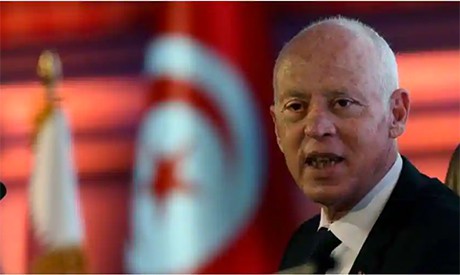

Tunisia’s President Kais Saied issued a decree Friday that punishes the dissemination of “fake news” with up to five years in prison, rising to 10 when such crimes are deemed to target top officials.
The decree, published in the Official Journal, defines the offence as “deliberating using communication networks and information systems to produce, promote, publish or send false information or rumours”.
It comes 14 months after Saied orchestrated a power grab and purportedly seeks to hold to account those who “bring harm to the rights of others, public order and national defence” along with those who “sow panic within the population”.
The offence is also punishable by a fine of 50,000 dinars (15,600 dollars).
The decree was condemned on social media after its publication as an attempt to muzzle journalists.
Saied in July last year sacked the government and suspended parliament, before later dissolving the legislature entirely.
Many Tunisians initially welcomed his moves against a democratic system that was set up in the wake of the Arab Spring but was widely seen as fractious and dysfunctional.
But criticism has mounted, with local and international groups accusing the president of curtailing civil liberties.
Tunisia’s journalists union warned in May that press freedom in the country faced “serious threats”.