
New Delhi, India – Russian academic Sergey Luzyanin has suggested that the United Arab Emirates’ Dirham could be considered as a potential currency for India-Russia trade in an interaction between Indian and Russian experts following the Shanghai Cooperation Organisation (SCO) virtual summit organized by India.
The discussion, organized by the Russian news agency Sputnik, shed light on Russia’s need for a third currency option due to concerns over the volatility of the Indian Rupee, the Indian newspaper The Hindu reported..
Professor Luzyanin, a prominent figure at the National Research University’s Higher School of Economics, explained that while settling payments for energy exports, Russia had previously resorted to using the Chinese Yuan as a third currency.
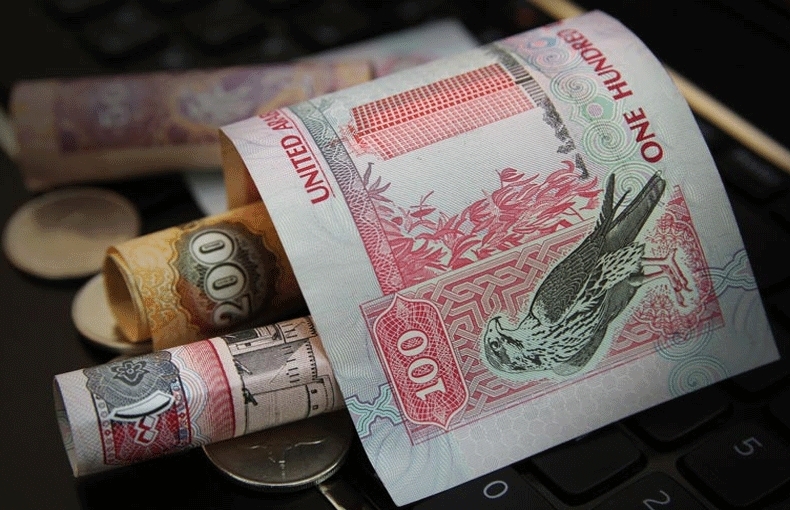
The decision to avoid the Indian Rupee was driven by its perceived volatility. However, the professor mentioned that the Dirham of the UAE had also been considered for this purpose, potentially offering an alternative option for trade relations between the two nations.
The need for a third currency arises as Russia continues to face Western sanctions imposed after its involvement in Ukraine. Despite strained economic ties between Russia and the West, both India and China have become significant buyers of Russian energy in recent years. The recent move by Indian refiners to make payments in Chinese Yuan to Russian energy majors highlights the growing trend of countries seeking “third currencies” to navigate the challenges posed by Western sanctions.
Russia has been actively advocating for de-dollarization and promoting trade in national currencies. However, the proposed strategy has encountered obstacles, as explained by Dr. Luzyanin. He suggested that bilateral investments could be a viable option for utilizing the Indian rupees in Russian possession. With Russia being a major supplier of oil to India, the professor emphasized the challenge of leveraging national currencies in such transactions, and he proposed exploring investment opportunities as a potential solution.
As discussions continue, exploring alternative currencies such as the UAE Dirham demonstrates the efforts being made to diversify and strengthen economic ties between India and Russia. Both countries are actively seeking solutions to overcome the challenges posed by Western sanctions while fostering mutually beneficial trade and investment opportunities.