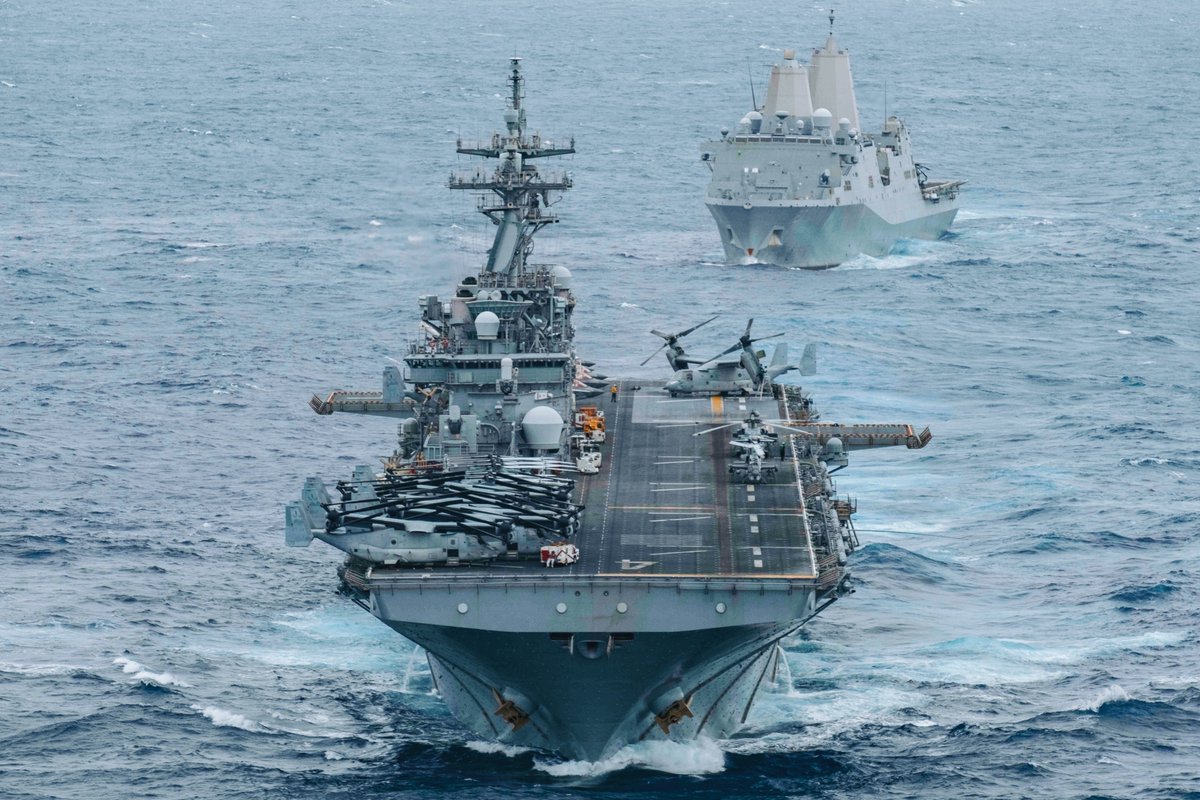

Dubai, UAE — The United States launched a ninth consecutive night of air strikes against Iran late on Sunday after announcing another American military death, while Tehran widened its retaliation with attacks on U.S. military installations in Kuwait and Jordan and renewed threats against shipping through the Strait of Hormuz, raising fears that the conflict is spilling further across the Gulf.
U.S. Central Command (CENTCOM) said it completed the latest wave of strikes at about 10 p.m. ET on Sunday, targeting Iranian military command centres, air defence systems, coastal surveillance facilities, maritime assets, missile and drone launch sites, and communications networks.
The latest strikes came hours after the Pentagon confirmed the death of another U.S. service member in Iraq during the controlled detonation of a downed Iranian drone, adding to a mounting toll of American casualties since hostilities resumed.
U.S. President Donald Trump said the latest operation was carried out to honour the service members killed in recent days.
“We hit them very hard again tonight,” Trump told reporters as he returned to Washington after attending the World Cup final, adding that the strikes were carried out in honour of the American troops who had died.
Iranian state media reported explosions in southern and northwestern parts of the country following the strikes but there was no immediate official word on casualties or damage.
Iran expands retaliation across the Gulf
Iran’s Revolutionary Guards said they had struck several U.S. military targets in Kuwait, including what they described as an early-warning radar system that was “completely destroyed.”
The Guards also said they targeted an equipment warehouse, aircraft parts depot and an MQ-9 drone hangar at Ali Al Salem Air Base, claiming several drones were set ablaze.
Kuwait’s military said its air defence systems were intercepting incoming missiles and drones, adding that explosions heard across parts of the country were caused by interception operations.
The attacks marked another escalation after days of Iranian strikes against Gulf states hosting U.S. military facilities.
Iran also claimed responsibility for ballistic missile strikes targeting U.S. military aircraft stationed at Jordan’s Aqaba airport, saying command-and-control aircraft and heavy transport planes had sustained severe damage. Jordan had no immediate comment on the claim.
The Jordanian military earlier said it intercepted three Iranian missiles headed toward its territory, while Israel warned that Iranian attacks were edging closer to its borders.
Hormuz tensions deepen
The Strait of Hormuz, through which roughly one-fifth of global oil supplies normally pass, remained at the centre of the confrontation.
Iran’s Revolutionary Guards warned the strategic waterway would remain unsafe for oil and petrochemical shipments as long as what they called U.S. aggression continued.
The Guards claimed two oil tankers had exploded after attempting to use what they described as an unsafe southern transit route near Oman despite Iranian warnings. They alleged the vessels had been encouraged by the U.S. military to use the passage.
Britain’s United Kingdom Maritime Trade Operations (UKMTO) separately reported that a ship was on fire near Oman’s coastline in the Strait of Hormuz but said the cause remained unclear.
The United States has encouraged commercial shipping to use routes closer to Oman after repeated Iranian attacks on vessels transiting the waterway.
Shipping activity through Hormuz has slowed sharply in recent days. LSEG shipping data showed only four vessels transited the strait on Sunday, down from eight a day earlier, while no liquefied natural gas carriers have passed through since Thursday.
Brent crude rose above $90 a barrel, its highest level since June, as traders weighed the growing risk to global energy supplies.
The expanding conflict has increasingly drawn Gulf states into the confrontation as Iran targets countries hosting U.S. military facilities.
Air raid sirens sounded overnight in Bahrain, home to the U.S. Navy’s Fifth Fleet, prompting authorities to urge residents to seek shelter. The island kingdom has come under repeated Iranian attacks in recent days and has accused Tehran of targeting civilian areas.
The U.S. embassy in Bahrain issued a security alert warning that Iran could seek to target locations in central Manama and advised American citizens to remain vigilant.
Elsewhere, Iranian forces announced what they described as a “surprise attack” on an enemy special operations command centre in Syria’s Al-Tanf region, saying the operation was carried out in retaliation for the deaths of Iranian soldiers.
The widening geographical scope of the conflict has heightened concerns that fighting could draw additional regional actors into direct confrontation.
Nuclear concerns intensify
The latest U.S. military campaign also extended to Iran’s nuclear infrastructure.
Iran’s Atomic Energy Organisation condemned what it said was a U.S. strike on the Darkhovin nuclear power plant site, describing the attack as another violation of international law.
The International Atomic Energy Agency (IAEA) said it was investigating reports of an attack on the facility but had not immediately confirmed the extent of any damage.
The development added another layer of uncertainty to a conflict that has increasingly shifted from military installations to strategic infrastructure with potentially wider international implications.
Shipping and energy markets under pressure
The confrontation has further disrupted one of the world’s most important energy corridors.
Iran has repeatedly warned that commercial shipping through the Strait of Hormuz cannot be guaranteed while U.S. military operations continue, threatening severe consequences for vessels using the route.
The decline in tanker traffic has already begun to affect global energy markets.
Data from LSEG showed only a handful of vessels entered the strait over the weekend to load crude, while LNG traffic remained virtually at a standstill.
The tightening supply outlook pushed Brent crude above $90 a barrel, its highest level since June, reflecting growing concern that prolonged disruption could affect global oil and gas supplies.
U.S. Secretary of State Marco Rubio accused Iran of attempting to use the Strait of Hormuz as leverage against the international community.
“The United States will continue to do what it needs to do to protect global shipping,” Rubio said before departing for a meeting of Southeast Asian foreign ministers, adding that other countries should contribute more resources to safeguarding maritime trade.
Diplomatic efforts unravel
The renewed hostilities underscore the collapse of diplomatic efforts that had briefly reduced tensions only weeks earlier.
Last month’s ceasefire and the Islamabad Memorandum of Understanding, intended to establish a framework for ending the conflict, have effectively broken down as both sides accuse each other of repeated violations.
Washington says its latest operations are aimed at degrading Iran’s military capabilities and responding to attacks on American personnel across the region.
Tehran, meanwhile, says its actions are a legitimate response to continued U.S. military operations and insists Gulf states hosting American forces have become part of the conflict.
With both sides expanding the range of their military operations, prospects for a return to negotiations appear increasingly remote.
Conflict enters more dangerous phase
The latest exchanges suggest the confrontation has entered a broader and potentially more dangerous phase.
What began as direct U.S.-Iran military exchanges has spread to Gulf states hosting American forces, disrupted global energy shipping, raised fresh concerns over nuclear facilities and increased the risk of further regional escalation.
With Washington maintaining its nightly air campaign and Tehran broadening its retaliation across multiple countries, regional governments are bracing for further attacks while global markets continue to monitor the security of energy supplies through the Strait of Hormuz.
The conflict now extends well beyond the two principal adversaries, threatening to draw more countries into one of the Middle East’s most volatile confrontations in years.