
The United States said it had completed a fresh wave of strikes on military targets across Iran late on Monday, as Tehran widened its retaliation by launching missile and drone attacks on Bahrain, claiming to have disabled two supertankers in the Strait of Hormuz and raising fears of further disruption to global energy supplies.
The latest exchange marked another sharp escalation in the renewed conflict between Washington and Tehran, with both sides stepping up military operations despite US President Donald Trump’s insistence that a negotiated settlement remains possible.
Five-hour mission struck military targets: Centcom
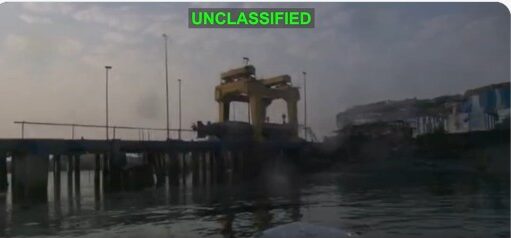
US Central Command (CENTCOM) said its forces completed a five-hour mission that struck military targets across Iran, including Bushehr, Chah Bahar, Jask, Konarak, Abu Musa and Bandar Abbas.
“During the five-hour mission, US forces successfully struck military targets across Iran,” CENTCOM said in a statement posted on X, describing the operation as part of efforts to degrade Iran’s military capabilities.
The strikes came after the United States launched attacks for a third consecutive night, with CENTCOM saying the operations were intended to impose “a heavy cost” on Iranian forces and reduce their ability to attack civilians and commercial shipping in the Strait of Hormuz.
Hours earlier, Trump had told conservative radio host Hugh Hewitt that US forces would continue to strike Iran.
“We’re going to hit them very hard tonight, and we’re going to hit them hard tomorrow,” he said, while later maintaining that a deal with Tehran was still “possible”.
The White House has also formally notified Congress that hostilities against Iran resumed on 7 July, a move the administration says opens a new 60-day window for military operations in the region without further congressional approval.
Iran responded by broadening its military campaign beyond direct exchanges with US forces.
The Islamic Revolutionary Guard Corps (IRGC) said it carried out missile and drone strikes on Bahrain, targeting what it described as weapons support warehouses, a satellite communications centre and residential facilities used by US military personnel.
Bahraini authorities activated missile warning sirens twice and urged residents to seek shelter as the attacks unfolded.
The IRGC also claimed it had struck two “offending supertankers” in the Strait of Hormuz after accusing them of ignoring warnings, switching off their navigation systems and attempting to pass through what it called a mined route.
In its statement, the Guards accused Washington of encouraging vessels to use an “illegal route” and warned that cooperation with the “aggressor enemy” would lead to further damage, delays in reopening the Strait of Hormuz and a global energy crisis.
Separately, the United Arab Emirates said two of its tankers were struck by Iranian cruise missiles while transiting the southern shipping lane of the Strait of Hormuz in Omani territorial waters.
According to the Emirati defence ministry, one crew member was killed and eight others were wounded in the attack.
The latest escalation follows Trump’s decision to reimpose a naval blockade on Iran’s ports and threaten a 20 percent levy on cargo transiting the Strait of Hormuz, arguing the fees would help fund efforts to keep the strategic waterway open.
Iranian Foreign Minister Abbas Araghchi dismissed the proposal on Monday, mocking Trump’s plan and saying Tehran would charge lower fees instead.
Brazilian President Luiz Inacio Lula da Silva also criticised the US proposal, calling it an act of “piracy” and warning that imposing charges on international shipping would undermine global maritime norms.
Hormuz blockade
Trump also reimposed a US naval blockade on Iranian ports on Monday and vowed hefty fees for ships transiting the Strait of Hormuz, as Tehran mockingly pledged to charge a lower rate for passage through the strategic waterway.
The maritime blockade was due to begin on Tuesday, the US military said, as oil prices shot up around nine percent after both sides traded attacks, raising fears of renewed conflict.
Iran’s top diplomat insisted Tehran would be a fair guardian in charging tolls on the waterway vital for oil and gas trade, while the Iranian military command insisted it would not allow the US to interfere in the management of the strait.
In a post on his Truth Social site, Trump declared that the US would be “known as ‘THE GUARDIAN OF THE HORMUZ STRAIT’,” and “be reimbursed, at the rate of 20% on all cargo shipped, for any and all costs necessary to do the job of providing safety and security to this very volatile section of the World”.
Oil prices up
Oil prices climbed to their highest level in four weeks as traders assessed the growing risk to global energy supplies from the escalating conflict around the Strait of Hormuz.
Brent crude futures rose 2 percent to $84.98 a barrel after surging 9.6 percent in the previous session, their biggest one-day gain since May 2020. US West Texas Intermediate crude gained 2.1 percent to $79.79 a barrel.
Markets were rattled by the combination of fresh US air strikes, Iran’s attacks on shipping and renewed uncertainty over one of the world’s most important oil transit routes, through which roughly a fifth of global crude supplies normally pass.
Analysts said continued military exchanges and any prolonged disruption to shipping in the Strait of Hormuz could keep energy markets volatile in the coming days.