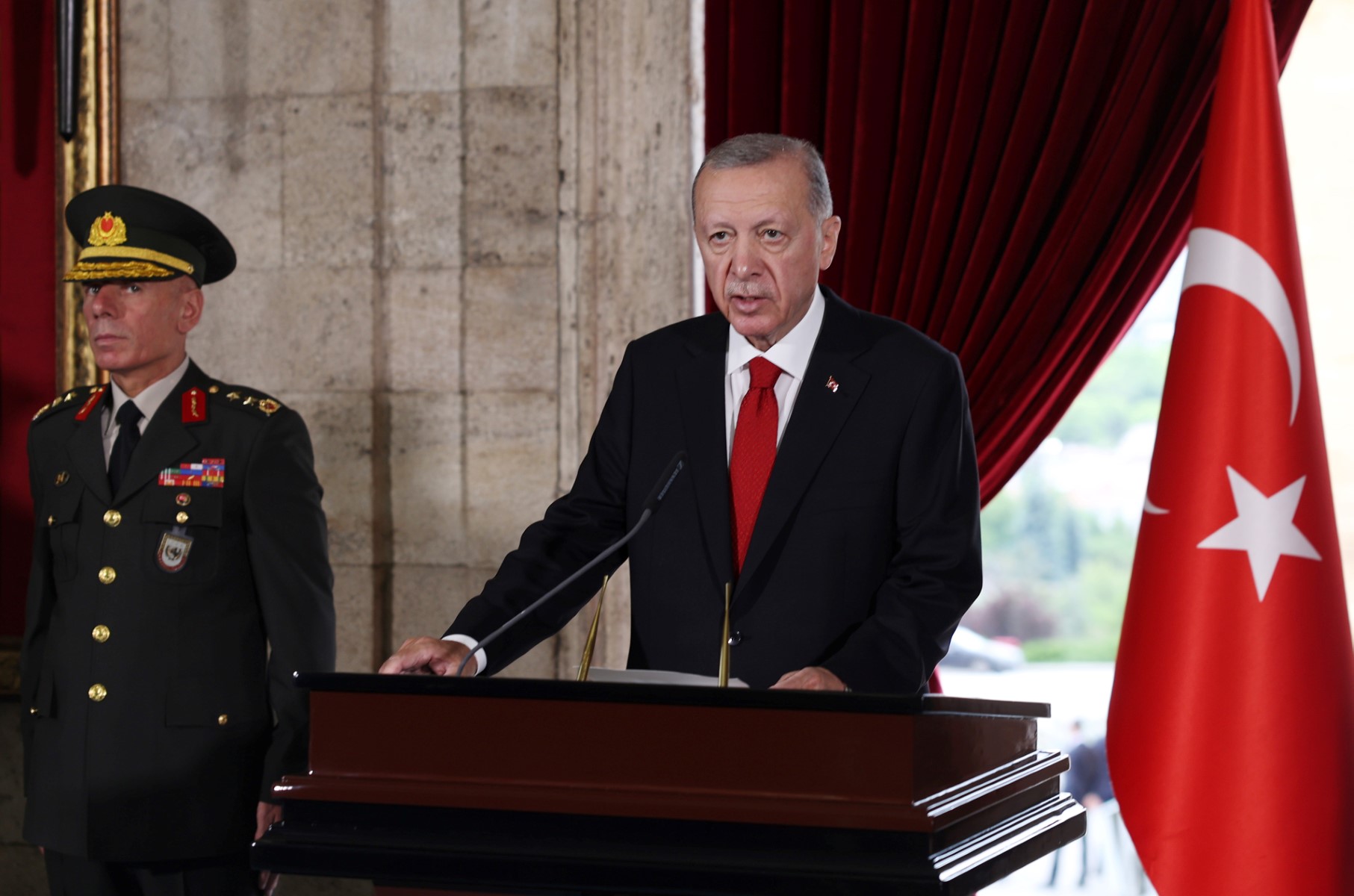

Istanbul, Turkey – The Turkish lira sank to a new low against the dollar on Wednesday, more than a week after the re-election of President Recep Tayyip Erdogan.
The currency, which was propped up by the central bank before the presidential election, fell seven percent to 23.17 lira per dollar at around 1145 GMT.
Erdogan was sworn in on Saturday after winning a historic election runoff on May 28 and named a new cabinet appointing market-friendly politician Mehmet Simsek as finance minister.
The former Merrill Lynch economist is known to oppose Erdogan’s unconventional policies.
He served as finance minister between 2009 and 2015 and deputy prime minister in charge of the economy until 2018, before stepping down ahead of a series of lira crashes that year.
Soon after taking office, Simsek said: “we have no choice but to return to rational ground” — a sign of shifting away from the unorthodox policy of lowering interest rates in order to fight high inflation.
“Whoever won the election, the expectation was the lira had to go weaker, to a more competitive level,” London-based emerging markets economist Timothy Ash said in a note.
Ash said the lira’s fall showed the “impact” from Simsek pushing the central bank to have a “rational policy”, which means a weaker, competitive currency.
“We are seeing policy normalization play out.”
Central banks worldwide have been raising rates in efforts to combat inflation.
But Erdogan has long advocated low interest rates in a bid to stimulate growth. He once called high rates “the mother and father of all evil” promoted by a foreign “interest lobby”.
‘Clean up the mess’-
Guldem Atabay, an economist, said the lira’s decline showed a decrease in costly interventions in the foreign exchange market by the central bank.
“It has now either been abandoned or greatly reduced,” she told AFP.
She predicted that the lira would keep on weakening until the central bank made a rate decision on June 22. “Until this time, whether the dollar will sit at 23 or 25, we will see.”
Simsek met with Hafize Gaye Erkan, a senior finance executive in the United States, who is believed may become next central bank governor, local media reported this week.
Erkan, a woman and former co-CEO at First Republic Bank and managing director at Goldman Sachs, is widely expected to replace central bank governor Sahap Kavcioglu.
Under Kavcioglu’s watch, the bank’s policy rate was decreased to 8.5 percent. It had been at 19 percent in 2021.
Ipek Ozkardeskaya, senior analyst at Swissquote Bank, suggested that Simsek was now supposed to “clean up the mess” of the past year and a half to restore investor confidence.
But she warned it “won’t be a piece of cake”.
“In past years, Turkey didn’t lack talented finance ministers or smart central bankers. But each time someone tried to do his/her job correctly — which in Turkey means raising the rates — he/she got rapidly sacked,” she said in a note.
“Therefore, what investors want to see in Turkey is not how talented Mehmet Simsek is in finance, but how resistant he will be to the low-rate pressure from the presidential office.”