
Dubai, UAE — U.S. President Donald Trump imposed tariffs of up to 12.5 percent on imports from 60 countries on Thursday, replacing temporary levies that expire on Friday after the Supreme Court struck down his earlier trade measures, with the White House saying the duties target countries that have failed to curb imports made with forced labour.
The new tariffs, ranging from 10 percent to 12.5 percent, will take effect as temporary 10 percent worldwide tariffs imposed under Section 122 of the Trade Act of 1974 expire on Friday.
The administration is instead invoking Section 301 of the Trade Act of 1974, which allows the president to impose tariffs and other sanctions against countries deemed to engage in unjustifiable, unreasonable or discriminatory trade practices. Trump used the same provision during his first term to impose tariffs on China.
The White House said the latest duties apply to 60 countries that account for 99 percent of U.S. imports and are aimed at governments that have inadequately enforced bans on goods produced using forced labour.
Trump turned to temporary tariffs after the U.S. Supreme Court ruled that the 1977 International Emergency Economic Powers Act did not authorize the sweeping tariffs he imposed earlier this year, forcing the administration to refund importers that had paid them.
The Office of the U.S. Trade Representative has also opened an investigation into whether 16 countries accounting for about 70 percent of U.S. imports have overproduced goods, depressing prices and disadvantaging American companies. The investigation has not yet been completed.
A senior administration official said some countries had strengthened enforcement against forced labour since the tariffs were first proposed last month, qualifying for lower duties. India, for example, saw its proposed tariff reduced to 10 percent from an initial 12.5 percent, the official said.
The administration exempted certain products, including oil and gas, fertilizer, and goods eligible for duty-free treatment under the U.S.-Mexico-Canada Agreement.
The tariffs, which are paid by U.S. importers, could increase costs for businesses and consumers ahead of November’s midterm elections.
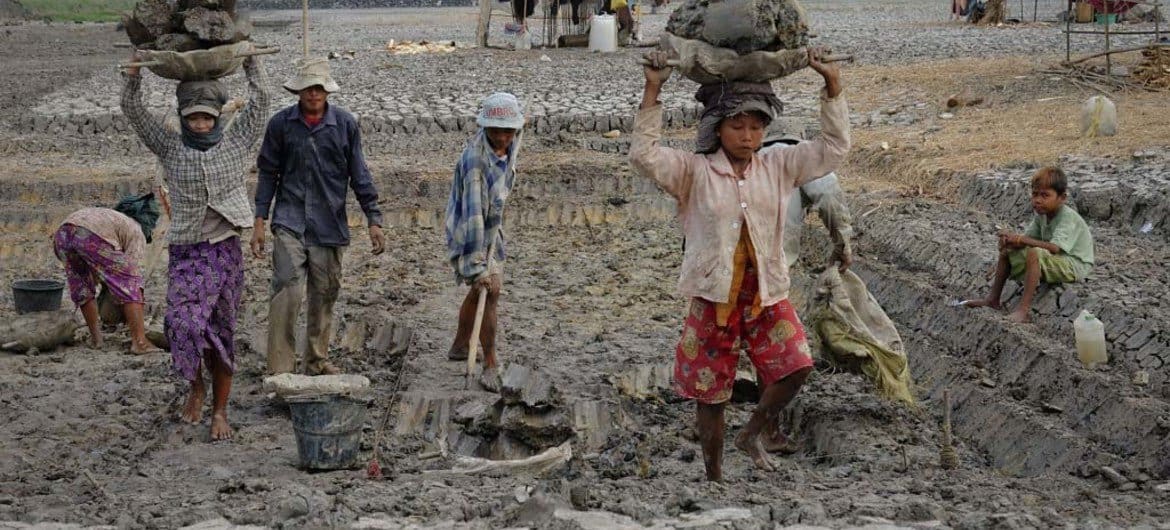
The International Labour Organization estimates that about 27.6 million people worldwide were in forced labour on any given day in 2021. Human rights advocates said import restrictions can help combat forced labour, although some warned that enforcement and implementation would be critical to their effectiveness.